As Valentine's Day nears, many find themselves struggling to articulate their feelings for that special someone. The temptation to seek help from AI tools like ChatGPT can be strong, as these programs can quickly generate romantic messages, poems, or even sweet limericks.
However, before opting for an AI-generated note, it's essential to reflect on the potential impact on your self-perception.
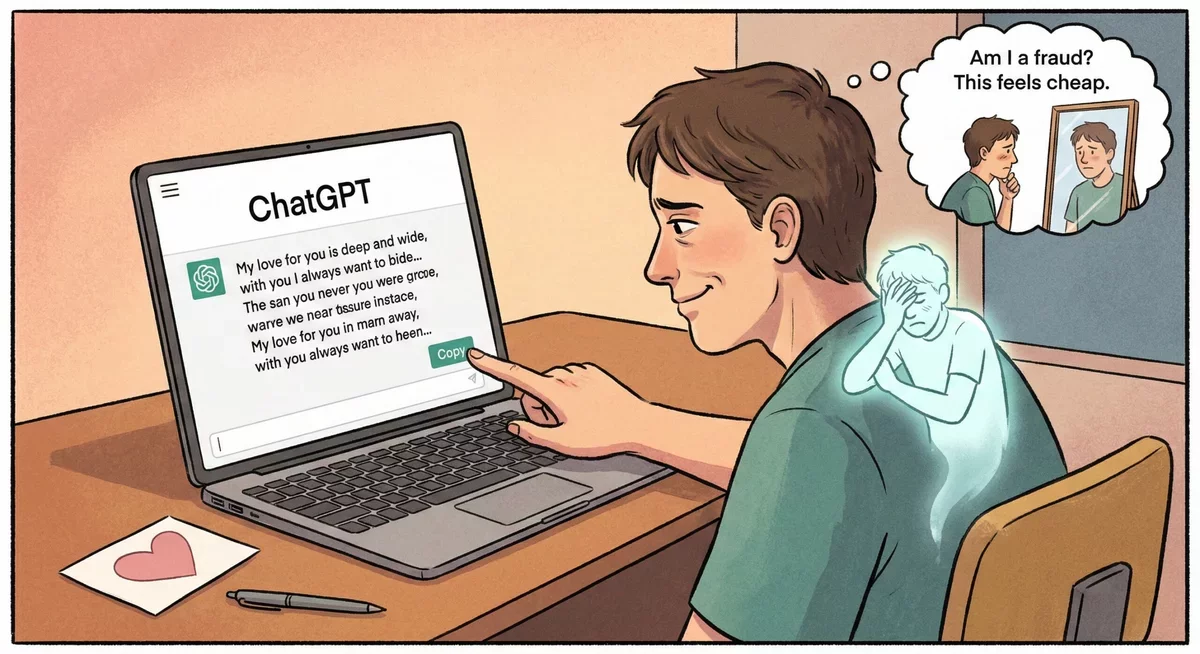
Research into consumer behavior and technology reveals that using generative AI for heartfelt messages often comes with a psychological price. Our studies indicate that relying on AI as a personal ghostwriter can lead to feelings of guilt.
The Emergence of AI as a Writing Assistant
Generative AI has revolutionized communication for many, becoming a staple in drafting work emails and social media updates. Consequently, it's not surprising that individuals are turning to these tools for more intimate expressions, such as wedding vows, birthday greetings, and Valentine's Day cards.
While these AI systems can produce emotionally engaging content, there is a significant downside: presenting these words as your own can feel disingenuous.
When Convenience Leads to Guilt
In a series of experiments involving hundreds of participants, we discovered a consistent theme. Whether crafting appreciation emails, birthday wishes, or love letters, individuals reported feeling guilty when using generative AI compared to composing the messages themselves.
By signing your name to an AI-generated message, you inadvertently claim authorship of words not genuinely your own. This creates a "source-credit discrepancy," where the true creator and the credited author do not align. Such discrepancies are evident in various contexts, from celebrity social media posts to political speeches crafted by professional speechwriters.
Even if you convince yourself that you're simply being efficient, deep down, you may recognize that you're misleading the recipient regarding the personal effort involved in the message.
Understanding the Guilt Factor
To delve deeper into this guilt, we compared AI-generated messages with other scenarios. Participants felt no guilt when purchasing greeting cards with preprinted messages, as the lack of personal authorship is clear. In contrast, having a friend write a message for you elicited similar guilt as using AI, highlighting that the source--whether human or machine--doesn't matter; what counts is the perceived dishonesty.
Interestingly, guilt diminished when messages were not delivered or when recipients were mere acquaintances rather than close friends, underscoring the importance of emotional authenticity in significant relationships.
Implications for Your Valentine's Day Message
So, how should you approach that upcoming Valentine's Day greeting? Our findings suggest that crafting a message yourself can enhance the emotional experience for both you and the recipient.
This doesn't mean you can't use AI for inspiration or brainstorming. Consider it a partner in creativity rather than a substitute for your voice. The final message should reflect your thoughts and feelings, enriched by personal touches that only you can provide. The essence lies in collaboration, not complete reliance on technology.
Generative AI is a remarkable resource, yet it brings ethical considerations to the forefront, whether in educational settings or romantic relationships. As these technologies become more integrated into our lives, individuals must navigate the balance between helpful assistance and emotional outsourcing.
This Valentine's Day, embracing your authentic voice in your message may prove to be the most rewarding choice for both you and your loved one.