The Guatemalan cultural minister has initiated efforts to reclaim a significant 1,200-year-old limestone lintel that was recently sent back from the United States to Mexico instead of its rightful home in Guatemala. This situation emerged following a report by the Art Newspaper.
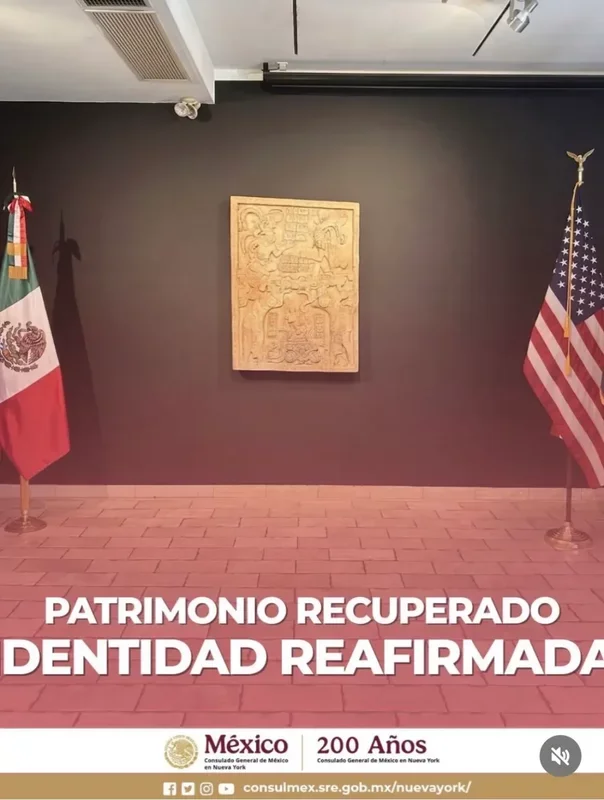
The ancient artifact was presented to the Mexican consulate in New York by an unidentified American businessman, who likely recognized its illegal removal from its original location prior to acquiring it.
This remarkable lintel features intricate depictions of ritualistic activities involving the sun god and Cheleew Chan K'inich, a prominent ruler of the ancient Mayan city of Yaxchilán, dating back to between 600 and 900 CE. Notably, it bears the signature of the carver known as Mayuy, one of the few artists in ancient America to sign their work. Stephen Houston, an anthropology professor at Brown University, praised Mayuy's inventiveness, explaining how he blended themes of divinity, cosmic order, and dynastic power in his carvings.
The lintel was first documented by American explorers Dana and Ginger Lamb during their 1950s expeditions through the tropical regions of northern Guatemala and southern Mexico. At some point, this artifact, along with other works by Mayuy, was extracted from a jungle area identified by Dana Lamb as Laxtunich and entered the complex world of the antiquities market.
The ambiguity surrounding the lintel's rightful ownership arises from its original location near the Usumacinta River, which traverses both modern-day Mexico and Guatemala. However, research by Houston indicates that the artifact was initially discovered on the Guatemalan side of the river.
An article from Cultural Property News highlights this incident as a case study of how "political spectacle and hurried cultural-property enforcement" can lead to missteps in restitution efforts. The publication also notes ongoing scholarly debates regarding whether Laxtunich is indeed located in Guatemala rather than Mexico, and questions the lack of thorough investigation into the lintel's history prior to its rapid repatriation to Mexico, particularly since Guatemala filed a claim just hours after the artifact's return.
This situation underscores the complexities surrounding cultural heritage and the importance of meticulous research in the repatriation process. As nations increasingly recognize the value of their historical artifacts, such developments could pave the way for more informed and respectful cultural exchanges in the future.