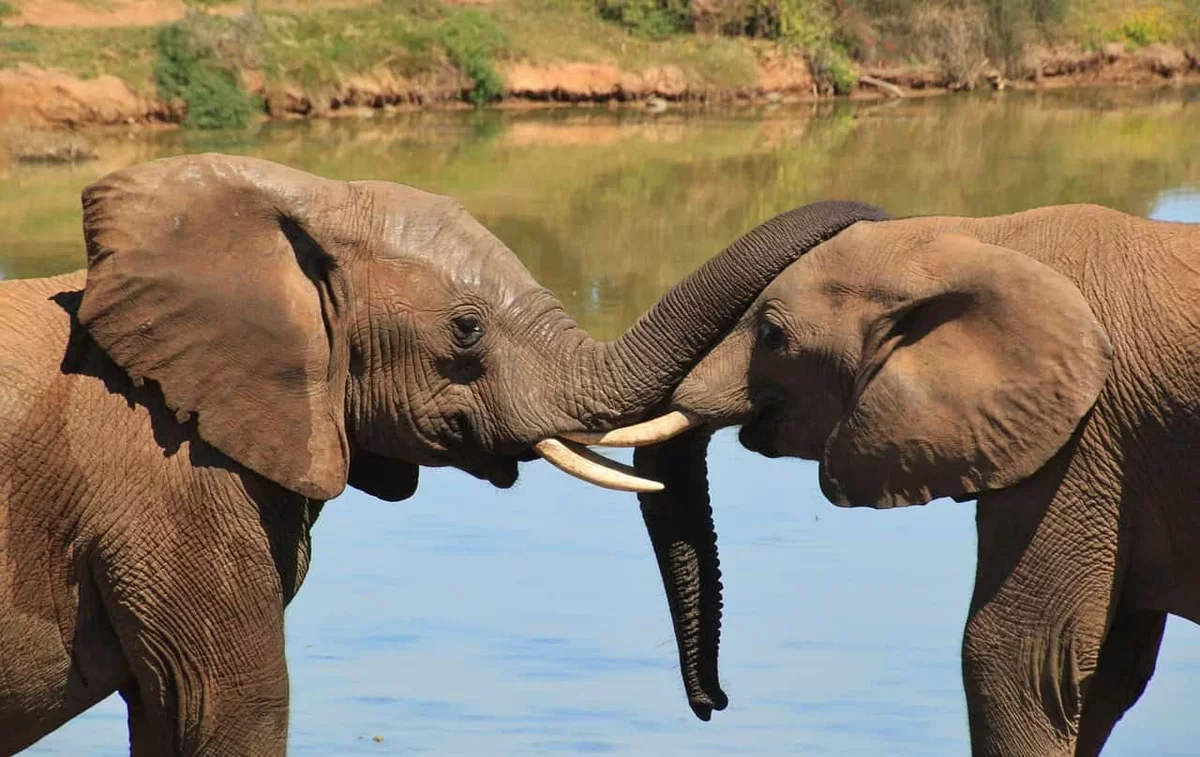
Recent research has unveiled that elephants possess the remarkable ability to call one another by name through unique vocalizations. While these sounds are not as articulate as human language, they consist of distinct low-frequency rumbles that serve to identify specific individuals within their social groups.
This groundbreaking study positions elephants as the first non-human species to utilize a naming system that does not rely on mimicking the calls of others, a trait previously noted in dolphins and parrots. According to Michael Pardo, the lead author and NSF postdoctoral researcher at Colorado State University and Save the Elephants, "Our data suggest that elephants do not depend on imitation of the receiver's calls, which is more akin to how human names function."
The Names of Giants Revealed Through AI
In their research, Pardo and his team recorded over 600 elephant calls in Kenya's Samburu ecosystem and Amboseli National Park. Elephants are known for their iconic trumpet-like sounds, but they also produce low-frequency noises between 1 to 20 Hertz, which are inaudible to humans yet can travel great distances, up to 10 kilometers (6 miles).
Employing a machine learning algorithm, researchers identified specific rumbles linked to 119 individual elephants, representing nearly 20% of the cases studied. By observing the social interactions of elephants during these vocalizations, they found statistical evidence that certain calls convey information about the intended recipient, indicating that elephants recognize when a call is meant for them.
When these rumbles were played back to wild elephants, the subjects exhibited a tendency to move quickly toward the sound and respond vocally, reinforcing the idea that these vocalizations are indeed name-like. The distinctiveness of these calls suggests a higher cognitive ability, indicating that elephants possess abstract thought processes.
Researchers propose that similar social dynamics may have led both elephants and humans to develop arbitrary vocal labels to identify individuals. George Wittemyer, a co-author and professor at Colorado State University, remarked, "This study provides insight into the potential drivers behind the evolution of these communication abilities."
While the study highlights the intricate social structures of elephants, it also raises questions about whether they assign names to other entities, such as food and locations. The researchers acknowledge that more data is necessary to explore these possibilities fully.
As the understanding of animal communication deepens, it becomes increasingly clear that naming conventions may not be exclusive to humans. The implications of this research suggest that many animals living in complex social environments may employ similar strategies to navigate their interactions.
This study not only enhances our appreciation for elephants but also encourages further exploration into the cognitive capabilities shared across species. As we continue to uncover the intricacies of animal communication, we may find that the line between human and non-human language is more blurred than previously thought.