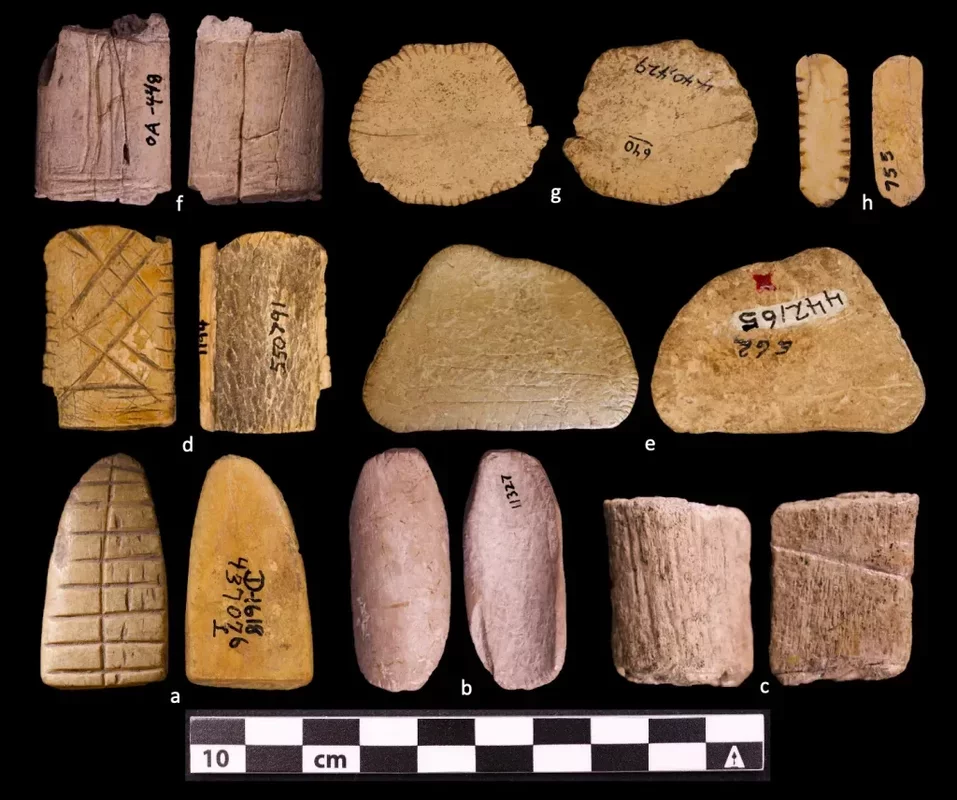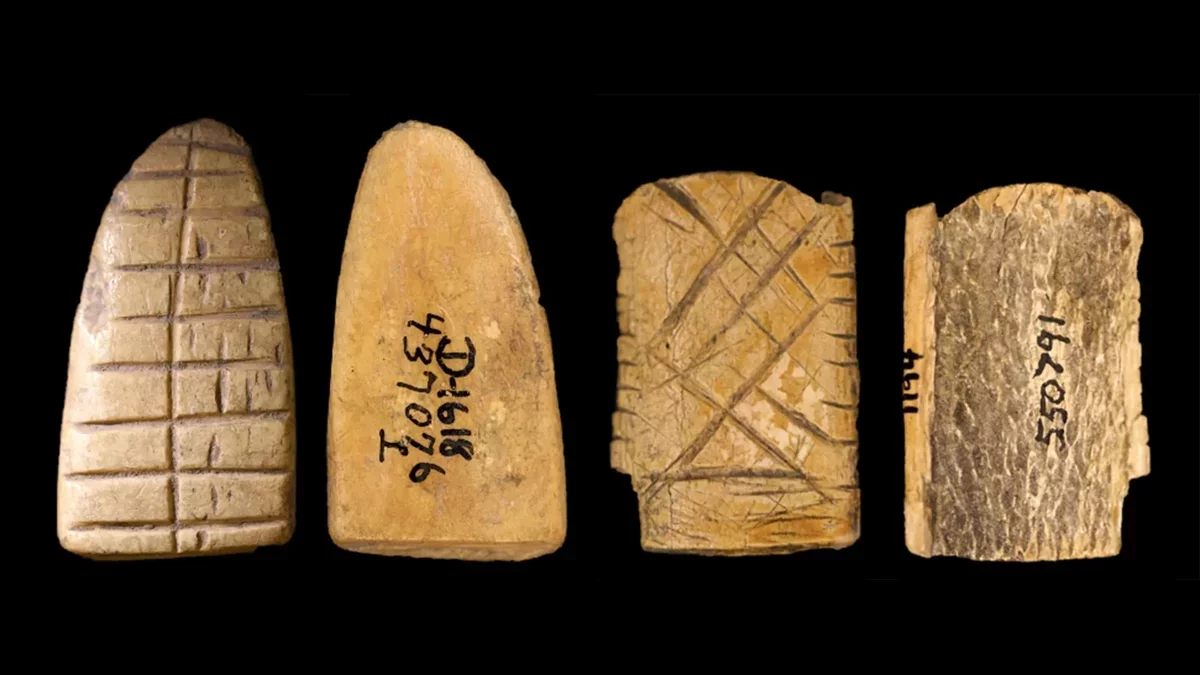
Research spearheaded by Robert J. Madden, a Ph.D. student at Colorado State University, reveals that the practice of dice games and gambling has profound roots in Native American culture, tracing back at least 12,000 years. The earliest artifacts have been unearthed from Late Pleistocene Folsom-period sites located in Wyoming, Colorado, and New Mexico, predating similar dice from the Old World by over 6,000 years.
Madden notes, "Historians have typically regarded dice and concepts of probability as innovations of the Old World. However, the archaeological evidence indicates that ancient Native American societies were intentionally crafting objects to generate random outcomes and employing these results in organized games far earlier than previously acknowledged."
Characteristics of Ice Age Dice
The oldest artifacts identified in this study date back approximately 12,800 to 12,200 years. Unlike today's six-sided dice, these ancient tools were two-sided pieces termed "binary lots." Skillfully shaped from bone, they were designed to be small and portable, with flat or slightly rounded surfaces, often oval or rectangular, intended to be tossed onto a flat surface.
Each piece featured two distinct faces, differentiated by color, texture, or design, akin to the heads and tails of a coin. One side served as the "counting" face, and when thrown, the outcome depended on how many pieces landed with this face up.
"These are simple yet elegant tools," Madden emphasizes. "They are clearly crafted with purpose, not just casual byproducts of bone craftsmanship. They were designed to yield random outcomes."
Innovative Methods for Identifying Ancient Dice
This study introduces a new attribute-based morphological test, a systematic checklist of physical traits used to identify dice in archaeological collections. This framework builds on a comparative analysis of 293 sets of historic Native American dice documented by ethnographer Stewart Culin in his 1907 work, "Games of the North American Indians."
By applying this structured approach, Madden has reassessed artifacts previously categorized as "gaming pieces" or overlooked. This method has revealed over 600 potential dice from various periods of North American prehistory, extending from the Late Pleistocene era through and beyond European contact.
"Most of these artifacts had been excavated and documented for years," Madden explains. "The key was establishing a clear, continent-wide standard for identifying these objects."
Rethinking Probability's Origins
Dice games are often viewed as humanity's earliest structured engagement with randomness, laying the foundation for probability theory and scientific reasoning. Until now, it was believed these practices emerged in complex Old World societies around 5,500 years ago. The new findings suggest a much earlier and widespread origin.
Madden clarifies, "This research does not assert that Ice Age hunter-gatherers were practicing formal probability theory. However, they were intentionally creating and relying on random outcomes in repeatable, rule-based contexts, which is significant for understanding the global history of probabilistic thought."
A Rich Cultural Tradition
The study also underscores the extensive and enduring nature of dice games within Native American cultures. Evidence has been found at 57 archaeological sites across a 12-state region, spanning various cultural traditions and historical periods.
Madden posits that this long-standing tradition highlights the essential social role of games of chance. "These activities fostered neutral, rule-governed environments for ancient Native Americans, facilitating interaction, trade, alliance formation, and uncertainty management," he concludes. "In this way, they served as powerful social technologies."
About the Study
The research paper titled "Probability in the Pleistocene: Origins and Antiquity of Native American Dice, Games of Chance, and Gambling" is set to be published in American Antiquity by Cambridge University Press on behalf of the Society for American Archaeology.