On July 16, 1945, at precisely 5:29 a.m., the New Mexico desert transformed into an unprecedented furnace during the world's inaugural nuclear bomb test. This historic event vaporized various materials, including steel and sand, which then coalesced into a unique type of glass known as trinitite. More than 80 years later, scientists continue to explore this artifact, revealing insights into the atomic age.
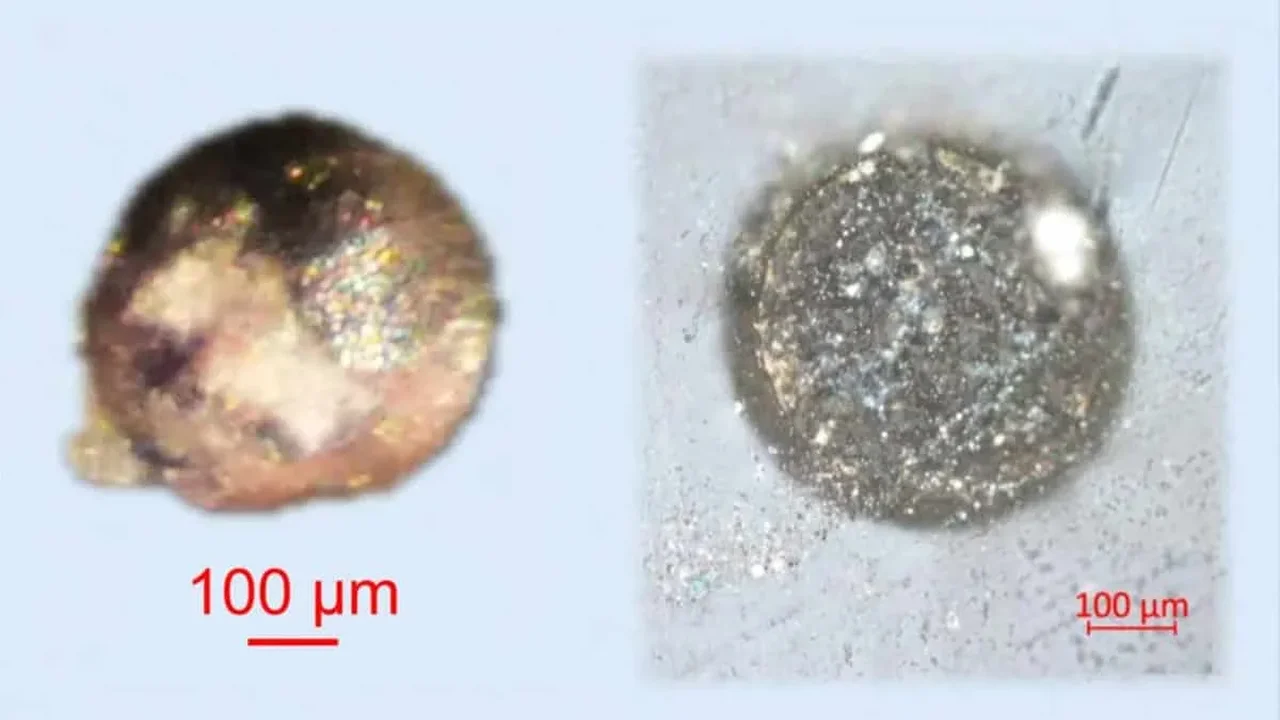
Recent research has uncovered a remarkable new crystal within a copper-rich droplet found inside a rare red sample of trinitite. This crystal, identified as a calcium-copper-silicon clathrate, exhibits a cage-like atomic structure that has never been documented in nature or in the aftermath of nuclear explosions. Luca Bindi, a geologist from the University of Florence and co-author of the study, emphasized the uniqueness of this discovery, stating, "It's a completely new kind of clathrate crystal."
A Unique Glass from the Atomic Era
The Trinity test utilized a plutonium implosion device known as "the Gadget," resulting in an explosion with energy equivalent to approximately 21 to 25 kilotons of TNT. The blast obliterated the test tower and vaporized surrounding materials, creating trinitite, primarily a pale green glass. However, the rarer red form contains a higher concentration of metals, offering a richer chemical history of the explosion.
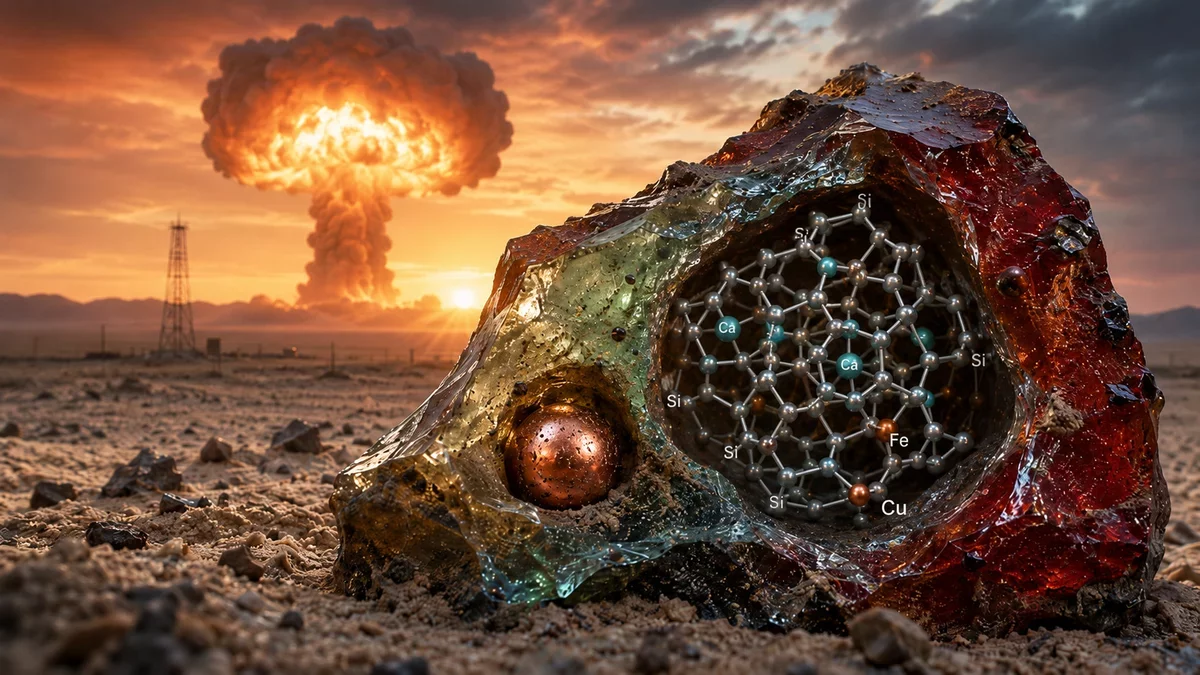
Researchers utilized single-crystal X-ray diffraction to analyze the red trinitite, revealing the new clathrate within a tiny metallic droplet. The clathrate structure is composed mainly of silicon atoms, forming dodecahedral and tetrakaidecahedral cages that encapsulate calcium, copper, and iron atoms.
Unprecedented Chemical Structures
This newly identified clathrate represents a calcium-copper-iron-silicon crystal with a unique atomic arrangement, likely formed under the extreme conditions of a nuclear explosion. Bindi noted that the transient environment of the Trinity test allowed for the creation of solid-state phases that are typically unattainable through conventional synthesis methods.
Such findings highlight the potential for high-energy events, like nuclear detonations, to act as natural laboratories for producing unexpected crystalline materials. While the Trinity clathrate may not have immediate commercial applications due to its rarity, it serves as a vital example of the extraordinary atomic structures that can emerge from extreme conditions.
Implications for Future Research
The discovery of this unique clathrate not only enriches our understanding of trinitite but also expands the field of materials science. Clathrates are of significant interest due to their potential applications in energy storage and quantum technologies. As researchers continue to explore the implications of these findings, the legacy of the Trinity test underscores the profound impact of high-energy events on material formation.
This groundbreaking research, published in the Proceedings of the National Academy of Sciences, opens new avenues for scientific inquiry and highlights the importance of studying the effects of extreme conditions on material properties.