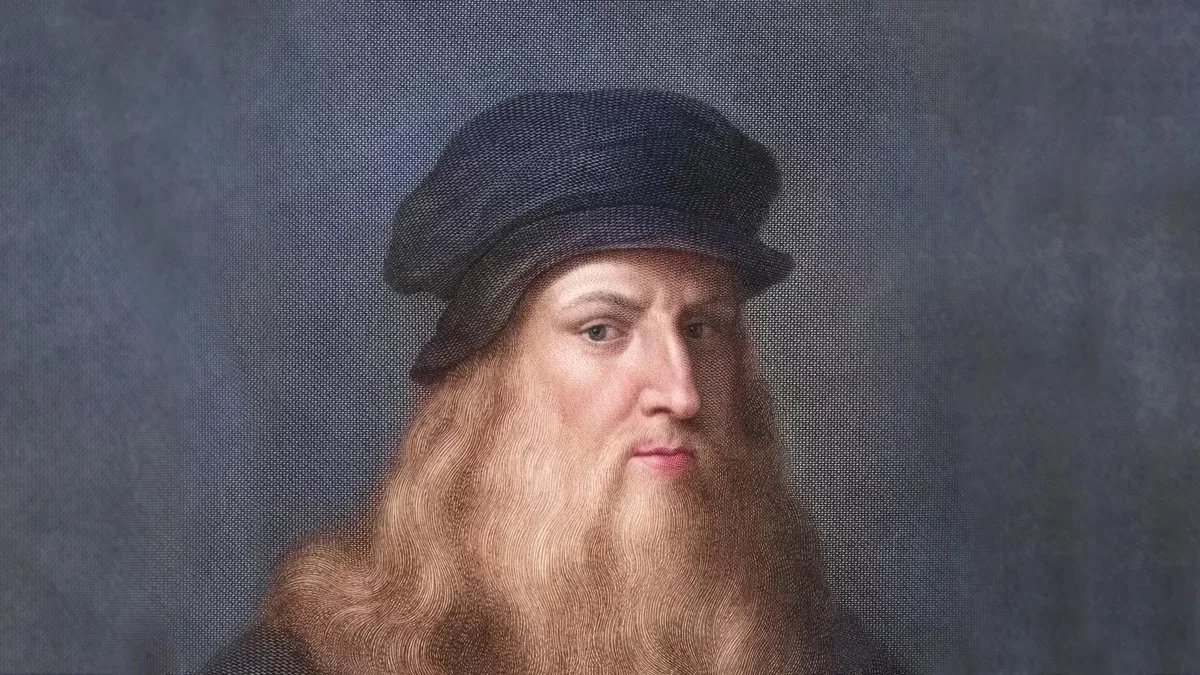
A groundbreaking publication titled "Genìa Da Vinci. Genealogy and Genetics for Leonardo's DNA" has emerged, synthesizing thirty years of research spearheaded by Alessandro Vezzosi and Agnese Sabato from the Leonardo Da Vinci Heritage Association in Vinci. With support from the Municipality of Vinci, this work reconstructs an extensive family tree that traces back to 1331, encompassing 21 generations and over 400 individuals, laying the groundwork for an extraordinary endeavor to recreate Leonardo's genetic profile.
Through meticulous examination of archival records and historical documents, the researchers have unveiled previously unknown branches of Leonardo's lineage, identifying 15 living male descendants directly connected through the paternal line to Leonardo's father and his half-brother, Domenico Benedetto.
Linking the Past with DNA Testing
This significant discovery has facilitated genetic analysis. David Caramelli, who oversees the anthropological and molecular dimensions of the Leonardo DNA Project at the University of Florence, collaborated with forensic anthropologist Elena Pilli to analyze DNA from six of these descendants. The findings revealed matching segments of the Y chromosome across the participants, confirming a continuous male lineage within the Da Vinci family that extends back at least 15 generations.
Unearthing Historical Evidence
Researchers have pinpointed a Da Vinci family tomb located at the Church of Santa Croce in Vinci. Ongoing archaeological excavations, in partnership with the University of Florence, aim to uncover the remains of Leonardo's grandfather, Antonio, as well as his uncle Francesco and several half-brothers.
Anthropologists Alessandro Riga and Luca Bachechi have recovered bone fragments from the site, some of which have been radiocarbon dated. One specimen, consistent with the age of Leonardo's relatives, has already undergone paleogenomic testing, suggesting a male individual.
"Further analyses are essential to ascertain whether the DNA extracted is well-preserved," states Caramelli, who also serves as President of the University Museum System. "Depending on the results, we can analyze Y chromosome fragments for comparison with living descendants."
If the Y chromosome from these remains aligns with that of living descendants, it would bolster historical records and family lineage reconstructions, potentially allowing for the analysis of biological traces linked to Leonardo himself, including materials found on manuscripts or artworks.
A Collaborative Scientific Initiative
The Leonardo da Vinci DNA Project, initiated in 2016 and coordinated from The Rockefeller University in New York, unites various institutions, including the J. Craig Venter Institute in California and the University of Florence, with backing from foundations like the Achelis and Bodman Foundation and the Richard Lounsbery Foundation.
As the project zeroes in on the Y chromosome, which remains largely unchanged through generations, it aims to reconstruct Leonardo's lineage while preserving the historical sites associated with him.
"Our mission is to trace the Da Vinci family's lineage to today, facilitating scientific inquiry into his DNA," explains Vezzosi. "We aspire to uncover the biological roots of his remarkable visual acuity, creativity, and possibly aspects of his health."
Exploring Leonardo's World
The book transcends genetics, providing a comprehensive exploration of Leonardo's environment through 21 chapters that delve into historical, geographical, and genealogical contexts. Researchers have identified seven Da Vinci family residences in Vinci, alongside two properties owned by Leonardo himself.
Additionally, the study sheds light on key figures in Leonardo's life, revealing his grandfather as a traveling merchant rather than merely a farmer and providing new insights into his mother's identity.
New Artistic Discoveries
A captivating finding includes a charcoal drawing discovered in Vinci, named the "Unicorn Dragon," which may be linked to Leonardo's early studies of flight. This hypothesis is supported by local authorities and is set for further examination.
As researchers look to reconstruct Leonardo's DNA, they aim not only to uncover his biological traits but also to redefine the boundaries of historical knowledge and cultural heritage. The potential to hear Leonardo's "genetic voice" centuries later stands as a testament to the enduring legacy of one of history's greatest minds.