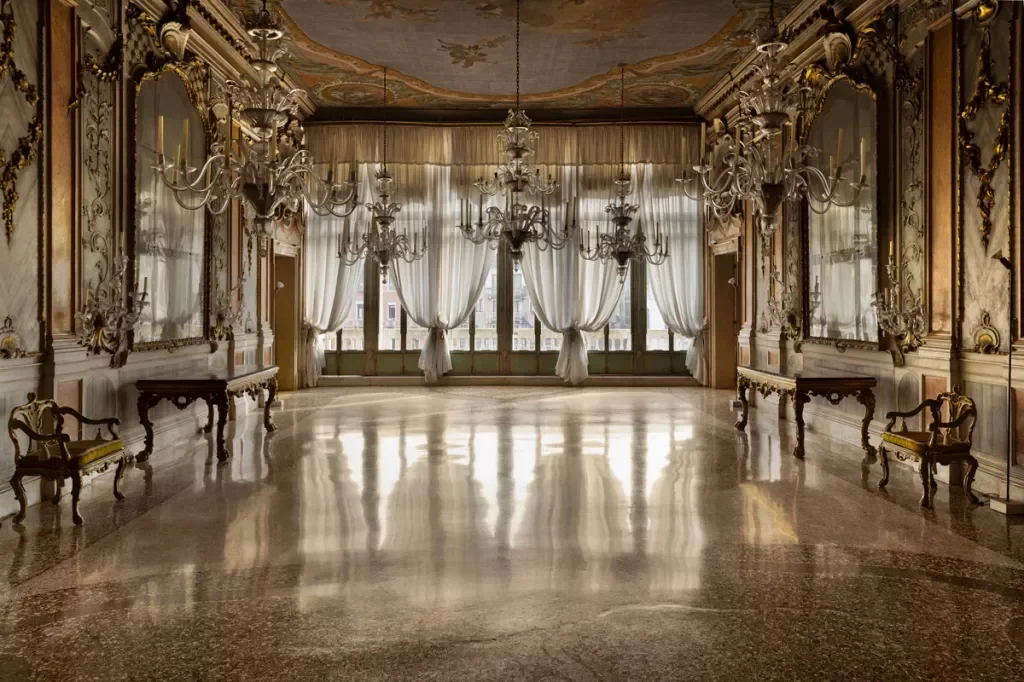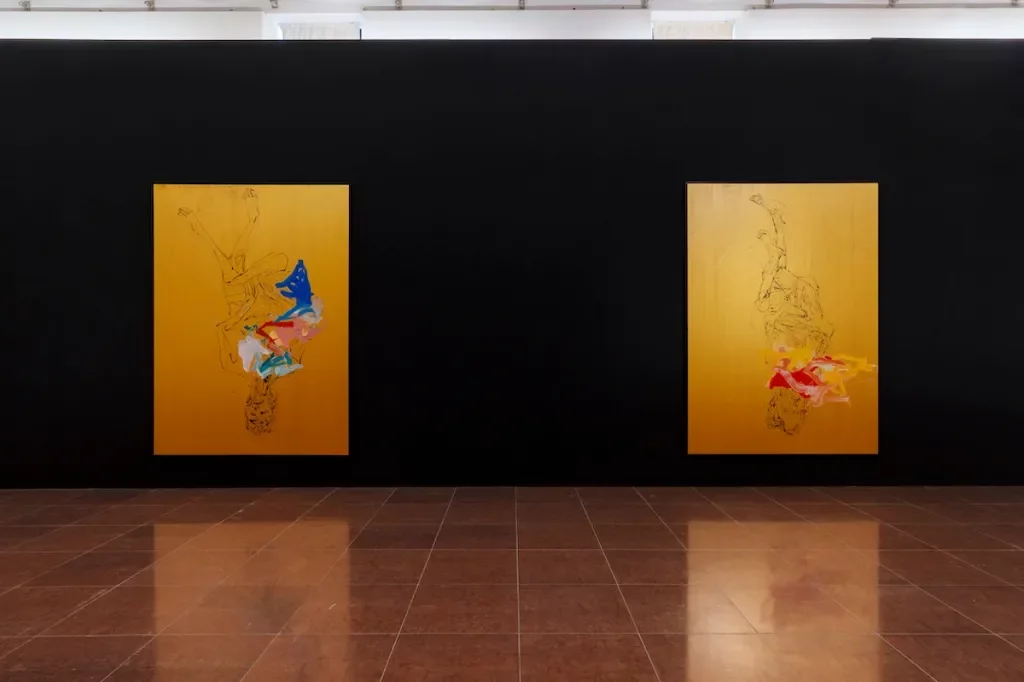
Just days after the passing of renowned artist Georg Baselitz, his long-time dealer, Thaddeaus Ropac, inaugurated an exhibition in Venice, which Baselitz had anticipated would be his final showcase. The exhibition, titled "Eroi d'Oro" ("Heroes of Gold"), is hosted at the Fondazione Giorgio Cini on San Giorgio Maggiore island, featuring the last paintings he completed during his lifetime.
In a prerecorded film for the exhibition, Baselitz candidly referred to these works as "my last paintings," describing them as a culmination of his artistic journey. At 88 years old, he reflected on his extensive career, stating, "I have painted an incredibly large number of pictures over the course of more than 60 years. Now that I'm more or less at the end of my painting activity, I thought I should draw some kind of conclusion."
Unlike his earlier, more controversial works, this exhibition focuses on the essence of his artistic evolution. The paintings are monumental in scale, adorned with a golden background that creates a luminous effect. Baselitz depicted figures--often of himself or his wife, Elke--floating in undefined spaces, merging intimacy with a cosmic quality.
Baselitz explained the significance of gold in his work, stating, "Gold absorbs space, shadows, spatiality." This exploration of minimalism runs throughout the series, where bodies are represented as delicate black lines, evoking a sense of ephemerality. His choice of gold grounds connects to historical art traditions, yet he reinterprets them to create a modern, secular narrative.
French art historian Eric Darragon noted that Baselitz's use of gold draws inspiration from the visual authority of 14th and 15th-century Sienese painters, who employed gold to evoke divine presence. However, Baselitz stripped away the religious context, transforming it into a "definitive surface" that invites contemplation rather than sanctification.
Despite the exhibition's reflective tone, Baselitz maintained a distance from how his work is perceived. He remarked, "I am not responsible for what happens," emphasizing that his communication with the public has always been limited. His legacy, as Darragon pointed out, challenges the notion of history as a linear progression, advocating for a rediscovery of the past rather than a mere accumulation of results.
Baselitz's contributions to contemporary art stand as a unique blend of tradition and innovation, leaving an indelible mark on the art world. His final exhibition serves not only as a farewell but also as a testament to his enduring quest for artistic renewal and exploration.