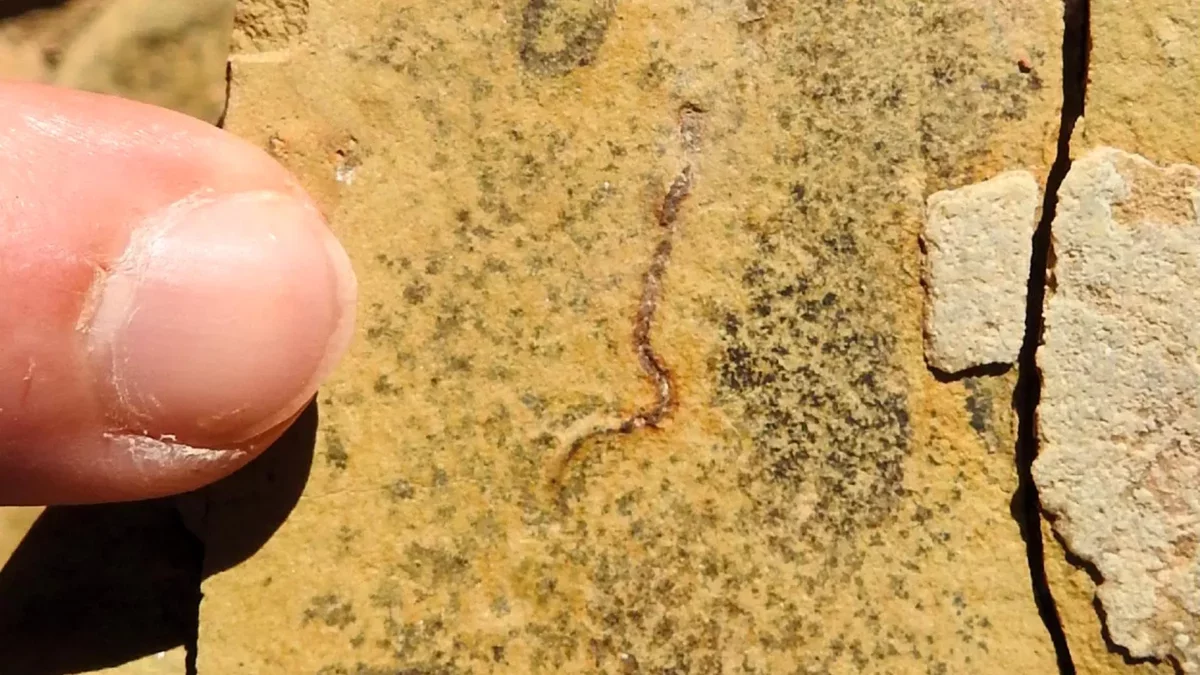
Recent research conducted in Brazil's Mato Grosso do Sul has unveiled fossils that challenge established theories regarding the origins of animal life. Published in the journal Gondwana Research, this study reinterprets previously identified markings, suggesting they are not the remnants of ancient animal activity but rather evidence of early microbial life.
Bruno Becker-Kerber, the lead researcher and currently a postdoctoral scholar at Harvard University, explains that advanced imaging techniques such as microtomography and spectroscopy revealed cellular structures consistent with bacteria and algae. "These findings indicate that the microfossils contain preserved organic matter, which aligns with the existence of microbial life during the Ediacaran period, preceding the Cambrian explosion," he notes. This suggests that the previously held belief of meiofauna--tiny invertebrates--existing at this time may need reevaluation.
The Ediacaran period, a crucial phase in Earth's history, set the stage for the Cambrian explosion, a time marked by a rapid diversification of complex life forms. While fossil evidence confirms the presence of meiofauna during the Cambrian, the latest findings indicate they may not have existed in the same capacity earlier, reshaping our understanding of evolutionary timelines.
This research is part of the larger "Rio de la Plata Craton and Western Gondwana" project, which is supported by FAPESP and led by Miguel Angelo Stipp Basei from the University of São Paulo (USP). The study involved a meticulous examination of fossils from the Tamengo geological formation, which originated in a shallow marine environment during Gondwana's final stages.
Utilizing the MOGNO beamline at the Sirius particle accelerator, researchers achieved unprecedented imaging resolution, revealing intricate details of the fossils. Becker-Kerber emphasizes the significance of this technology: "The MOGNO beamline allows us to conduct zoom tomography, focusing on specific structures at the nanoscale without damaging the samples." This level of detail was previously unavailable to scientists interpreting the fossils as animal traces.
In addition to microtomography, Raman spectroscopy was employed to analyze the chemical composition of the fossils, reinforcing the conclusion that these structures are preserved microbial entities rather than animal disturbances. Some samples contained pyrite, hinting at the presence of sulfur-oxidizing bacteria, which can grow to sizes visible to the naked eye, defying common perceptions of microbial life.
The diversity of fossil sizes suggests a complex ecosystem of multiple species coexisting, with larger forms resembling algae and smaller ones potentially representing various microbial organisms. Becker-Kerber concludes, "The evidence points firmly towards the presence of bacteria or algae rather than mere disturbances from moving animals."
This groundbreaking discovery not only enhances our understanding of pre-Cambrian life but also sheds light on the environmental conditions that may have facilitated the emergence of complex animal life in subsequent epochs.