Traditionally, batteries contain complex and hazardous chemicals that can be corrosive or difficult to dispose of. However, a groundbreaking team from China and Hong Kong has developed a revolutionary battery that utilizes a neutral, water-based electrolyte made from magnesium and calcium salts, closely resembling the brine used in tofu production. This innovative design has successfully undergone 120,000 charge cycles, demonstrating its safety with non-flammable materials and adherence to disposal standards.
Why Water Batteries Are Captivating
The shift towards renewable energy sources has highlighted a critical challenge: energy storage. Solar and wind energy generation is often inconsistent, necessitating efficient storage solutions that are both economically viable and environmentally friendly. While lithium-ion batteries are prevalent in portable devices and electric vehicles due to their compactness, larger stationary batteries for grid storage require different attributes such as safety, cost-effectiveness, durability, and ease of maintenance.
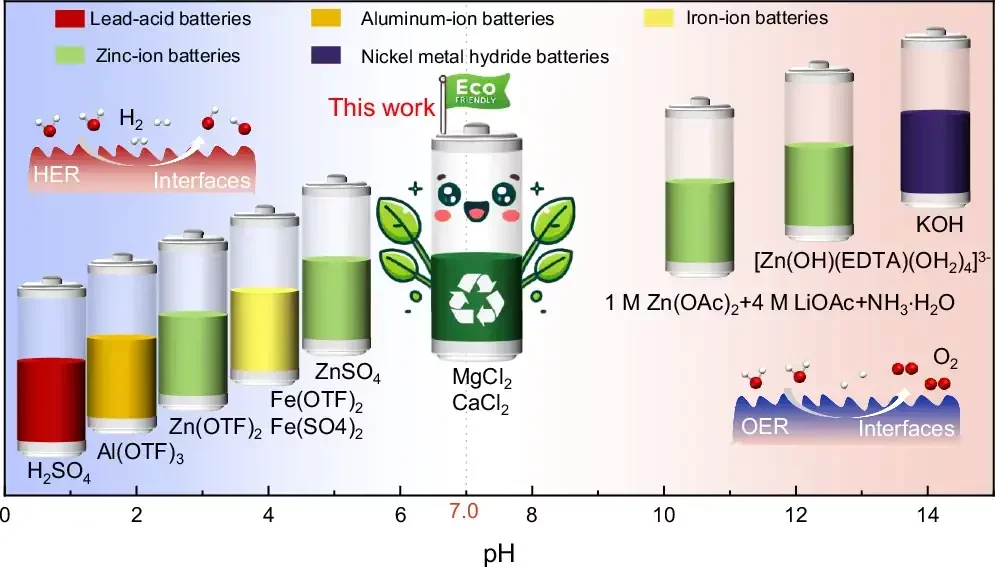
Researchers are increasingly exploring aqueous batteries, which utilize water-based electrolytes that are generally safer and more affordable than traditional lithium-ion systems. The challenge, however, lies in the corrosive nature of the acidic or alkaline liquids commonly used in these batteries. The new study addresses this issue by employing an electrolyte with a neutral pH, akin to pure water.
The researchers noted that "the electrolytes are environmentally benign and can even be 'brine' in tofu production," emphasizing the potential dual-use aspect of these materials.
Innovative Electrode Materials
Creating a reliable battery involves more than just a neutral electrolyte; finding suitable electrode materials is crucial. The research team focused on the negative electrode, which often presents challenges in aqueous battery designs. They synthesized three covalent organic polymers (COPs), which are robust, porous structures made from repeating organic units. One polymer, Hex-TADD-COP, demonstrated remarkable properties, allowing for efficient ion movement and stability over multiple charge cycles.
In testing, this polymer retained 72.67% of its capacity after 120,000 cycles, indicating exceptional durability.
A 300-Year Battery? A Closer Look
While the impressive number of cycles suggests a potential lifespan of over 300 years for grid applications, real-world conditions such as temperature fluctuations and manufacturing variances must be considered. The full battery stored less energy per weight compared to modern lithium-ion batteries but could still be suitable for stationary applications where size is less critical.
Environmental Considerations
The study highlights the battery's non-toxic nature, making it a promising candidate for environmentally safe disposal. The electrolyte maintained a pH range of 4.91 to 7.02, with no detectable heavy metals, positioning this technology as a potential solution to the growing battery waste issue.
Overall, this innovative water-based battery could pave the way for more sustainable energy storage solutions, significantly impacting the future of renewable energy and battery recycling.