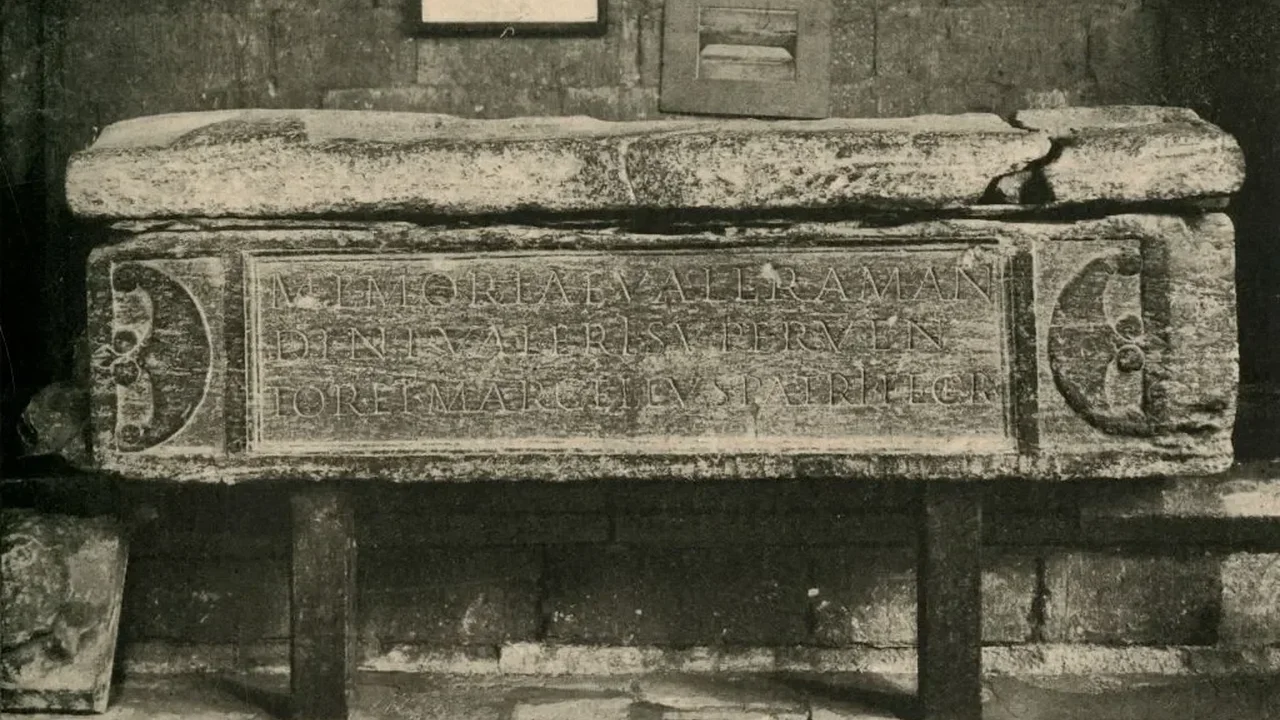
A skeleton found inside a Roman limestone sarcophagus beneath Westminster Abbey may belong to one of two medieval abbots, according to research by the abbey's consultant archaeologist, Warwick Rodwell.
The sarcophagus was discovered in 1820 and excavated in 1869. Although it dates to the fourth century and bears an inscription naming Valerius Amandinus, the remains inside are much later. Carbon dating by the Scottish Universities Environmental Research Centre places the person's death between 987 and 1052 CE.
Relocated during the abbey's rebuilding
In a study published in the Journal of the British Archaeological Association, Rodwell suggests the sarcophagus was originally set into a mausoleum wall. It may have been moved around 1258, when Henry III's rebuilding of the abbey led to the relocation of earlier burials.
The remains are those of a man who was about 1.75 metres tall and aged between 35 and 49. A cross carved on the sarcophagus lid and the burial's original prominent setting point to a person of high status, likely a churchman.
Rodwell considers two candidates: Ælfwig, who died around 1020 after serving as abbot for 27 years, and his successor Wulfnoth, who died around 1049. He says Ælfwig may be the stronger possibility because he was already a monk at Westminster.
Further analysis may help refine the identification, while the case illustrates how scientific dating and archaeological context can deepen understanding of the people connected to historic places.