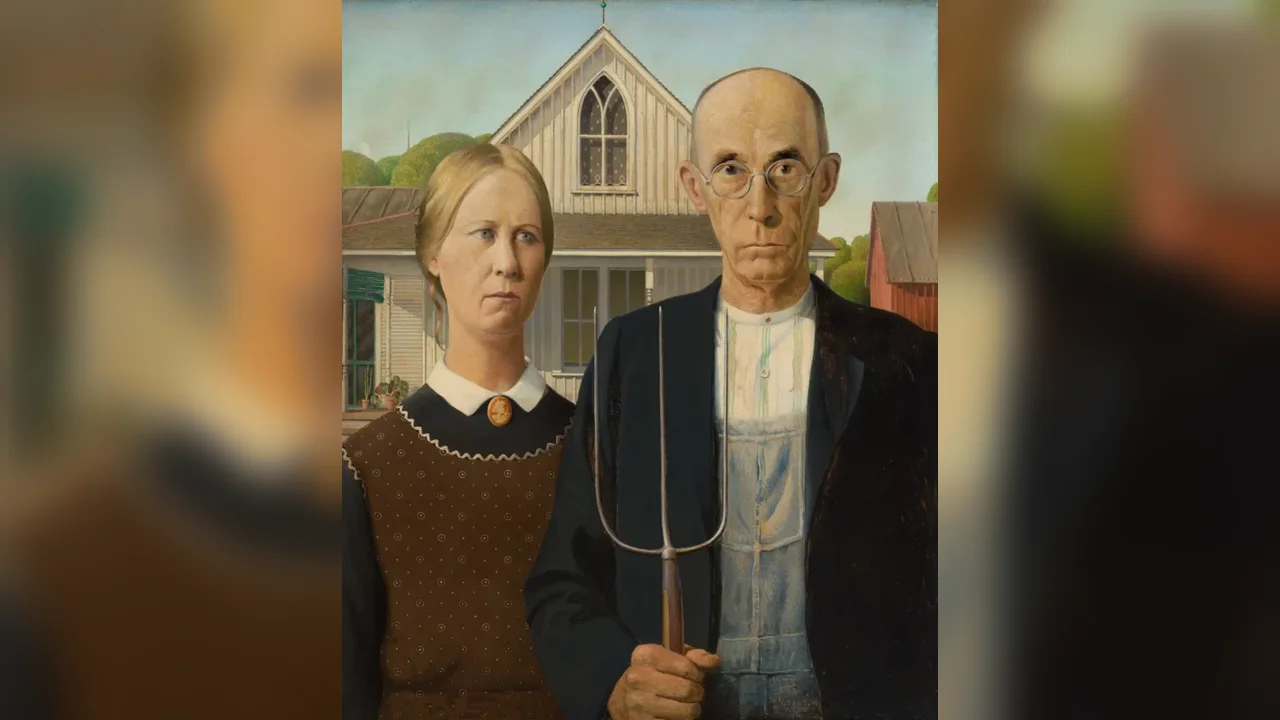
Grant Wood's 1930 painting American Gothic has become one of the most widely recognized images in American art. Art historian Wanda Corn explores its rise and continuing influence in her book The Couple with the Pitchfork: American Gothic from Easel to Icon, drawing on five decades of research.
Though often viewed as a farmer and his wife, the figures were not intended as a married couple. Wood said he portrayed a small-town father and daughter, modeled on his sister Nan and his dentist. The painting also reflects the artist's search for a visual style rooted in the Midwest.
A composition built to travel
Wood shaped the scene with deliberate patterns and forms: vertical lines link the pitchfork to the church steeple, while circles and ovals recur in the figures' faces, clothing and accessories. The carefully ordered design helped make the painting striking and easy to reproduce in newspapers after it won an award at the Art Institute of Chicago.
Its early reception helped turn the image into a shared cultural reference. Viewers widely interpreted the figures as a married pair, even as responses to their appearance and setting varied. Corn argues that this gap between Wood's intention and public interpretation gave the image room to evolve.
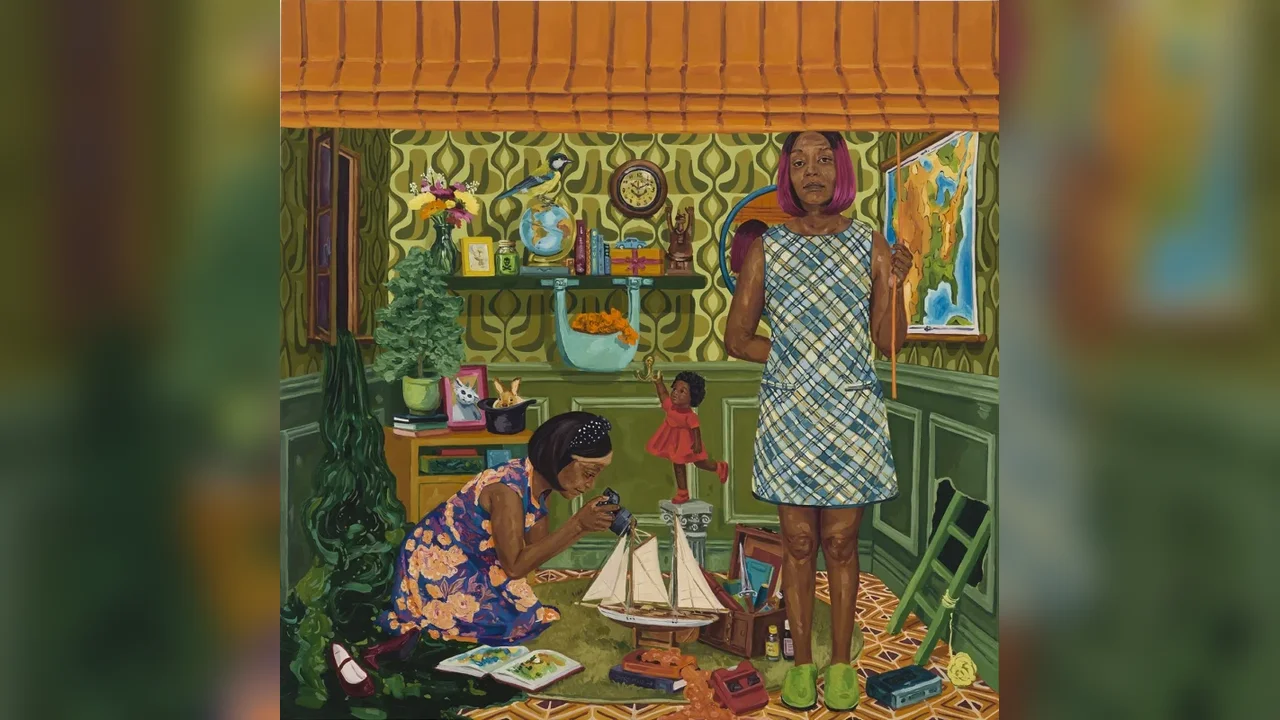
Artists and communities have since reworked the familiar pose to express different experiences and ideas. Among them were Black artists in 1930s Chicago, including Walter Ellison, who adapted the composition to tell stories of migration. Later versions have also used the motif to explore changing gender roles and social identities.
The painting's enduring appeal, Corn suggests, lies in its combination of an instantly legible form and an underlying tension between idealized appearances and lived experience. Its adaptability points to how familiar works of art can continue to carry new meanings as culture changes.