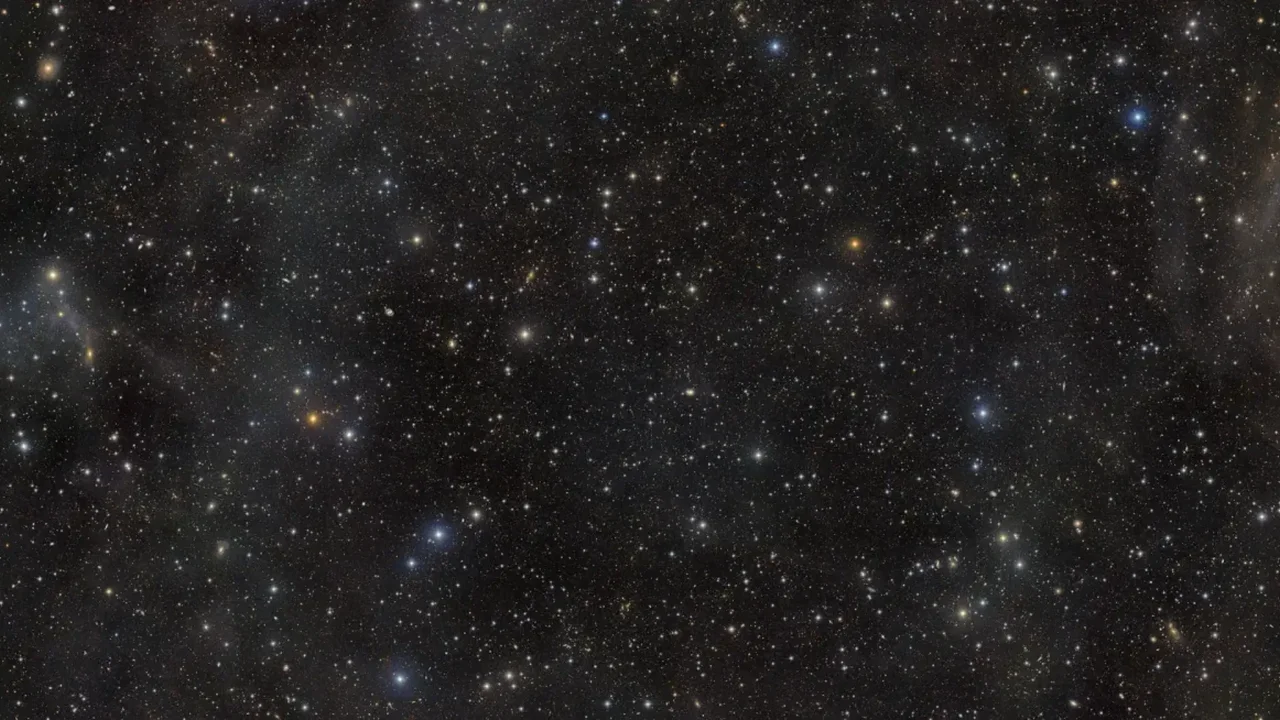
The Vera C. Rubin Observatory has unveiled a striking new deep-sky image of the COSMOS field, revealing more than half a million galaxies in a single view. At first glance it resembles a crowded star field, but the scale is far greater: it is a detailed portrait of the distant universe.
The COSMOS region is one of astronomy's most carefully studied areas because it sits away from the dense plane of the Milky Way, offering a cleaner window into deep space. Rubin's extraordinary sensitivity also captures faint dust from our own galaxy, while showing galaxies across vast distances, some whose light has traveled for nearly 12 billion years.
A New Era of Repeated Sky Watching
This image is not just a snapshot. Rubin will revisit the same region again and again, transforming it into a dynamic laboratory for tracking supernovae, flaring black holes, variable stars, and asteroids moving across the foreground.
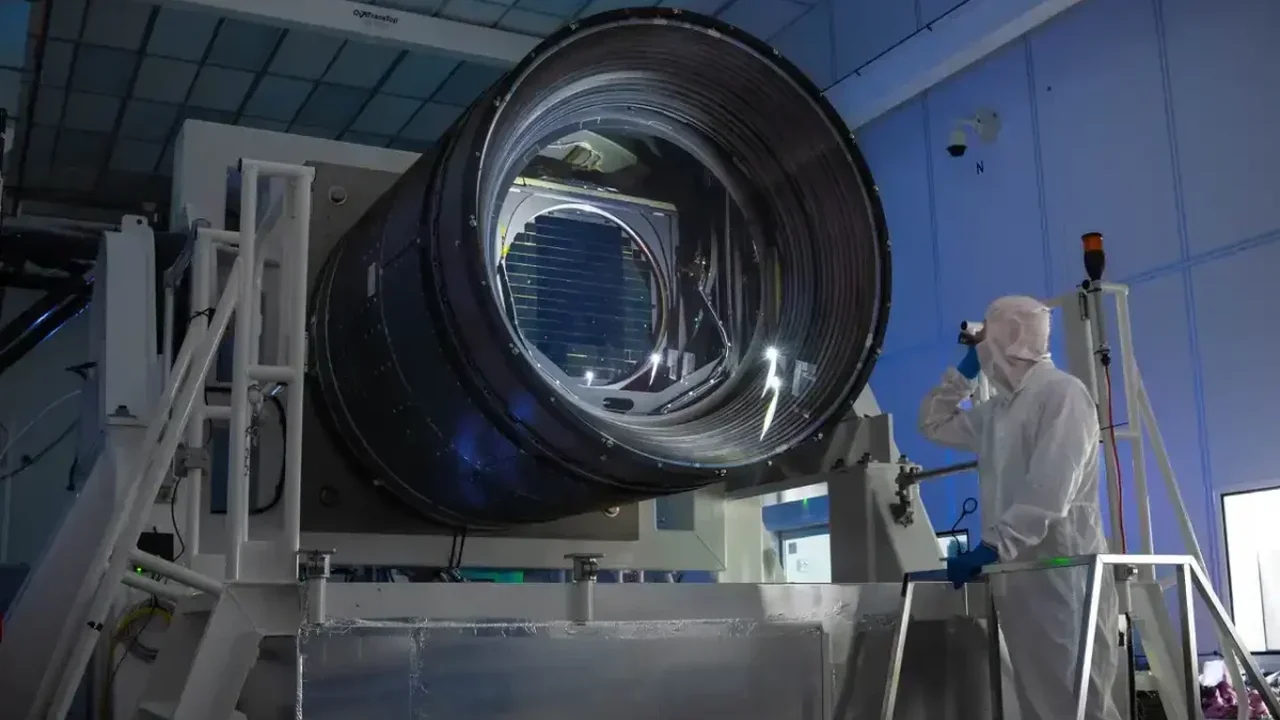
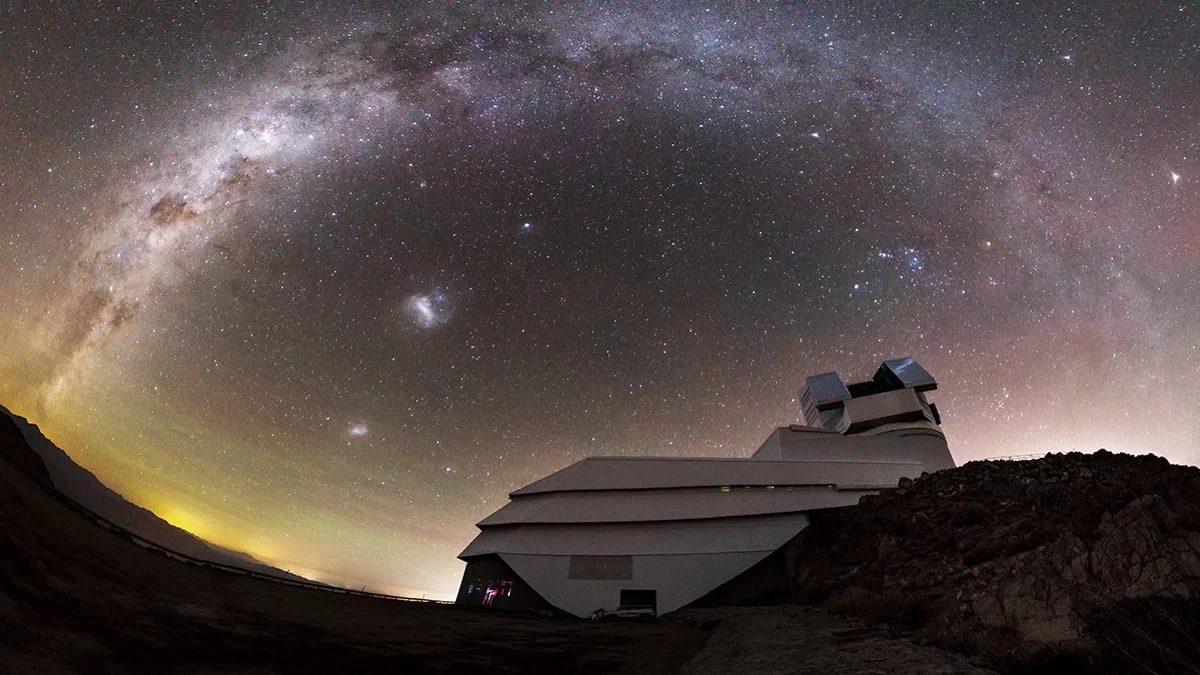
The observatory's core instrument, the LSST Camera, is the largest digital camera ever built for astronomy. Mounted on the 8.4-meter Simonyi Survey Telescope, it uses 189 science CCD sensors cooled to about -100°C to preserve precision while recording extremely faint light.
Each exposure covers 9.6 square degrees of sky, roughly the area of 45 full Moons. The new COSMOS image was created by combining many observations taken between April 2025 and January 2026, showing how deep survey data can reveal both structure and change.
Building a Living Map of the Universe
Over time, Rubin is expected to generate difference images that highlight what has changed from one visit to the next. The system is designed to produce millions of alerts each night, helping astronomers identify transient events and follow them in detail.
Across its 10-year survey, the observatory is projected to detect about 20 billion galaxies and 17 billion stars, creating one of the most ambitious astronomical datasets ever assembled. This kind of precision mapping could reshape how humanity studies the evolving universe in the years ahead.