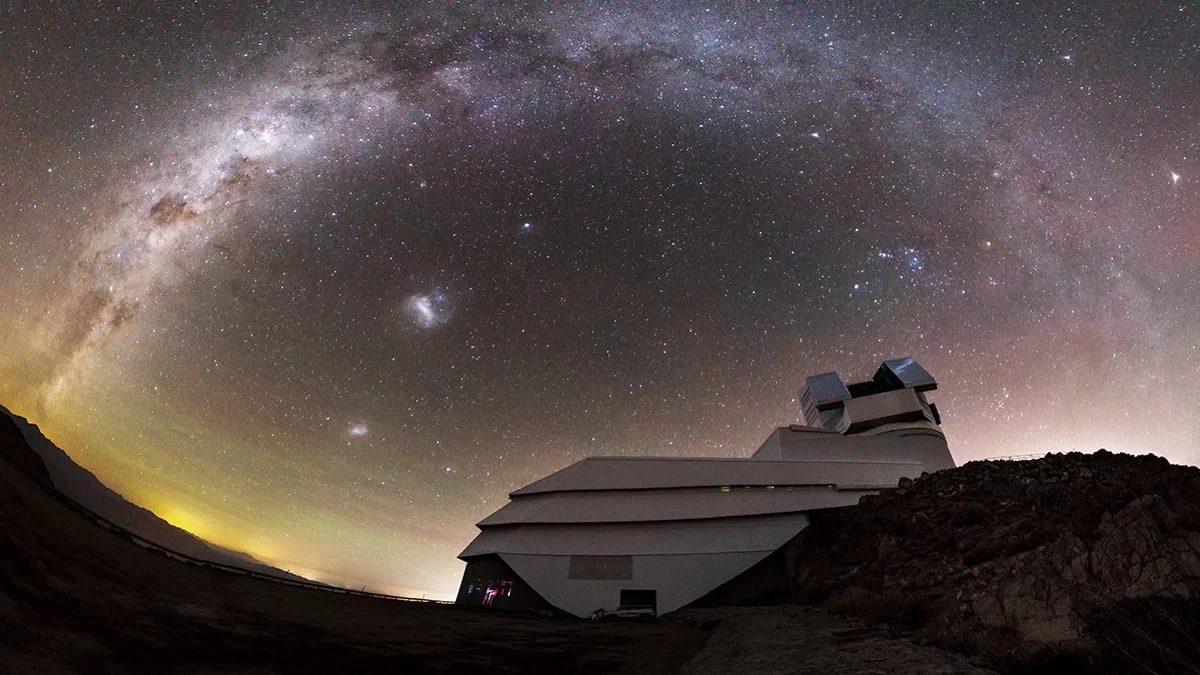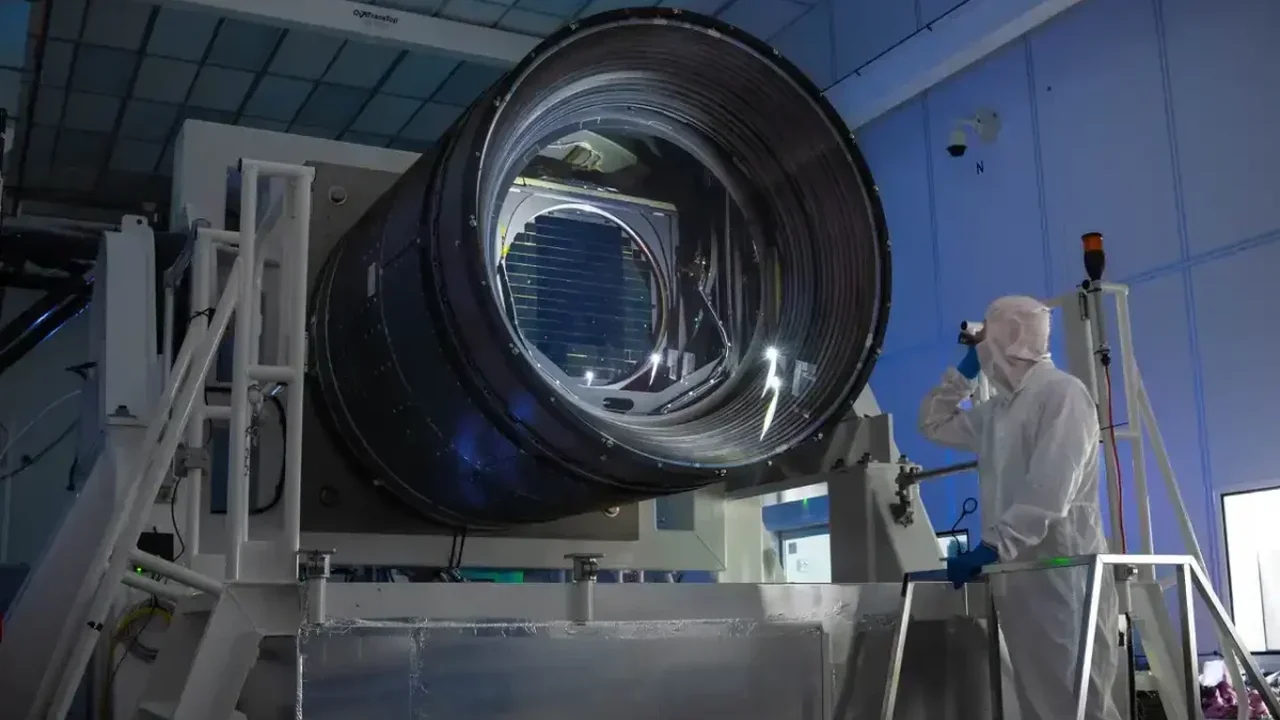
In Chile's high-altitude desert, the Vera C. Rubin Observatory has begun showcasing the power of the world's largest digital camera. Its 3,200-megapixel LSST Camera is designed to map the southern sky with extraordinary speed, depth, and precision.
Built for the 10-year Legacy Survey of Space and Time, the system combines a 1.57-meter lens with 189 ultra-sensitive CCD sensors cooled to -100°C. Each 15-second exposure captures a wide slice of sky, and the telescope can repeat this process about 1,000 times per night.
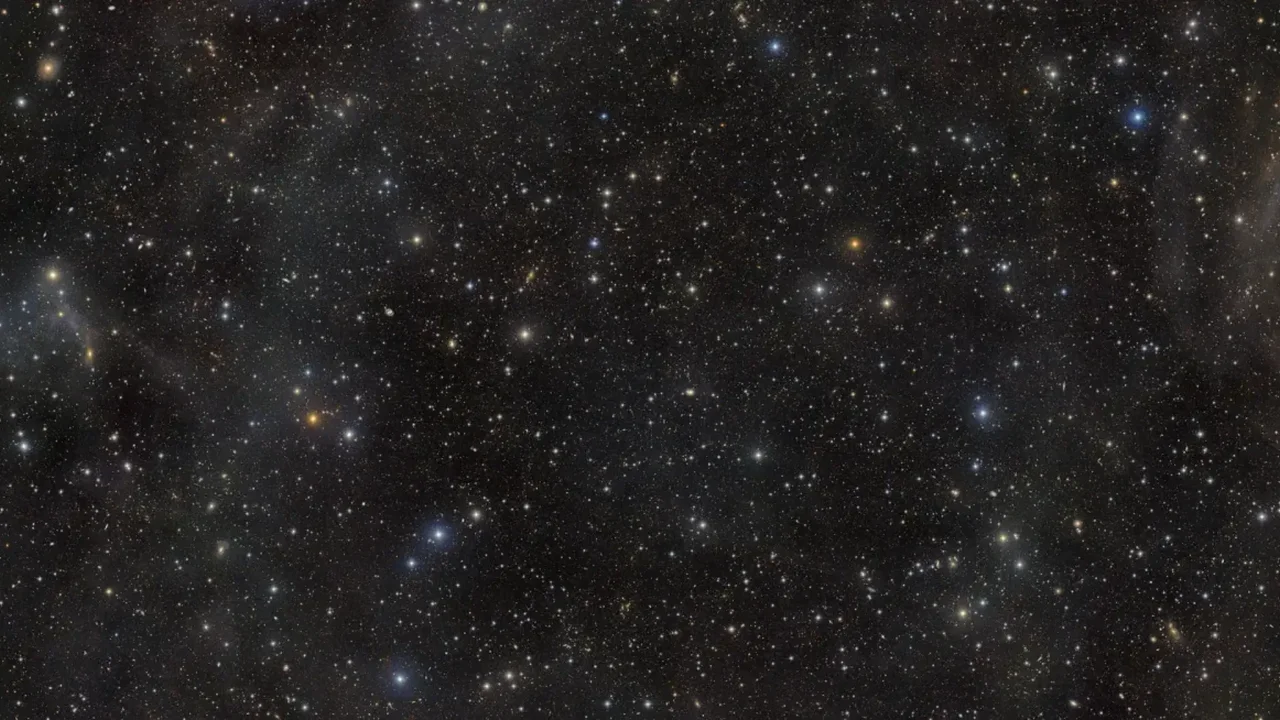
The first released images highlight the camera's range. One composite reveals the Trifid and Lagoon Nebulae in a single frame, while another shows the globular cluster NGC 6544, a dense collection of ancient stars. A sweeping view of the southern Virgo Cluster turns out to contain millions of galaxies, and a close look at one spiral galaxy exposes dust lanes and star-forming regions with striking clarity.
Other images show the rich star fields of Lupus, the youthful Messier 21 cluster, and a spiral galaxy wrapped in dark dust. Together, they demonstrate Rubin's unique strength: it can observe vast regions of space without losing fine detail.
Over the coming decade, the observatory is expected to gather around 10 terabytes of data on a typical night and build a catalog of roughly 20 billion galaxies and 17 billion stars. Beyond beautiful images, the survey is designed to track change across the sky, from asteroids to evolving stars and distant galaxies.
This new era of sky mapping could reshape how astronomy studies the universe, turning the night sky into a living, measurable archive for future discovery.