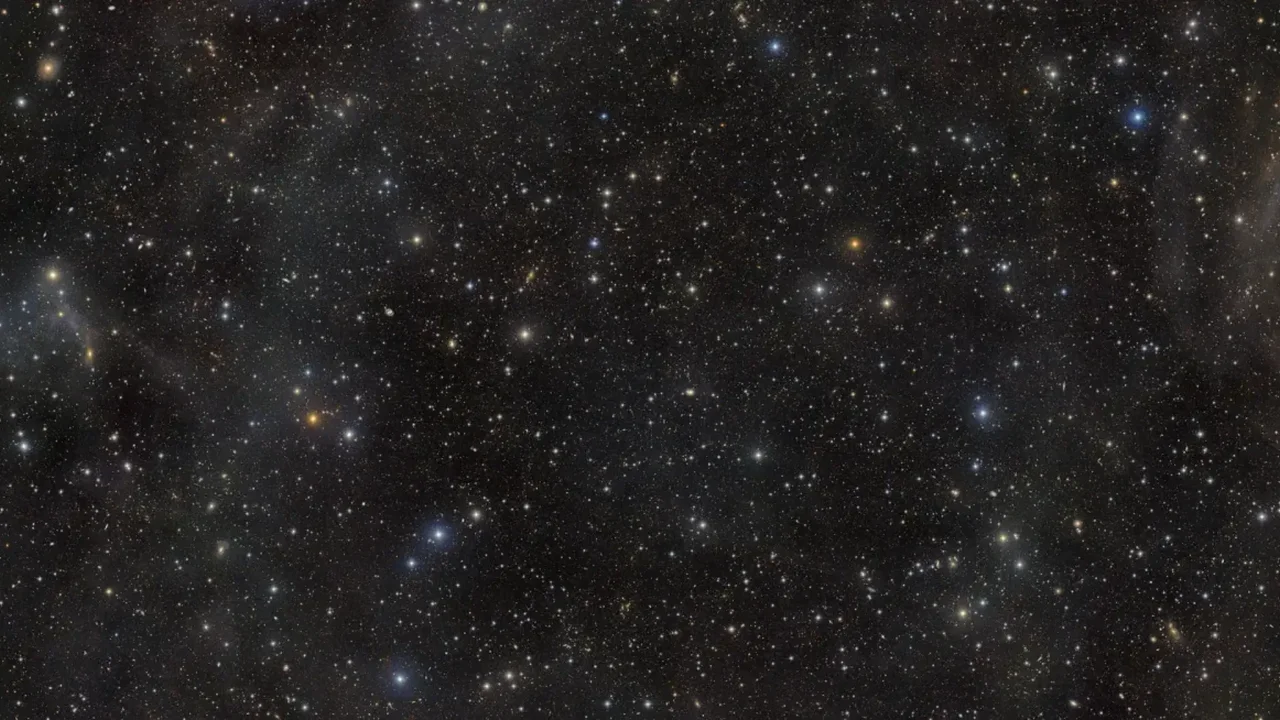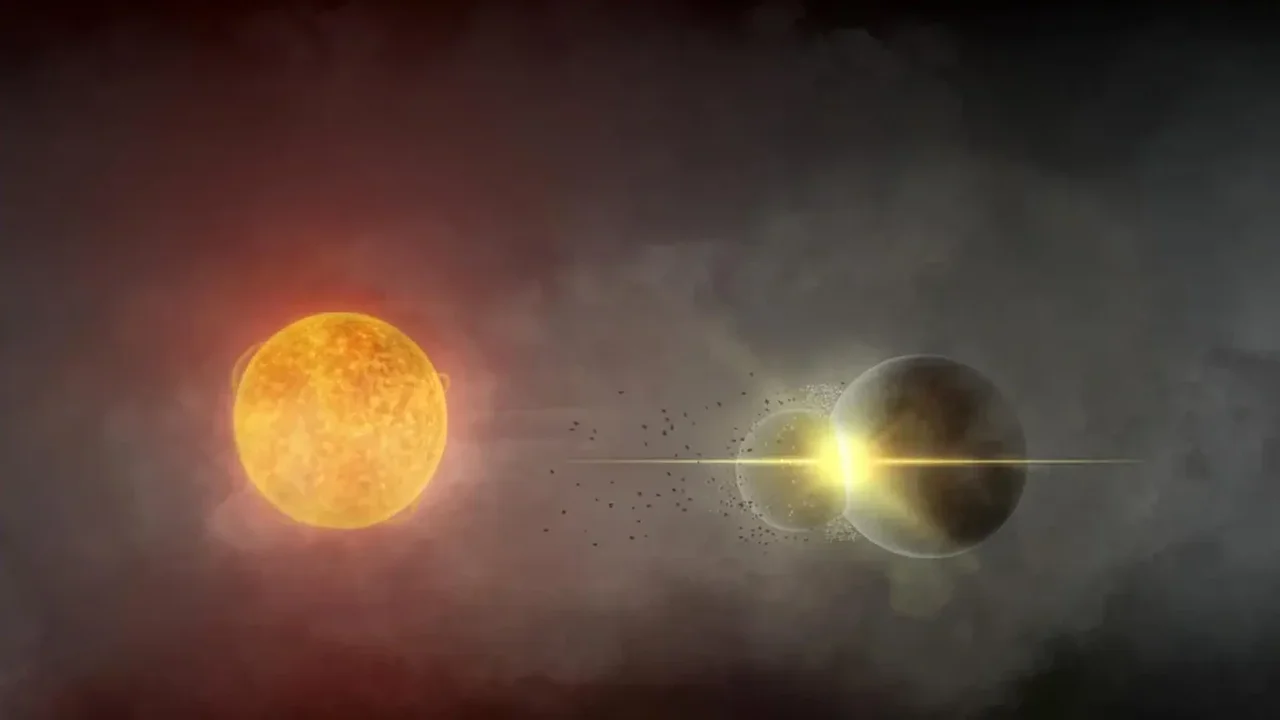
Astronomers have identified an exceptionally rare planetary collision around Gaia20ehk, a Sun-like star located roughly 11,000 light-years away in the Puppis constellation. The event offers a remarkable opportunity to examine how rocky worlds and their moons may form.
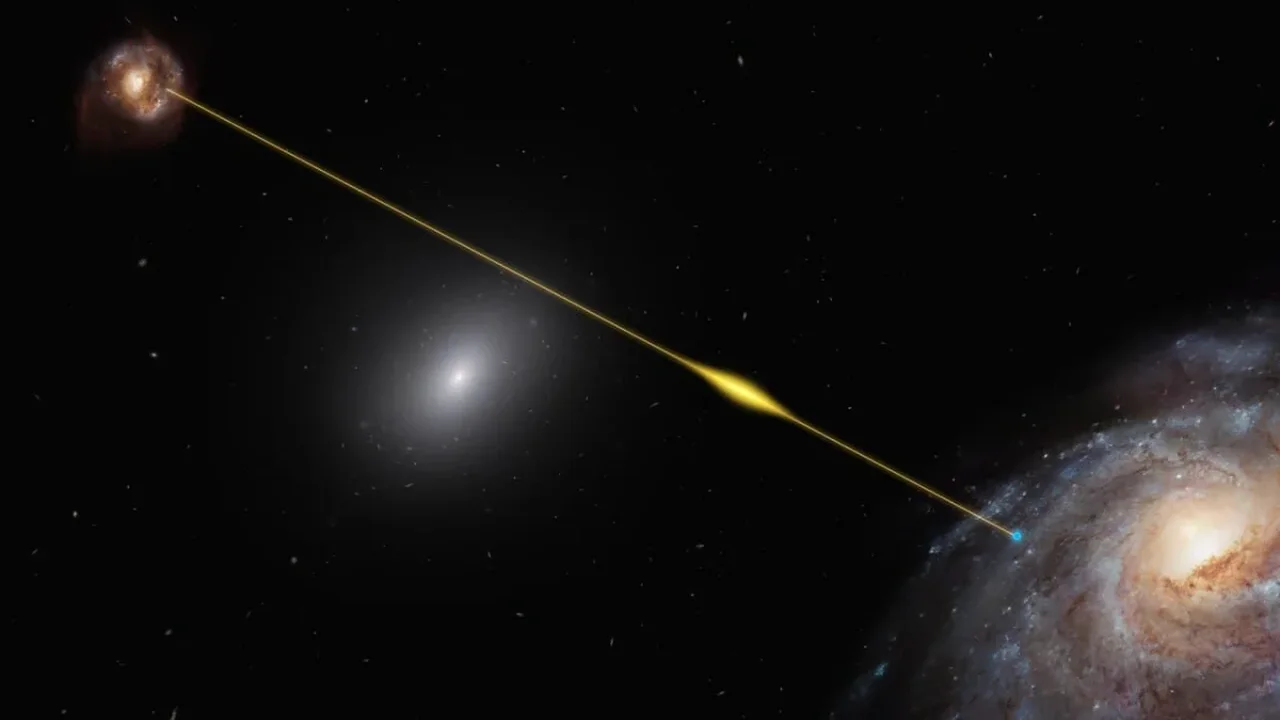
The signal was first recognized by Anastasios Tzanidakis of the University of Washington, who found that the star's previously steady brightness began showing short dips from 2016 onward. In 2021, those variations became much more pronounced, suggesting that an expanding cloud of material was moving across the star from Earth's viewpoint.
Heat Reveals a Fresh Debris Cloud
Infrared observations provided the key clue. While visible light from Gaia20ehk declined intermittently, infrared emissions increased sharply. This pattern indicates that the obscuring material was extremely warm, reaching about 900 Kelvin, or 627°C.
Researchers interpret the sequence as evidence of two planets gradually approaching one another before a final impact produced a broad cloud of heated rock and dust. The glowing debris is estimated to contain at least 4 × 10²⁰ kilograms of warm material, with an area of no less than 0.13 square astronomical units.
The dust mass alone is comparable to Saturn's moon Enceladus, although the original planets were likely much larger. Only a portion of a planetary body is expected to turn into fine, infrared-emitting particles during such an event.
A Window Into Planetary Formation
The debris is orbiting at approximately one astronomical unit from its star, a distance similar to Earth's orbit around the Sun. That location makes Gaia20ehk especially valuable for researchers exploring the formation of terrestrial planets and moon systems.
The process may offer parallels to the early Solar System, where a major impact is thought to have supplied material that later assembled into Earth's Moon. The findings were published in The Astrophysical Journal Letters.
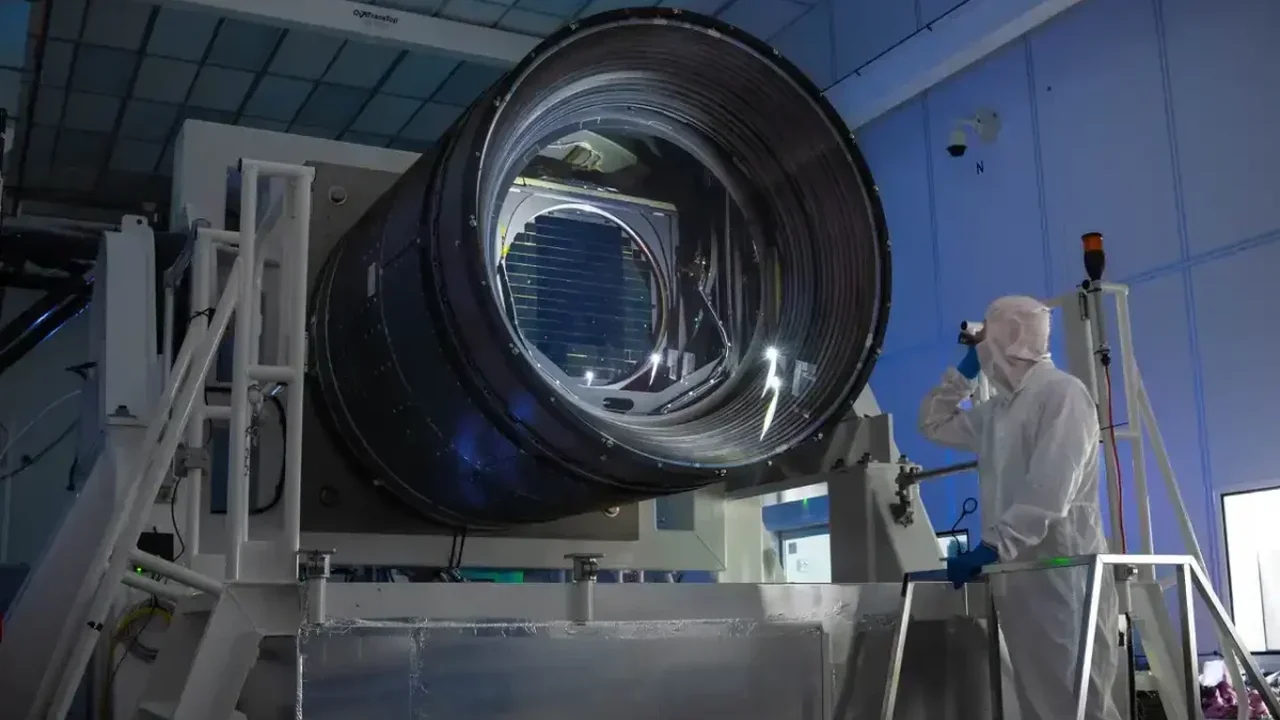
Long-term sky surveys are expected to expand the search for comparable events. The Vera C. Rubin Observatory is designed to repeatedly monitor changing objects across the southern sky, potentially revealing more planetary systems in formation. As these observations grow, astronomers may gain a clearer understanding of how often worlds reshape one another across the galaxy.