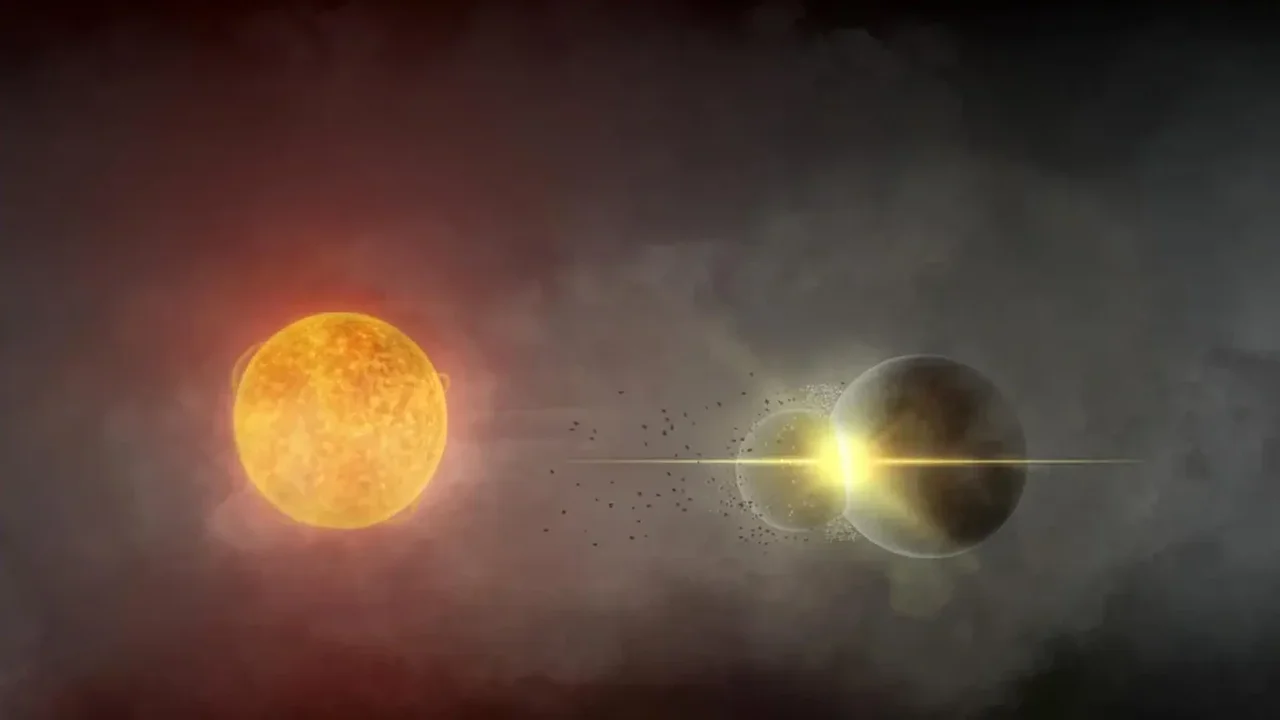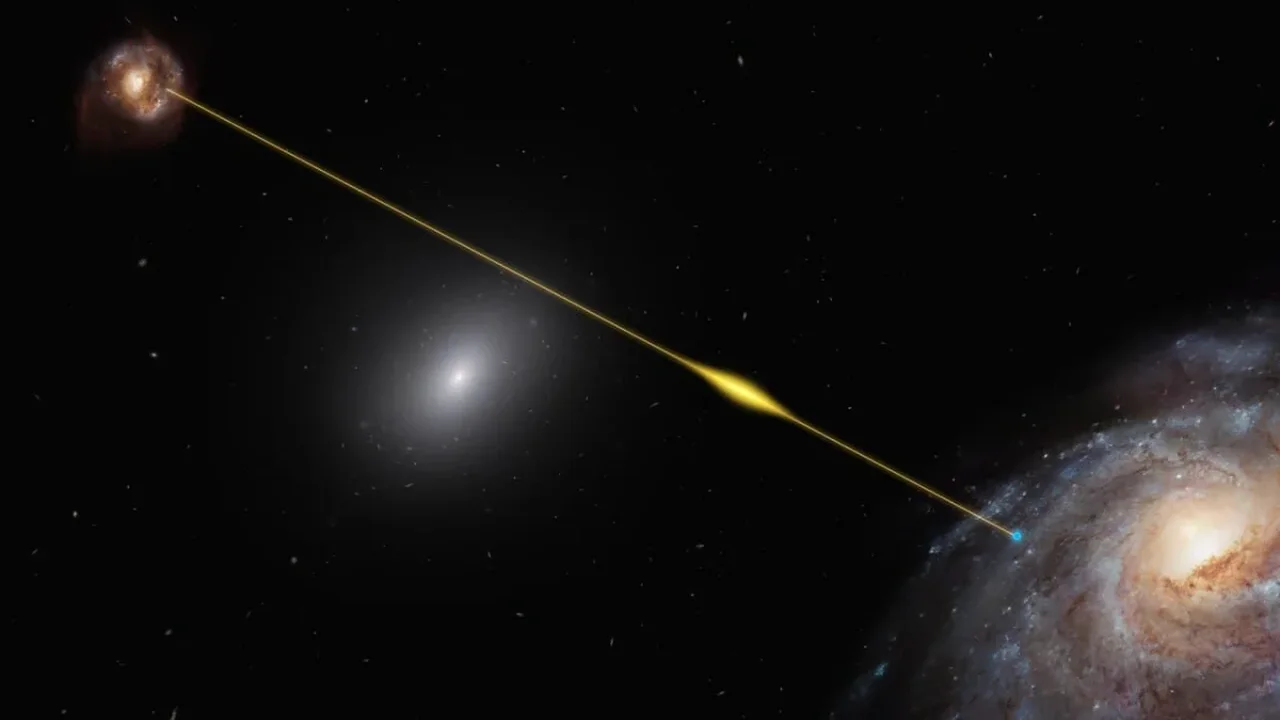
Fast radio bursts are brief, intense flashes that vanish in milliseconds, yet they are becoming powerful tools for cosmology. A new study in Nature Astronomy, led by Caltech, used 114 localized bursts to examine how ordinary matter is spread across the universe.
Tracing invisible gas
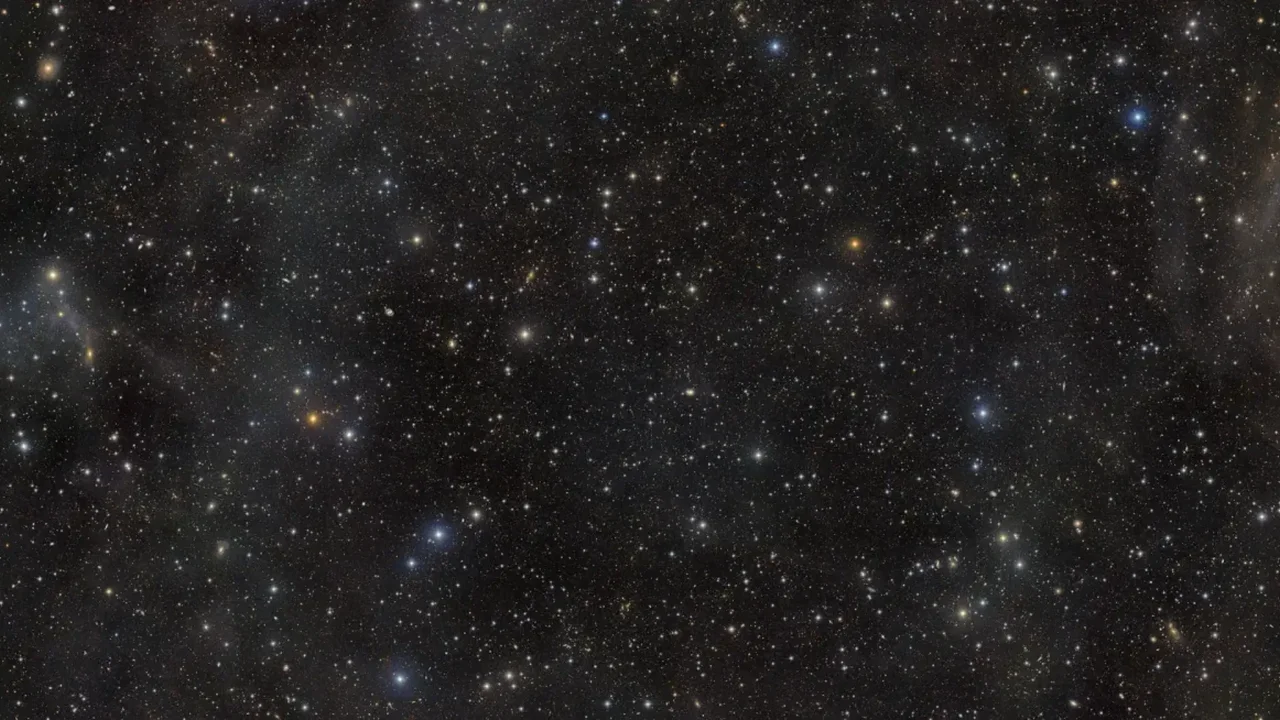
Scientists have long known that the universe contains more ordinary, or baryonic, matter than can be easily accounted for nearby. Much of it is believed to exist as extremely thin ionized gas around galaxies and in the spaces between them. The challenge is not only finding this material, but also understanding how galaxies move it around.
That is where fast radio bursts come in. As their signals travel across vast cosmic distances, they pass through free electrons in ionized gas. This slightly delays lower-frequency radio waves, creating a measurable effect called dispersion measure. By comparing many bursts from known locations, researchers can estimate how much matter lies along each path.
The Caltech-led team found that differences between the 114 bursts revealed how clumpy the gas is and how strongly galaxy feedback has redistributed it. Their results also helped estimate how much gas remains inside large halos around galaxy groups and clusters.
What makes the finding notable is that this relatively small sample already produced constraints competitive with established measurements from the Atacama Cosmology Telescope and eROSITA. That suggests fast radio bursts could become a major cosmological probe as more localized events are discovered.
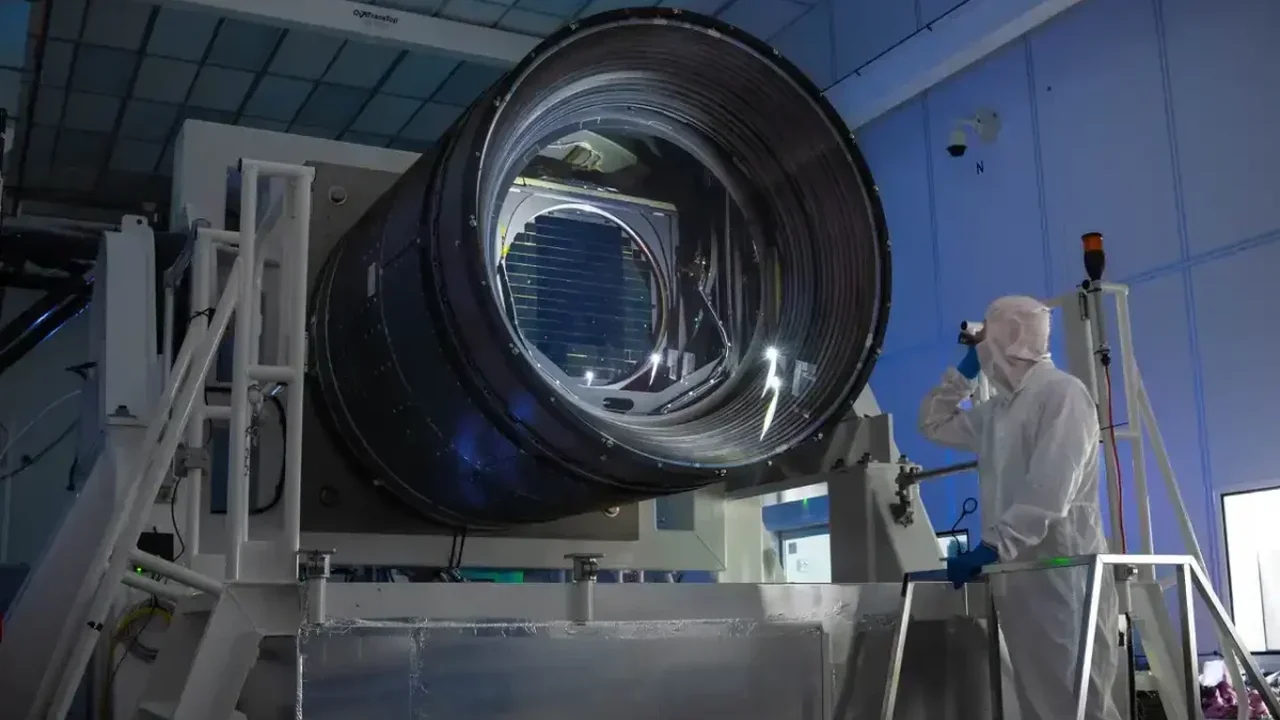
Upcoming observatories such as the Vera C. Rubin Observatory and Euclid are expected to sharpen these measurements even further, opening a new window on the structure of the cosmos. In the future, fast radio bursts may help turn fleeting signals into a precise map of the universe's hidden matter.