China's Zhurong rover may have uncovered one of the most compelling clues yet about Mars' watery past: large gypsum crystals that appear to have formed from ancient brine and may still contain tiny sealed pockets of that liquid.
Crystals That Preserve a Planet's Memory
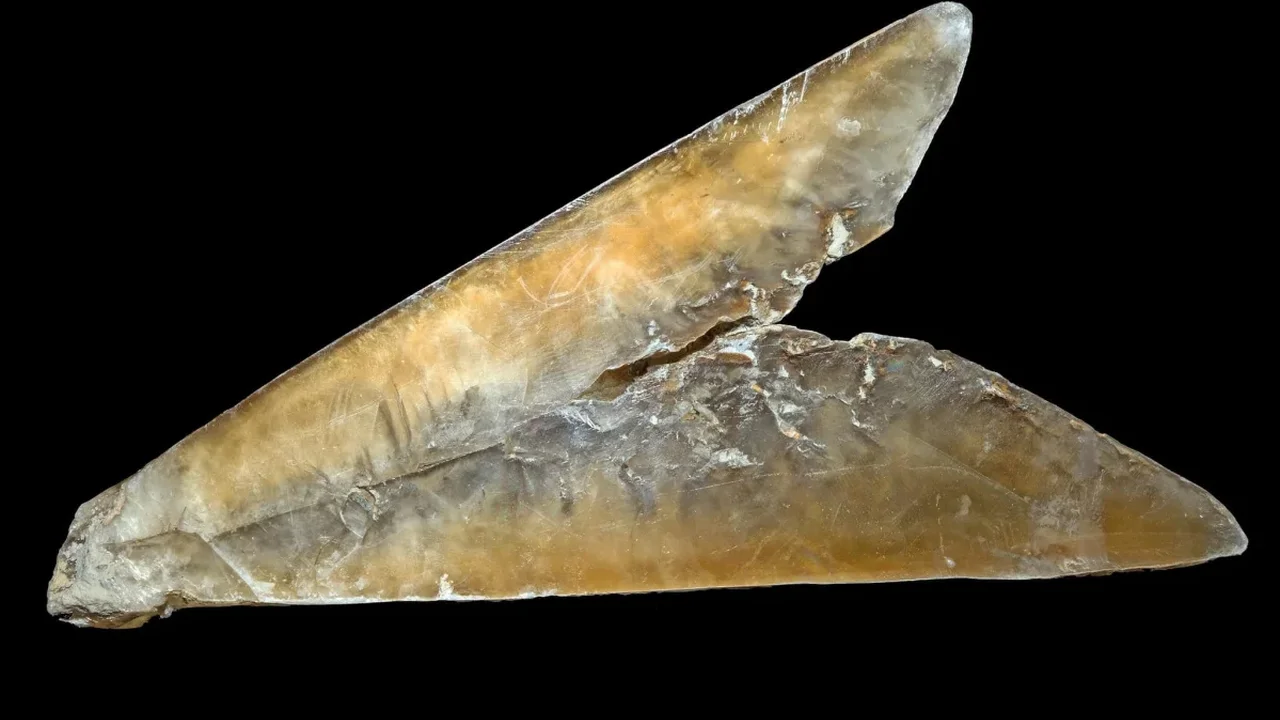
Researchers revisited images and measurements from the rover's journey across southern Utopia Planitia, where bright rocks emerged from beneath the sand. Their analysis points to a large-crystal form of gypsum known as selenite, recognized on Earth for its blade-like shapes and radiating patterns.
What makes the discovery especially intriguing is the possibility that these crystals formed directly from concentrated water rather than inside older fractures. If so, they would represent a primary evaporite layer, created as water became increasingly salty and minerals began to crystallize.
The team suggests a likely setting: warm groundwater or brine may have risen through the subsurface after being heated by ancient magmatic activity. A thin frozen surface could have formed above it, while the liquid below slowly concentrated until gypsum began to grow. This scenario remains a hypothesis, but it fits the geology of the region.
A Potential Archive of Martian Water
On Earth, large selenite crystals often trap fluid inclusions -- microscopic cavities that preserve traces of the water they formed from. If the Martian samples contain similar pockets, they could hold salts, gases and possibly organic molecules, offering a rare snapshot of Mars' underground chemistry hundreds of millions of years ago.
That makes the find valuable not only for understanding Martian water, but also for identifying environments that may once have supported more complex chemistry beneath the surface. The study, published in Nature Astronomy, adds a new target for future Mars exploration and sample-return planning.
As planetary science advances, discoveries like this could help transform Mars from a distant mystery into a detailed record of how habitable worlds evolve.