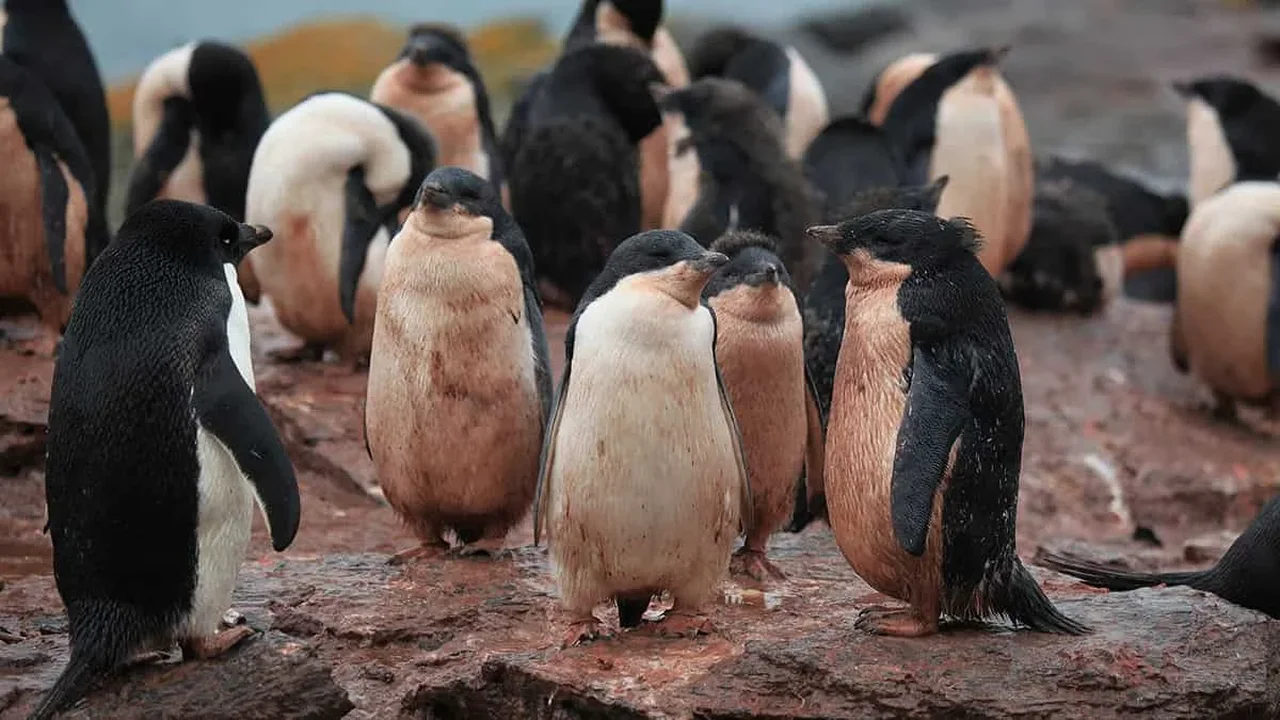
Scientists have found a new way to read Antarctica's ecosystems from orbit: by analyzing the colorful guano of Adélie penguins. The approach, published in Current Biology, combines satellite imagery with field samples to show how diet patterns and colony trends have changed over decades.
Researchers compared guano samples from breeding colonies with long-term satellite records from the Landsat program, which has monitored Earth for decades. The color and chemical makeup of the samples helped confirm that satellite signals can reflect whether penguins are eating more krill or more fish.
The results point to a clear regional pattern. Colonies in West Antarctica were more likely to rely on krill, while those in East Antarctica leaned more toward fish. The study also found that colonies with krill-heavy diets were more often linked to long-term population decline, and those shifts aligned with reduced sea ice.
Because Landsat images are collected regularly, the team could also observe seasonal changes within the same year. Some colonies showed stronger krill signals in summer than in spring or autumn, suggesting that penguin feeding habits are more flexible than once assumed.
For ecologists, the study highlights the power of long-running satellite archives. These datasets make it possible to study remote regions without constant field access and to track ecological change across decades. The method may also help scientists examine how prey availability, sea ice, and marine food webs interact across the Southern Ocean.
As satellite monitoring becomes more precise, it may open a new era of large-scale wildlife research, helping scientists read environmental change with greater clarity and foresight.