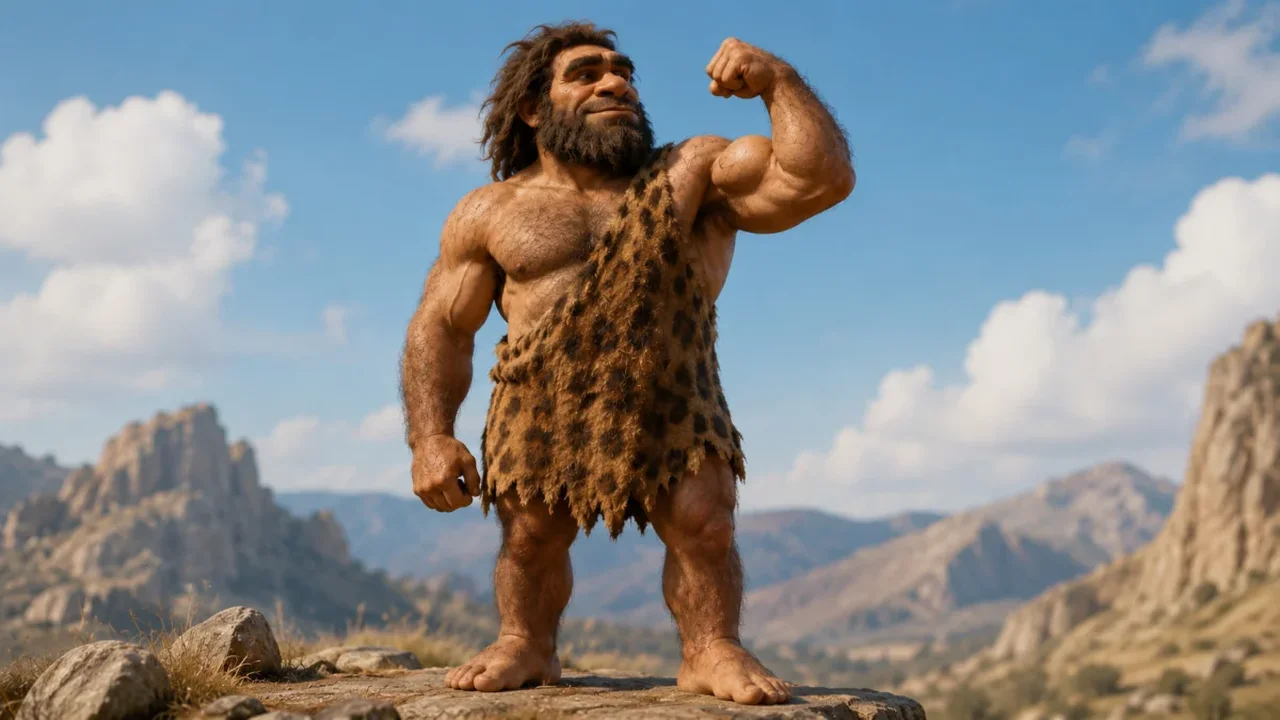
A new genetic study suggests that a Neanderthal-inherited variant may still be influencing human bodies today, with a modest effect on muscle-related traits. Researchers found that people carrying this version of the growth hormone receptor tend to show slightly higher lean mass and a small increase in height.
A Trace From Deep Human History
Neanderthals vanished as a distinct population about 40,000 years ago, yet parts of their DNA remain in modern humans. Previous research has connected Neanderthal ancestry with differences in immunity, sleep patterns, skin and hair traits, and even pain sensitivity. This new work adds muscle development to that list.
The study, led by scientists including Philipp Kanis of the Max Planck Institute for Evolutionary Anthropology and Hugo Zeberg of Karolinska Institutet, focused on the growth hormone receptor. By comparing reconstructed Neanderthal genomes with modern human DNA, the team identified two key changes that likely entered the human gene pool through ancient interbreeding.
To test the effect, the researchers engineered mouse cells to carry either the Neanderthal version or the common modern version of the receptor. When exposed to growth hormone, cells with the Neanderthal variant responded more strongly and grew about 40% more over several days.
Large-scale human data supported the lab findings. Across biobanks with genetic and health records from more than 1.1 million adults, carriers of the variant showed roughly 270 to 285 grams more lean mass and about 0.3 centimeters of extra height on average. The effect was not seen in children under 11, suggesting it may become more relevant later in development.
The variant is found most often in parts of South and East Asia, and is uncommon in Europe. It was not detected in the sub-Saharan African datasets examined in the study. Researchers also noted small links with jaw and tooth traits, though these differences do not define a person's overall appearance.
Published in Current Biology, the study offers a fresh look at how ancient genetics still shape modern biology in subtle ways. It also shows how evolutionary history can continue to echo in everyday human traits, opening new paths for future research on growth, health, and personalized medicine.