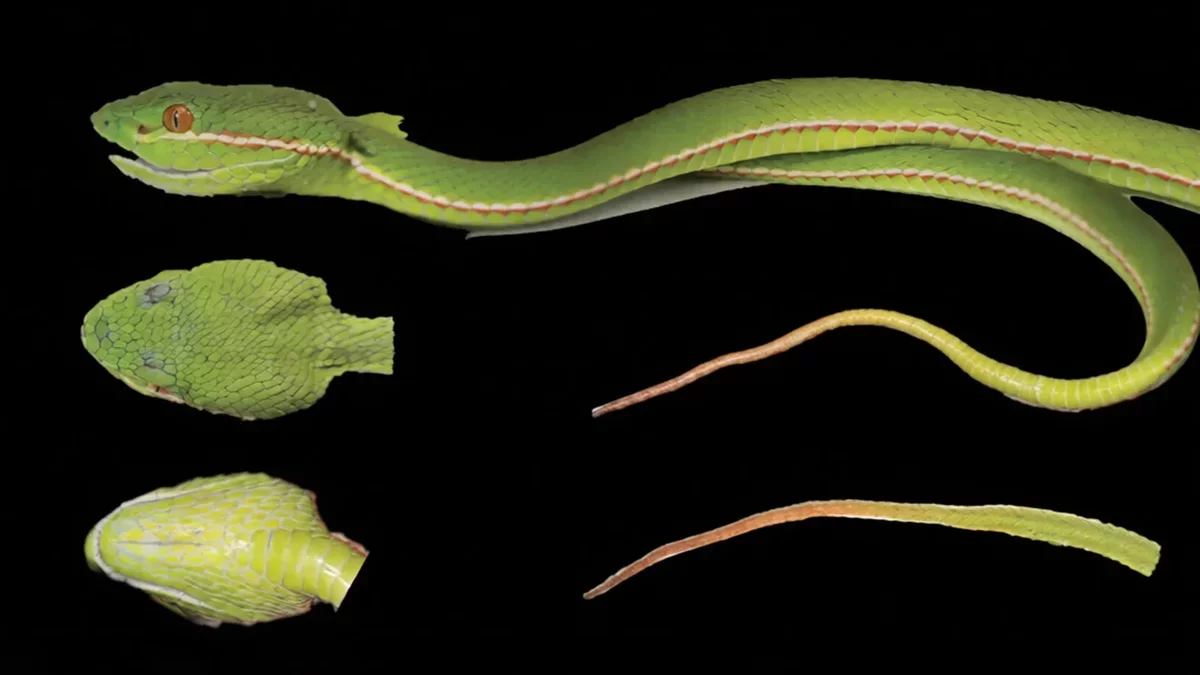
Researchers from the Chengdu Institute of Biology, in collaboration with the Giant Panda National Park, have made an exciting discovery in the West China Rain Zone. Initially thought to be a familiar species, this snake has been identified as a new species, named Trimeresurus lii, or the Huaxi Green Pitviper. This name pays tribute to Li Er, commonly known as Laozi, an ancient Chinese philosopher whose teachings advocate for harmony between humanity and nature--principles that resonate with the conservation efforts in the region.
Identification of a New Species
The Huaxi Green Pitviper is now recognized as the 58th species within the Trimeresurus genus and is only the second from its subgenus found in Sichuan Province. For many years, these snakes were misidentified as the bamboo pitviper (T. stejnegeri) due to their similar green coloration. However, thorough genetic analysis and examination of their physical characteristics revealed that this population represents a distinct evolutionary lineage.
Distinctive Features
Published in the open-access journal Zoosystematics and Evolution, the research highlights the Huaxi Green Pitviper's impressive adaptations to its environment. Both male and female snakes exhibit a vivid green body, but they differ in striking ways. Males are characterized by a vibrant red and white stripe along their sides and amber eyes, while females display a more subdued yellow stripe and orange-yellow eyes.
Understanding Their Habitat
This venomous species, like its relatives in the Trimeresurus genus, poses a potential risk of snakebite envenoming, particularly since it inhabits mountainous regions that overlap with human activities. These snakes can reach lengths of nearly 80 centimeters (~32 inches) and thrive in the humid forests of Mt. Emei and Xiling Snow Mountain--areas recognized as global biodiversity hotspots, yet still harboring many undiscovered species.
Continuing Exploration
The findings emphasize the vast unknowns that still exist in previously explored regions. The research team advocates for ongoing field surveys in biodiversity hotspots, underscoring the importance of continued exploration to uncover the rich tapestry of life in these areas.