Recent excavations at the Shenduntou archaeological site, located near China's Yangtze River, have unveiled significant findings from the Bronze Age, dating back to approximately 2070 - 771 B.C. This era was pivotal in shaping early Chinese civilization, with bronze being a crucial material for tools and weaponry, as well as for establishing complex social and political systems.
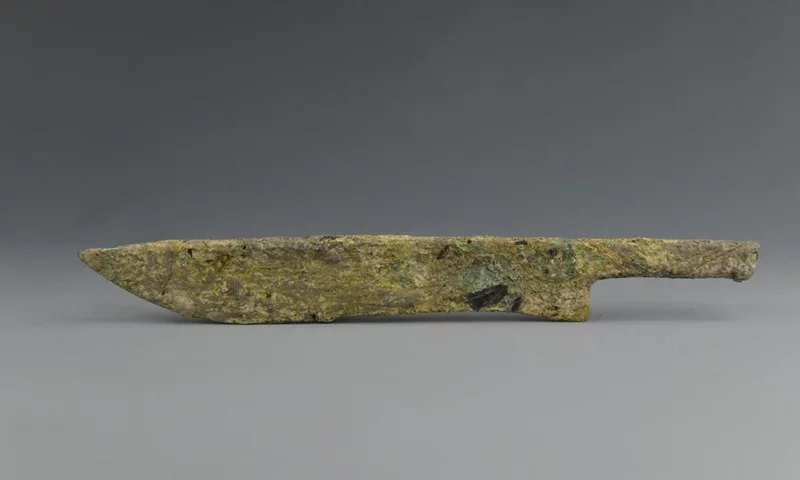
According to China Daily, archaeologists have uncovered around 1,000 artifacts associated with bronze production during the Zhou dynasty. While these items, including simple knives, arrowheads, and clay molds, may not be as ornate as the ritual vessels often displayed in museums, they indicate that this site was a major center for metalworking.
Wang Zhigao, an archaeology professor at Nanjing Normal University and the leader of the excavation, remarked, "The discovery of numerous bronze-casting remains proves this was a high-level workshop." This finding points to a sophisticated level of craftsmanship and organization in ancient metalworking.
Perhaps even more intriguing is the evidence suggesting a "state-controlled" system of smelting and casting. The layout of the site, featuring workshop areas surrounded by earthen walls and moats, implies a level of oversight and protection typical of regulated industries.
Researcher Zhang Min from Nanjing Museum elaborated, "This reflects an 'official industry' model, in which the state organized and supported production. Artisans and merchants were brought together and sustained by government resources to ensure steady manufacturing and trade." This indicates that the Zhou dynasty not only advanced metallurgy but also integrated it into their economic and political frameworks.
During this period, while the Zhou royal house governed the Central Plains, various vassal states were in competition for resources. The bronze industry at Shenduntou likely played a crucial role in the military successes of the Wu kingdom, particularly in the 6th century B.C., alongside the strategic insights of military advisor Sun Tzu.
Wang further noted, "In that era, bronze technology represented national strength, and the industry was strictly managed by governments. Whoever controlled bronze could produce superior weapons and tools." This discovery not only sheds light on the technological advancements of the time but also highlights the intricate relationship between governance and industrial production in ancient China.
This archaeological breakthrough not only enriches our understanding of Bronze Age technology but also illustrates how early civilizations managed resources and industries, potentially influencing future governance and economic models.