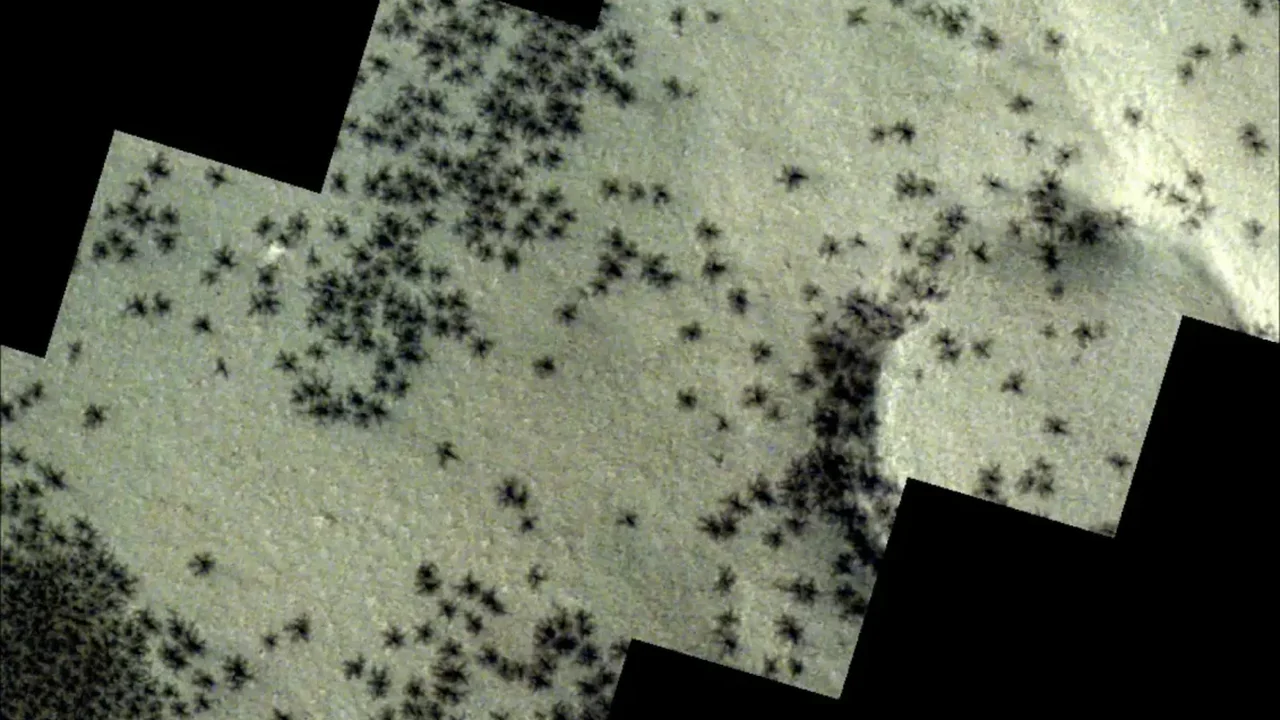
NASA researchers have taken a major step toward explaining one of Mars' most striking surface mysteries: the branching formations known as araneiform terrain, or "Mars spiders." These patterns, found mainly in the planet's southern hemisphere, can stretch across more than a kilometer and resemble giant roots etched into the ground.
How the formations appear
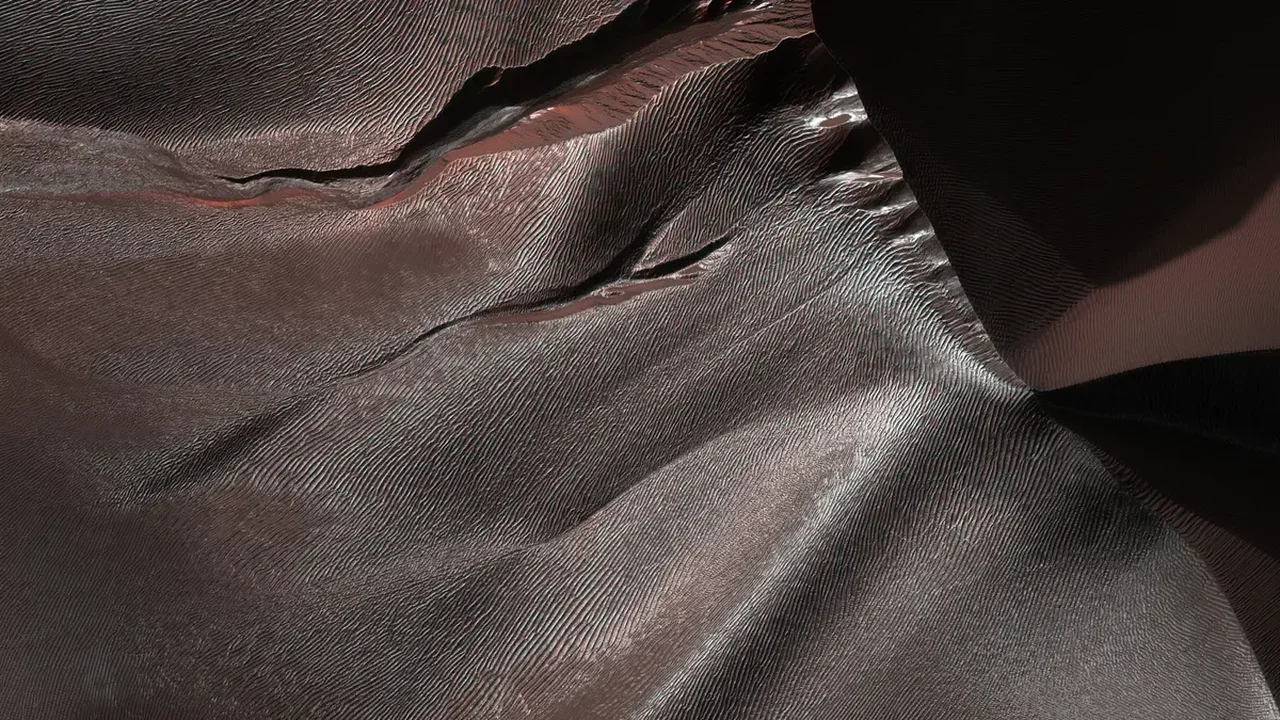
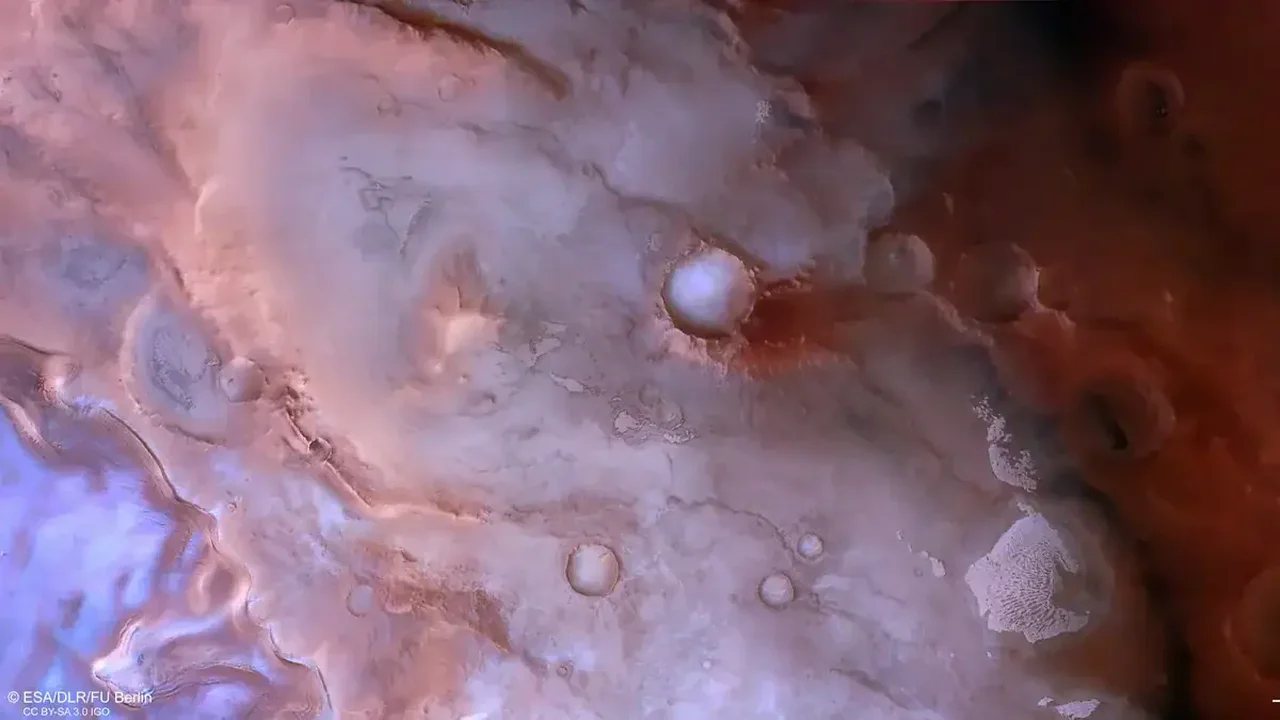
The leading explanation centers on seasonal carbon dioxide ice. During Martian winter, CO₂ freezes onto the surface. When spring sunlight reaches the translucent ice, it warms the soil beneath. The trapped gas then builds pressure, cracks the ice, and escapes in jets that move dust and shape the ground into spider-like channels, dark spots, and fan-like streaks.
To test this idea, NASA's Jet Propulsion Laboratory used a chamber called DUSTIE, designed to recreate Mars-like cold and pressure conditions. Researchers filled it with simulated Martian soil, cooled it with liquid nitrogen, and introduced carbon dioxide over several hours to mimic the planet's seasonal cycle.
The experiments confirmed the basic model, but they also revealed something more nuanced. In some cases, the branching patterns were not formed only by gas jets carving the surface. Fine soil particles allowed CO₂ to seep deeper into pores, where sublimation created stress that helped crack the terrain from within. In other words, Mars spiders may form through more than one mechanism.
The team also found that soil texture matters. Finer material encouraged stronger and longer-lasting plumes, while water ice in the pores changed how the CO₂ layer developed and slowed sublimation. These details help explain why the formations vary so much across Mars.
Although scientists have not yet observed a mature spider growing in real time, smaller related features have been tracked on the planet's surface. That makes the structures valuable not just as a geological curiosity, but as a possible record of Mars' changing climate and surface history.
The findings, published in The Planetary Science Journal, bring researchers closer to decoding how Mars' seasonal landscape evolves. In the future, this kind of planetary testing could sharpen our understanding of how cold worlds preserve clues to their past.