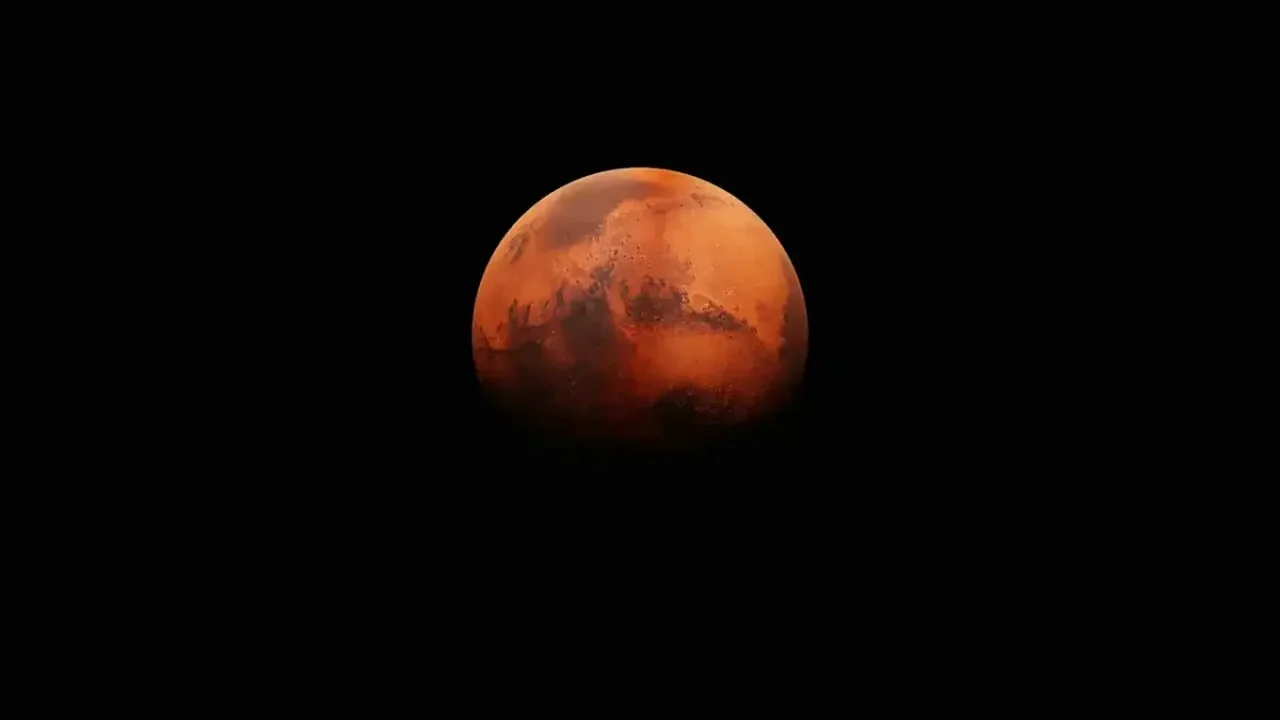
NASA's Perseverance rover has identified evidence that the same rocks in Mars' Jezero Crater interacted with water on at least three separate occasions. The discovery adds new depth to the crater's environmental history and strengthens its value for astrobiology research.
Scientists examined the crater's Margin Unit, an area once thought to be mainly sediment deposited along an ancient lake shoreline. Instead, many of its rocks appear to have formed from slowly cooled magma rich in olivine before being reshaped by multiple water-driven chemical processes.
A Geological Record of Changing Water Systems
Using the rover's SuperCam instrument, researchers assessed more than 185 bedrock targets. Their analysis points to an early phase in which carbon dioxide-rich groundwater moved through fractures, creating carbonate minerals.
A later episode involved more acidic water, potentially linked to Jezero's former lake or a changing groundwater network. This stage appears to have redistributed some carbonates while leaving behind silica in newly formed pores. In a final phase, hot fluids circulated underground through younger fractures, depositing calcium sulfate and fluorite-bearing mineral veins.
These mineral layers show that Jezero was not shaped by a single water event. Rather, its rocks became a long-lived meeting point for groundwater, lake-related water and hydrothermal activity.
Why Carbonate and Silica Matter
Carbonate and silica are especially significant because they can preserve chemical signatures and microscopic structures over vast timescales. On Earth, reactions between water and olivine can release hydrogen, an energy source that supports some microbial communities.
The Mars findings do not confirm past life. However, repeated interactions between rock and water may have created environments with conditions favorable to life and improved the preservation potential of any ancient chemical traces.
Perseverance has collected rock cores from the Margin Unit for potential future laboratory analysis. Published in Communications Earth & Environment, the research gives scientists a more detailed timeline of how water transformed this region of Mars.
As future missions study these samples in greater detail, Jezero Crater could help refine humanity's understanding of planetary habitability and the conditions that may support life beyond Earth.