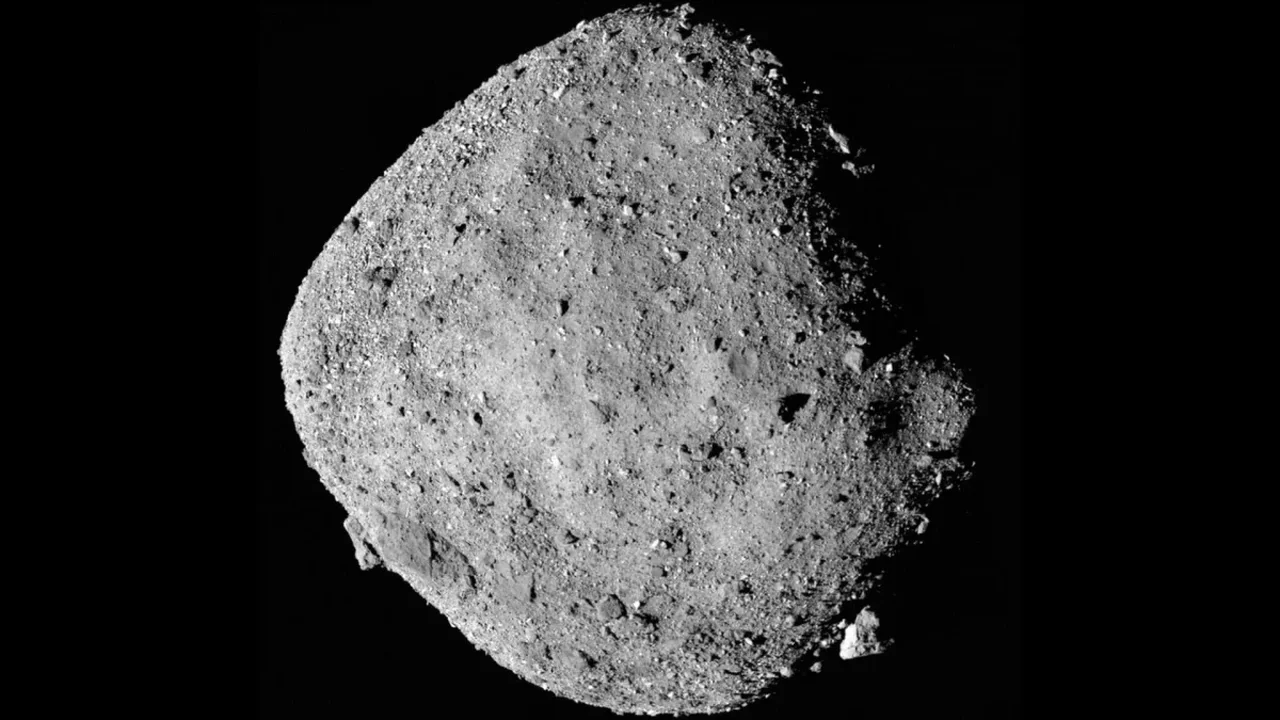
New research shows that asteroid Bennu is far more delicate than a solid rock body, with a surface strength estimated to be far below that of freshly ground coffee. Scientists say the key lies in its dusty makeup and the way its grains fit together.
According to a study led by Paul Sánchez of the University of Colorado Boulder, Bennu is not a single block of stone but a loose mix of boulders, pebbles, and fine particles. The asteroid's mechanical strength depends on how those grains fill the gaps between larger fragments.
Why Grain Shape Matters
To test this idea, the team modeled 78 granular bridges made of smaller particles trapped between two large boulders. The simulations used grains ranging from 2 to 5 centimeters and compared rounded particles with angular and elongated ones.
The results were clear: smaller grains created stronger connections because they packed more tightly and formed more contact points. Irregular shapes added extra stability by locking together instead of touching at just one point.
What Bennu's Samples Revealed
Researchers then applied the model to material returned by NASA's OSIRIS-REx mission in 2023. The samples included dust, fine grains, and rocks, and the analysis showed Bennu contains relatively few tiny particles to bind the surface together effectively.
That helps explain why the spacecraft's sampling head sank into the asteroid so easily during its 2020 touch-and-go maneuver. The study estimates the strength of Bennu's sampling site at below one pascal, with some calculations reaching as low as 0.001 to 0.01 pascal.
The findings also matter for planetary defense. Understanding whether an asteroid behaves like solid rock or loose rubble can improve impact simulations, including strategies similar to the DART mission. In the future, this kind of material science could help shape more precise asteroid-response planning.