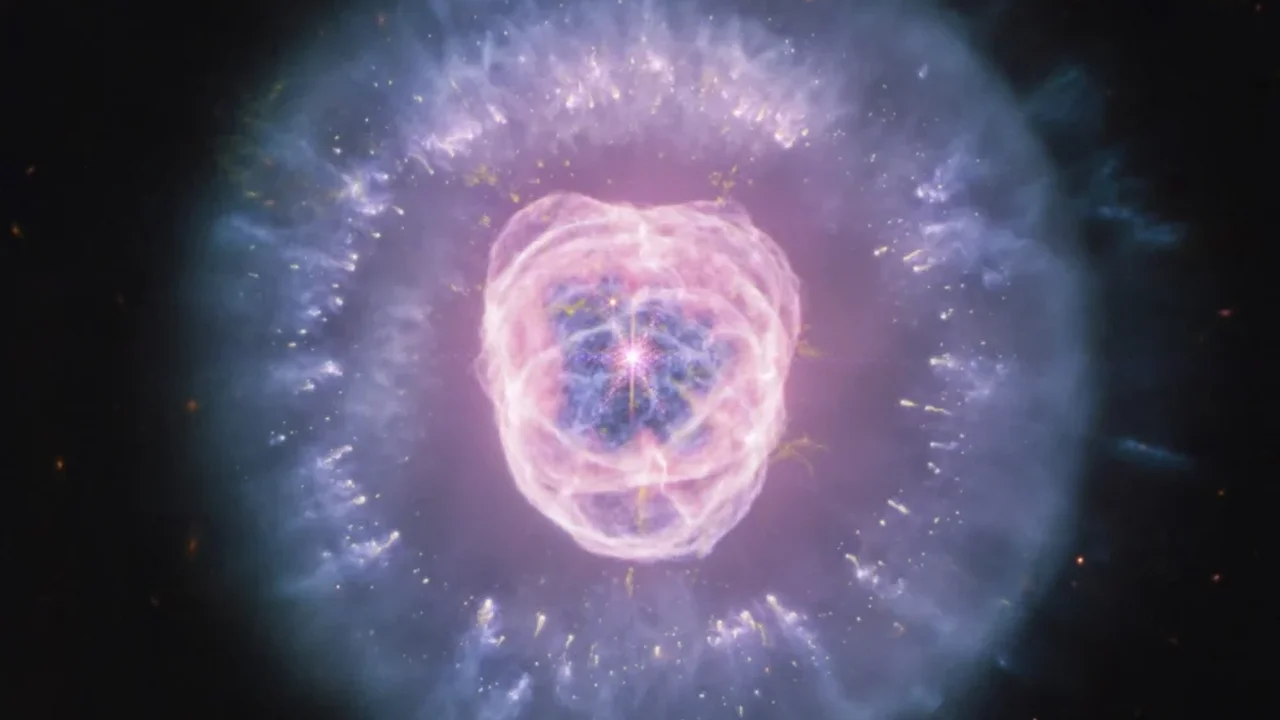
Observations of the Lion Nebula, also known as NGC 2392, made with NASA's James Webb Space Telescope are helping astronomers examine the complex structures around a star nearing the end of its life. Webb's NIRCam and MIRI instruments detect different features in the nebula's surrounding gas and dust.
At the nebula's center, a hot stellar core is shedding its outer layers. NASA explains that radiation from the star ionizes surrounding hydrogen, creating a glowing gas bubble. Shells, rings and tendrils shape the surrounding material, while the star's energy erodes some dust and leaves other filaments intact.
The nebula's structure has formed over thousands of years and continues to evolve as the central star pushes material outward. Astronomers estimate that it may disperse in roughly 10,000 years.
By revealing how stars transform their surroundings, Webb's observations can deepen understanding of stellar life cycles and the material that later contributes to new generations of stars.