A new evolutionary review is reshaping how scientists think about the origins of vision. Researchers from Lund University and the University of Sussex suggest that the vertebrate eye may have emerged from a single light-sensitive organ that existed about 560 million years ago.
The ancient starting point
According to the model, early vertebrate ancestors likely carried a central, cyclops-like sensory structure on top of the head. It probably did not create detailed images at first, but it could detect light and darkness, helping the animal track time and orientation in shallow marine environments.
The study, published in Current Biology, brings together anatomy, developmental genes, light-sensing proteins, neural pathways and single-cell expression data. The authors argue that when these early creatures later became more active swimmers, parts of that central organ expanded sideways and gradually formed the paired retinas seen in modern vertebrates.
Why vertebrate eyes are unusual
Most animals rely on one of two broad light-sensing systems. Vertebrates, however, appear to combine both in a distinctive way. Their rods and cones belong to the ciliary family, while other retinal cells show features linked to the rhabdomeric lineage. This mix may explain why the vertebrate retina looks so different from the eyes of insects, worms or squid.
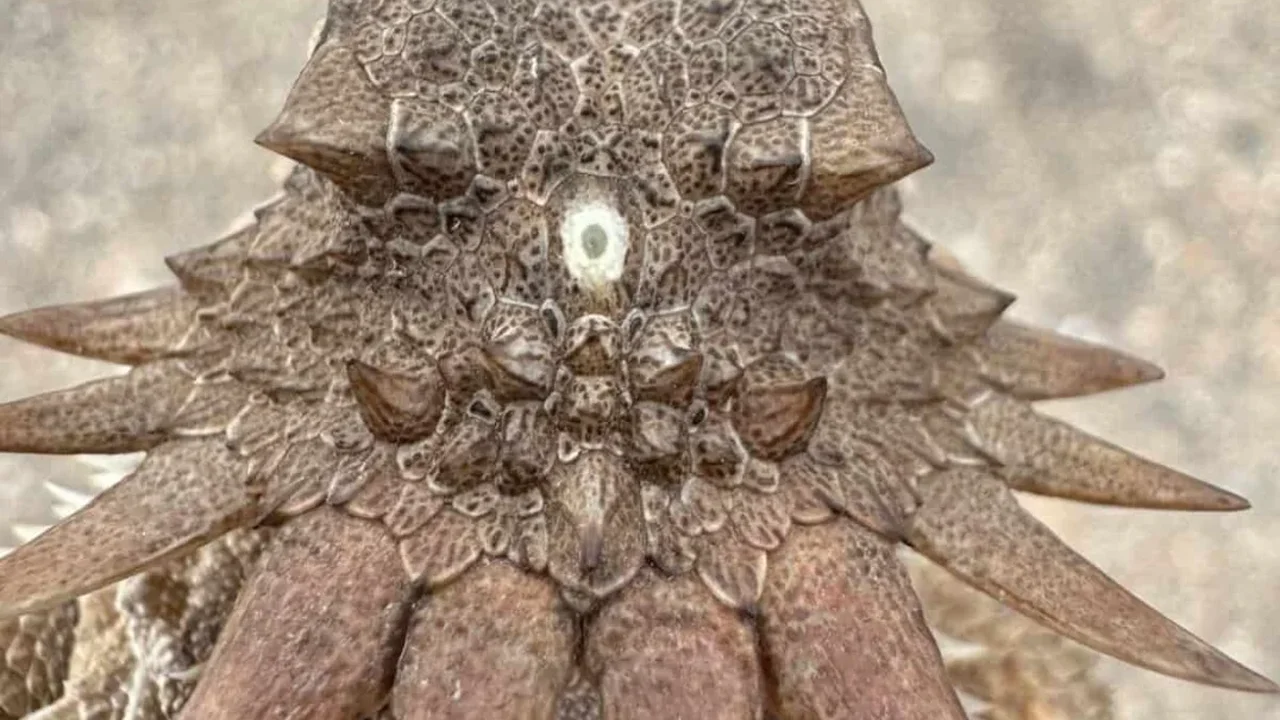
The researchers also point to living examples that preserve hints of this ancient biology. In some fish, amphibians and reptiles, a light-sensitive parietal eye remains near the top of the skull. In mammals, the pineal gland no longer receives light directly, but it still helps regulate daily rhythms through signals from the ordinary eyes.
A working hypothesis for future research
The idea is not presented as a final answer, but as a strong evolutionary framework. The team says the next step is to compare pineal and retinal cells across many vertebrates and map how their wiring and gene activity overlap. Early vertebrates such as lampreys may offer especially useful clues.
If confirmed, this model would show that modern vision did not simply appear all at once, but evolved through a long process of sensory refinement. It could open a new chapter in understanding how the brain and eye co-evolved across deep time.
In the future, this line of research may help scientists reconstruct how complex sensory systems emerge from simpler biological foundations.