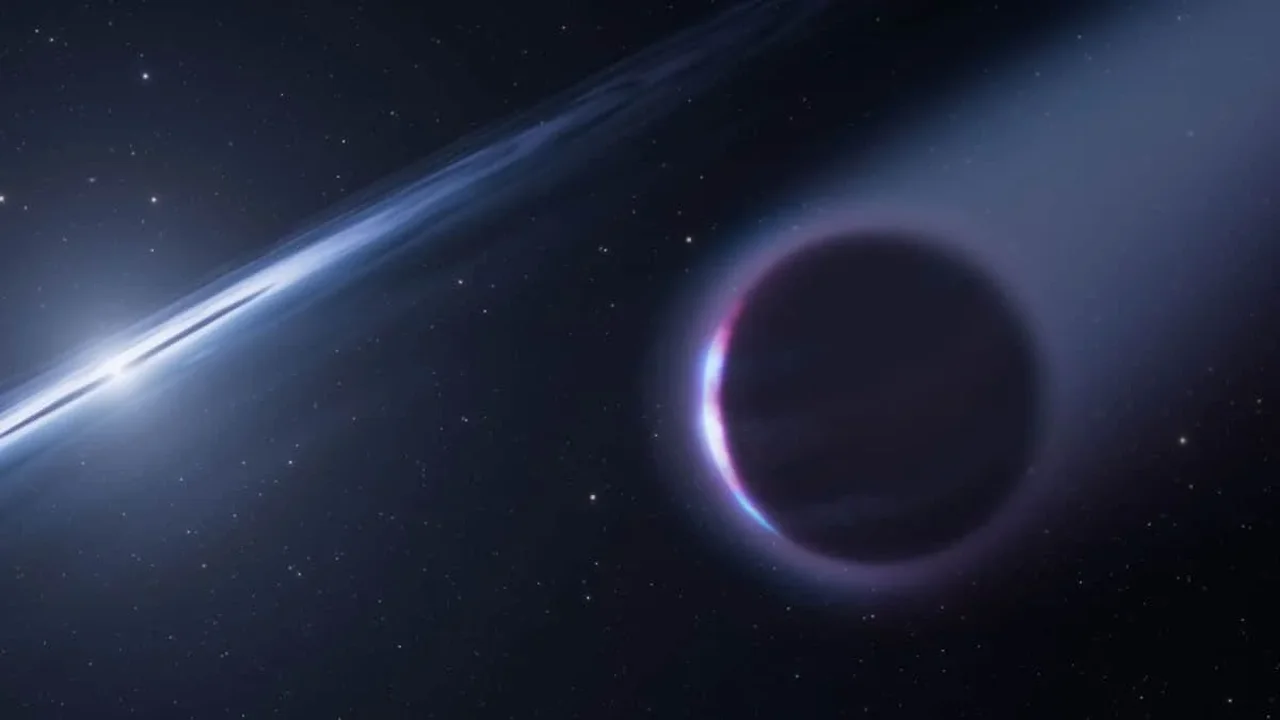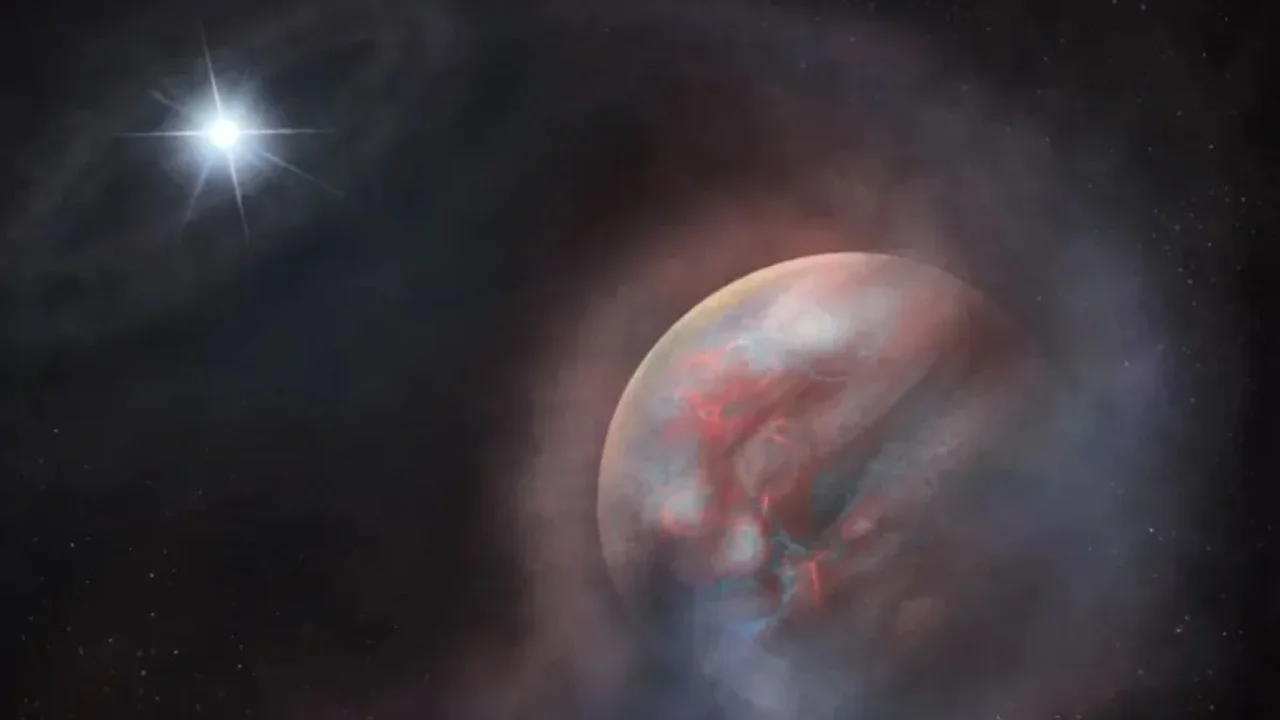
A distant white dwarf may host a planet formed from material expelled by its star during its final stages. Researchers at the University of Warwick say their findings offer evidence for a rare "second-generation" world in the system HS 0209+0832.
The clue began with unusual chemical signals in the white dwarf's atmosphere. Re-examining archival observations with updated atomic data, the team identified signatures of niobium, copper and zinc. Iron was absent, while silicon appeared only in small amounts--a combination that does not fit typical rocky planetary material.
Clues in the star's chemistry
White dwarfs have intense gravity, causing heavy elements in their atmospheres to sink quickly. Their presence can indicate that material is falling onto the star. In this case, the unusually high niobium abundance--estimated at more than 1,000 times the Sun's--may point to matter enriched by nuclear reactions in the star's late life.
The researchers also found a subtle brightness pattern in data from NASA's Transiting Exoplanet Survey Satellite. It repeats every 4.399 days and could be caused by a giant planet orbiting about six million kilometres from the white dwarf. The world may be roughly Jupiter-sized, though its mass and dimensions have not been directly measured.
A possible planetary second act
Intense radiation from the hot white dwarf could be stripping gas from the planet's atmosphere. Some of that material may then fall onto the star, potentially explaining the unusual elements detected in its light. The team's findings were published in Nature Astronomy, but the planet's identity and formation history remain a hypothesis supported by the available evidence.
If confirmed, the discovery would show that planetary systems can take shape again after their original stars evolve, broadening our understanding of how and when worlds form.