Researchers are testing a new way to protect astronomical observations from fast-moving satellites: a sensor that reacts like a biological retina. The project, led at the University of Warwick, aims to give telescopes a split-second warning before a satellite crosses the frame and leaves a bright streak behind.
A smarter way to watch the sky
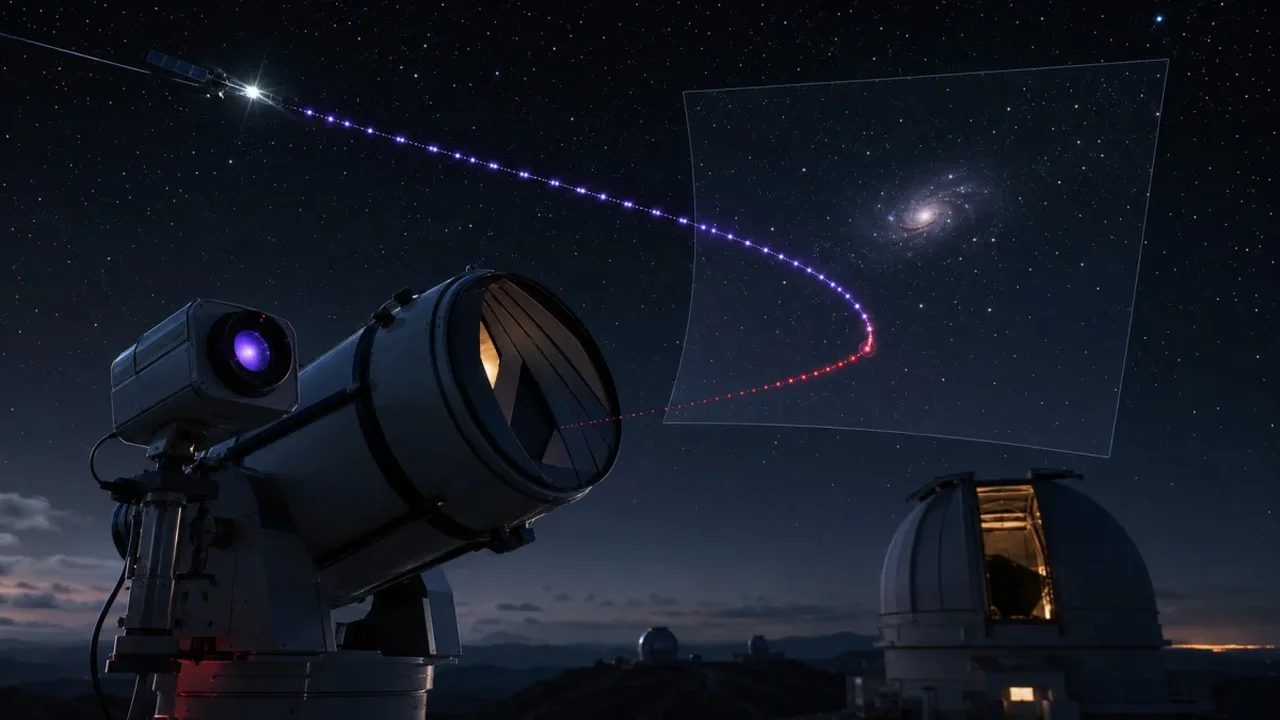
The system pairs a telescope with a neuromorphic camera, a device designed to detect changes in light rather than record full images at fixed intervals. Because it only responds when something moves or brightness shifts, it can scan a wide area of sky and quickly flag an object on a collision course with an exposure.
If the software confirms the path, the observatory could close the shutter, delay the shot, or switch targets before the satellite enters the scientific image. That makes the approach especially useful for long exposures, where even a brief crossing can affect the final result.
The idea comes at a time when orbital traffic is growing rapidly. According to the European Space Agency, tens of thousands of satellites are now in orbit, and many move through low Earth orbit, where they can pass across a telescope's view in seconds. Wide-field surveys are among the most exposed to this kind of interference.
Why event-based sensing matters
Unlike standard cameras, event-based sensors do not repeatedly capture unchanged scenes. Instead, they register only the pixels where brightness changes occur. That makes them fast, efficient, and well suited to tracking bright moving objects against a dark sky.
Warwick's team says the prototype is being developed as part of the Preserving Dark Skies with Neuromorphic Camera Technology project. The researchers plan to test it at the campus observatory before moving to larger observing facilities in the Canary Islands.
The method will not solve every challenge in astronomy, but it offers a practical layer of protection for optical observations. If successful, it could help observatories preserve more clean data and keep pace with a more crowded sky. In the future, this kind of adaptive sensing may become a standard tool for smarter, more resilient astronomy.