The Northern Lights continue their dance even after sunrise, though daylight makes them invisible to observers on the ground. The SMILE spacecraft has now revealed this hidden activity by observing Earth's auroras in ultraviolet light from space.
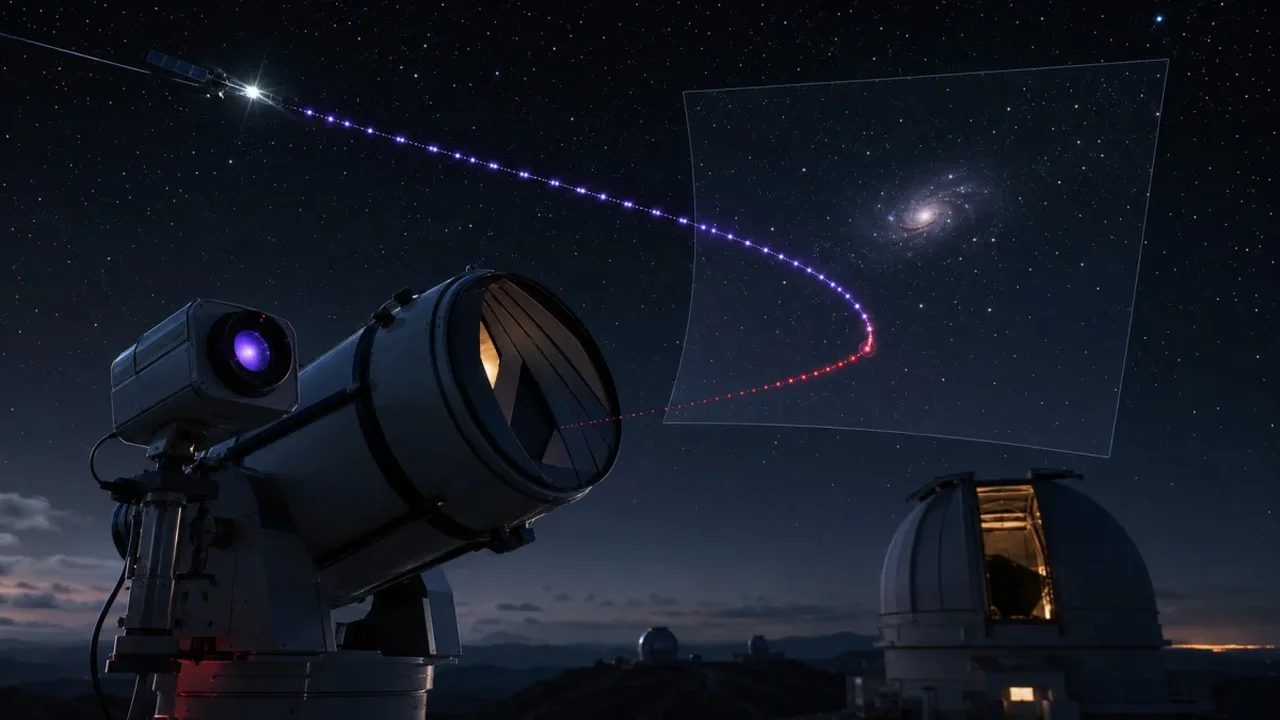
Developed jointly by the European Space Agency and the Chinese Academy of Sciences, SMILE--short for Solar Wind Magnetosphere Ionosphere Link Explorer--has begun studying the glowing auroral ring around Earth's polar region across both night and day.
A new perspective on the auroral oval
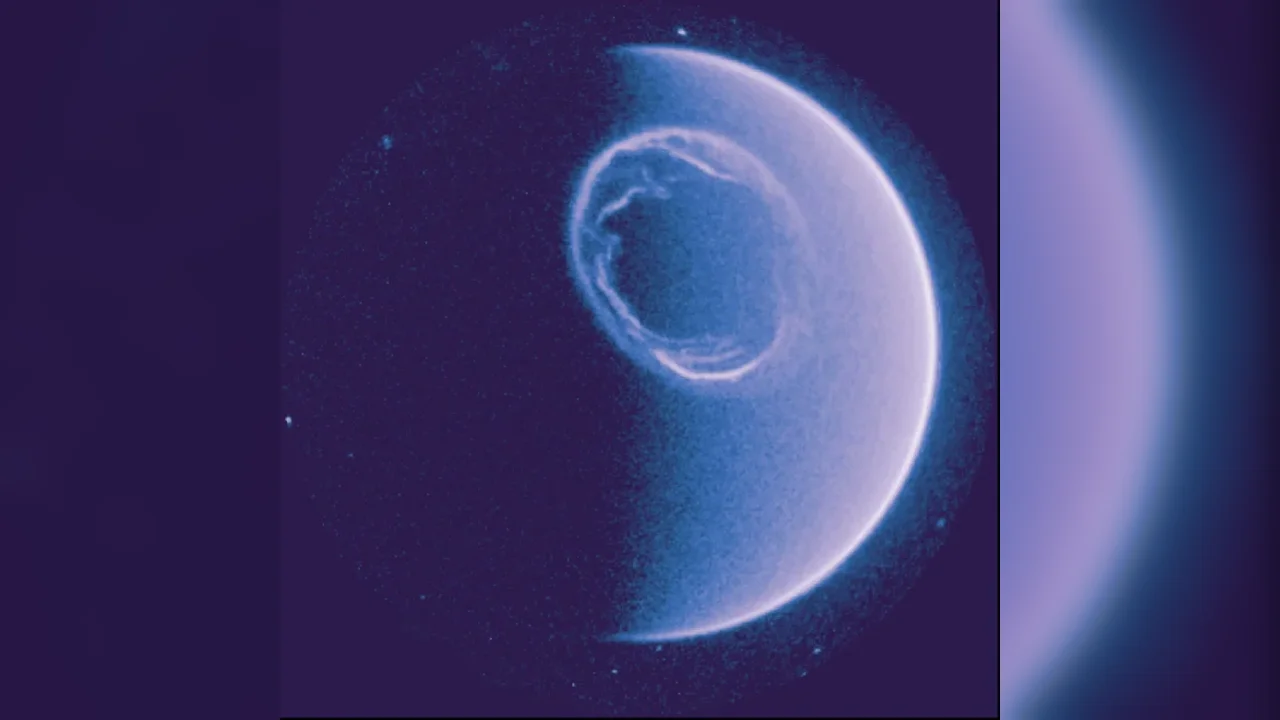
During early operations in July 2026, SMILE's Ultraviolet Imager recorded an auroral substorm, a short-lived burst of activity within Earth's magnetic environment. The observation captured changes across a broad section of the northern auroral oval, including areas illuminated by the Sun.
Auroras form when charged particles carried by the solar wind interact with Earth's magnetic field. Some of these particles are guided toward the polar atmosphere, where collisions with atmospheric gases produce the characteristic glow associated with auroral displays.
Because conventional visible-light observations are overwhelmed by sunlight, daytime auroras have remained difficult to track continuously. SMILE addresses this challenge by detecting ultraviolet wavelengths and filtering much of the natural glow from Earth's upper atmosphere.
Longer observations for space science
SMILE's elongated orbit allows the mission to monitor the polar region for up to 45 hours at a time. This extended viewing period gives researchers a stronger opportunity to follow how solar activity travels through Earth's magnetosphere and influences the auroral zone.
The spacecraft also carries instruments designed to measure solar wind conditions and magnetic-field changes. Combining these readings with ultraviolet auroral observations may help scientists build a more complete picture of the interconnected Sun-Earth system.
As SMILE enters full science operations, its sustained observations could advance space-weather research and support more precise forecasting tools for an increasingly connected technological world.