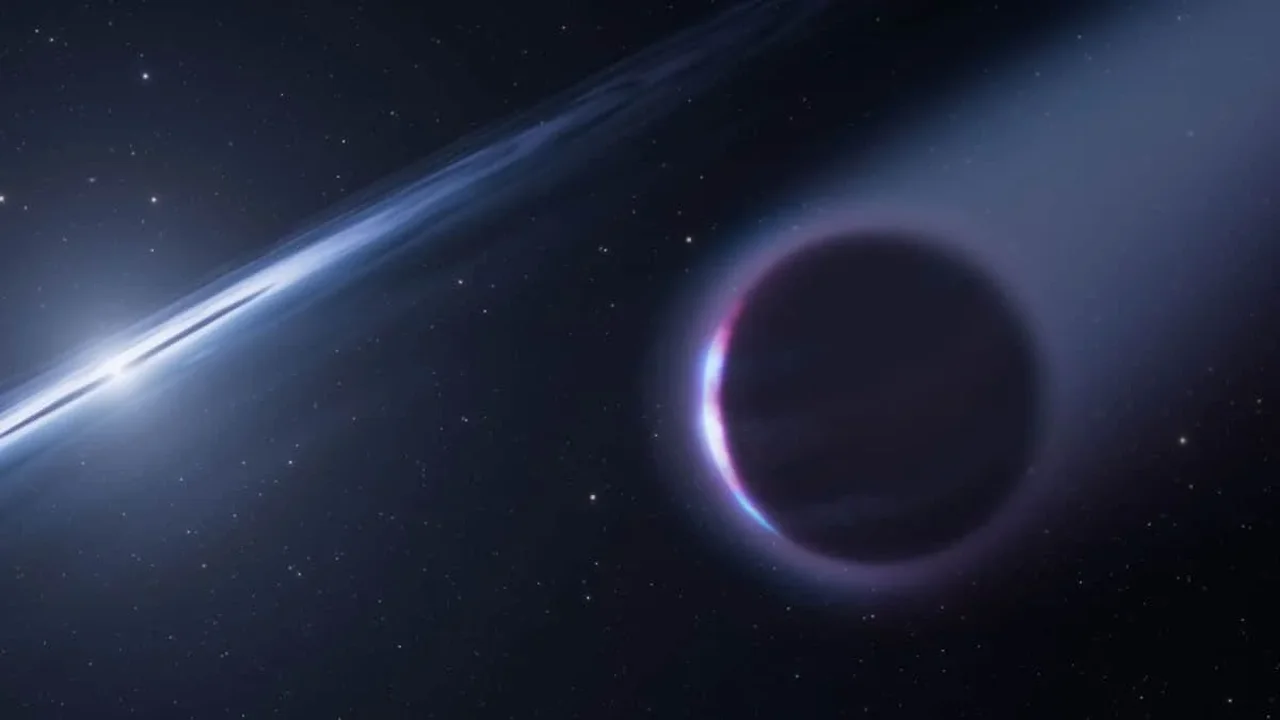
A star's end may not mark the end of its planetary system. Astronomers have found evidence that a planet could have formed from material cast off by a dying star--and is now orbiting the stellar remnant that helped create it.
The candidate circles HS 0209+0832, a hot white dwarf: the compact remains of a star similar to the Sun. Researchers suspect the planet formed from a disk of gas and debris released as the star approached the end of its life. The findings were reported in Nature Astronomy, with lead researcher Jamie Williams of the University of Warwick.
Clues in the star's atmosphere
The white dwarf's atmosphere contains an unusual mix of elements, including copper, zinc and niobium. Niobium is especially notable: it had not previously been identified in a white dwarf. Such heavy elements can indicate that material from an orbiting body has entered the star's atmosphere.
Researchers also detected changes in the system's brightness that may be linked to a planet completing an orbit every 4.4 days. If confirmed, it would be a hot, close-orbiting world--and a rare example of a second-generation planet, formed from the remains of its star rather than from the original material that built the star system.
The white dwarf's intense ultraviolet radiation may now be stripping away the planet's atmosphere. Some of that material appears to be falling onto the star, potentially explaining both the atmospheric elements and the system's changing brightness. The planet remains a candidate, and further observations will be needed to establish its nature.
If confirmed, the discovery would suggest that planets can form even after a star's transformation, broadening the range of places astronomers look for planetary systems.