In the vastness of space, a medical emergency can escalate into a critical situation, especially when medications deteriorate faster than they do on Earth. Research aboard the International Space Station revealed that over half of the medications there had expired within three years, barely sufficient for a round trip to Mars, which takes approximately 200 days each way. Resupply missions become unfeasible when venturing deep into interplanetary space.
Engineers from the University of California, San Diego, have proposed an innovative solution: cultivating medicines directly from plants, akin to growing tomatoes.
Their recent study, published in npj Science of Plants, showcases a straightforward technique for generating and harvesting pharmaceuticals from living plants under conditions that mimic space. This method avoids the need for expensive lab equipment and minimizes biological waste.
Plants as Living Pharmacies
The concept of utilizing plants for drug production is not novel; however, the breakthrough lies in executing it efficiently enough for space applications.
The research team focused on a compound known as cowpea mosaic virus (CPMV), which has demonstrated the ability to stimulate the immune system to target tumors. This compound has shown promising anti-tumor effects in both mice and canine cancer patients, and is currently being evaluated as a potential human treatment.
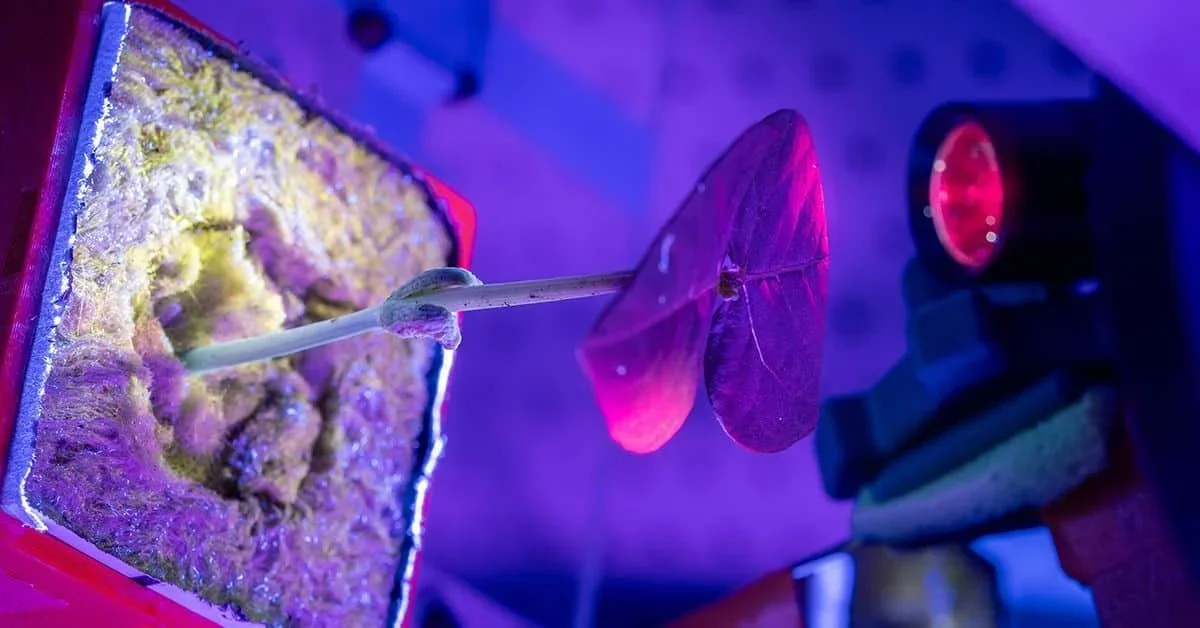
To produce CPMV, the researchers utilized two plant species: Nicotiana benthamiana (a tobacco relative) and black-eyed peas. These plants are adept at quickly generating large amounts of biomass, which translates to higher product yields. The challenge has always been in the extraction process.
"Cultivating the compound in these plants is straightforward," stated Patrick Opdensteinen, a postdoctoral researcher and lead author. "They can generate substantial biomass rapidly, which means more product. The main hurdle now is the extraction method."
The team drew inspiration from how bacterial and mammalian cells are utilized in pharmaceutical production. Rather than dismantling the entire plant, they devised a way to encourage it to secrete the desired product.
The plants naturally release materials into the apoplast, a network of fluid-filled spaces within the leaf. Researchers discovered they could extract CPMV from the apoplast while keeping the plant intact.
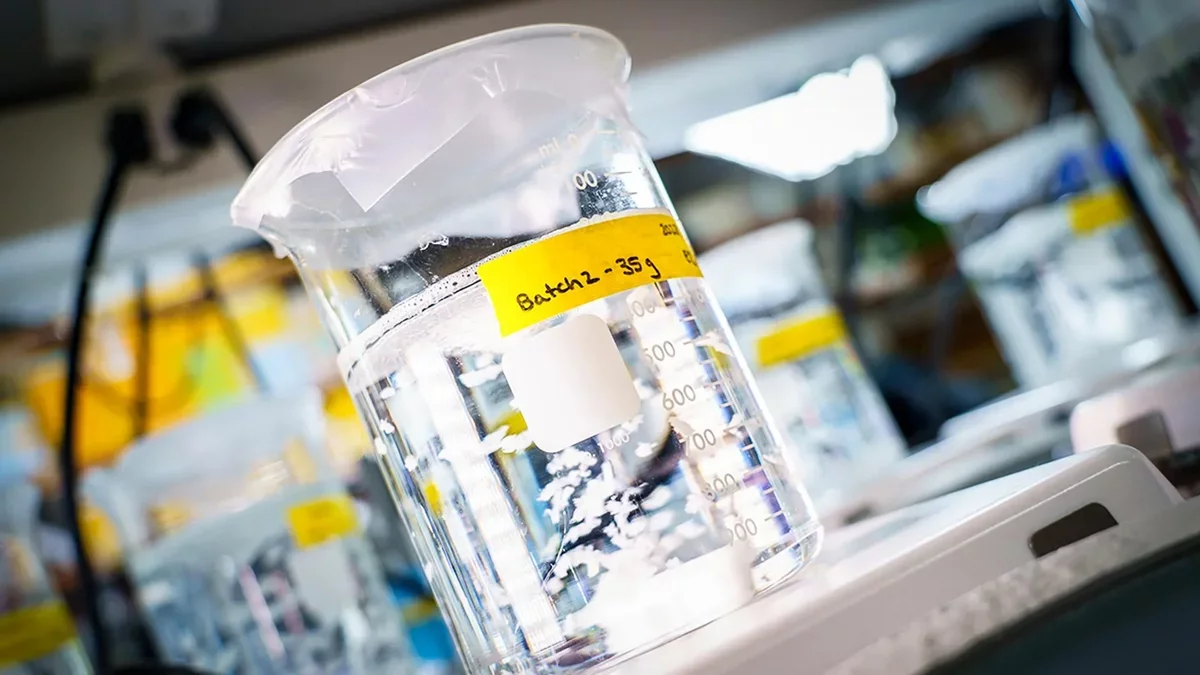
In their extraction process, the leaves are submerged in a buffer solution within a sealed container. A vacuum is applied, allowing the apoplast to absorb the liquid. The saturated leaves are then centrifuged to retrieve the CPMV-rich fluid, which is filtered to separate larger virus particles from plant debris.
This method is efficient, enabling the team to harvest and purify CPMV from over 50 plants in under two hours. The same plants can be harvested multiple times, transforming them into renewable pharmaceutical sources.
Testing Under Space Conditions
To assess the viability of this method in space, the researchers subjected their plants to various space-like stressors. Collaborating with Maziar Ghazinejad's lab at UC San Diego, they used custom-built random positioning machines to simulate microgravity and exposed the plants to extreme temperature variations and oxidative stress.
The findings were promising, with some stress conditions even enhancing CPMV yields. The researchers believe this occurs because stressed plants become more vulnerable to viral infections, which benefits the production of CPMV.
While the journey from proof of concept to astronauts cultivating their own drug gardens is significant, the vision remains compelling. As plants are already being grown in spacecraft for air and water recycling, a system that allows them to produce medicines on demand could revolutionize long-duration space missions.