A groundbreaking biomaterial has been developed that enables the treatment of damaged tissues from the inside out, as stated by Karen Christman, a bioengineering professor at the University of California San Diego and the lead researcher on the project. This innovative approach represents a significant advancement in regenerative engineering.
The findings, published in Nature Biomedical Engineering in 2022, indicated that human trials assessing the safety and efficacy of this biomaterial could commence within the next couple of years.
Transforming Heart Damage Repair
Heart attacks are a major health crisis in the United States, accounting for approximately 785,000 new cases annually. When blood flow to the heart is obstructed, cardiac tissue can sustain damage or perish. The body's natural response is to form scar tissue, which lacks the ability to contract like healthy heart muscle, ultimately weakening the heart and increasing the risk of congestive heart failure.
Currently, there are no therapies that directly repair heart tissue post-heart attack. Treatment largely focuses on restoring blood flow and managing future heart issues.
"Conditions like coronary artery disease and congestive heart failure are significant public health challenges," remarked Dr. Ryan R. Reeves, a physician in the UC San Diego Division of Cardiovascular Medicine. "As an interventional cardiologist, I am eager for new therapies that can enhance patient outcomes."
From Hydrogel to Intravascular Delivery
This research builds on previous work by Christman's team, which involved a hydrogel derived from cardiac muscle tissue's natural scaffolding, known as the extracellular matrix (ECM). This gel was designed for direct delivery into damaged heart muscle via catheter. However, the method faced limitations as it could not be administered immediately post-heart attack due to the risk of further injury.
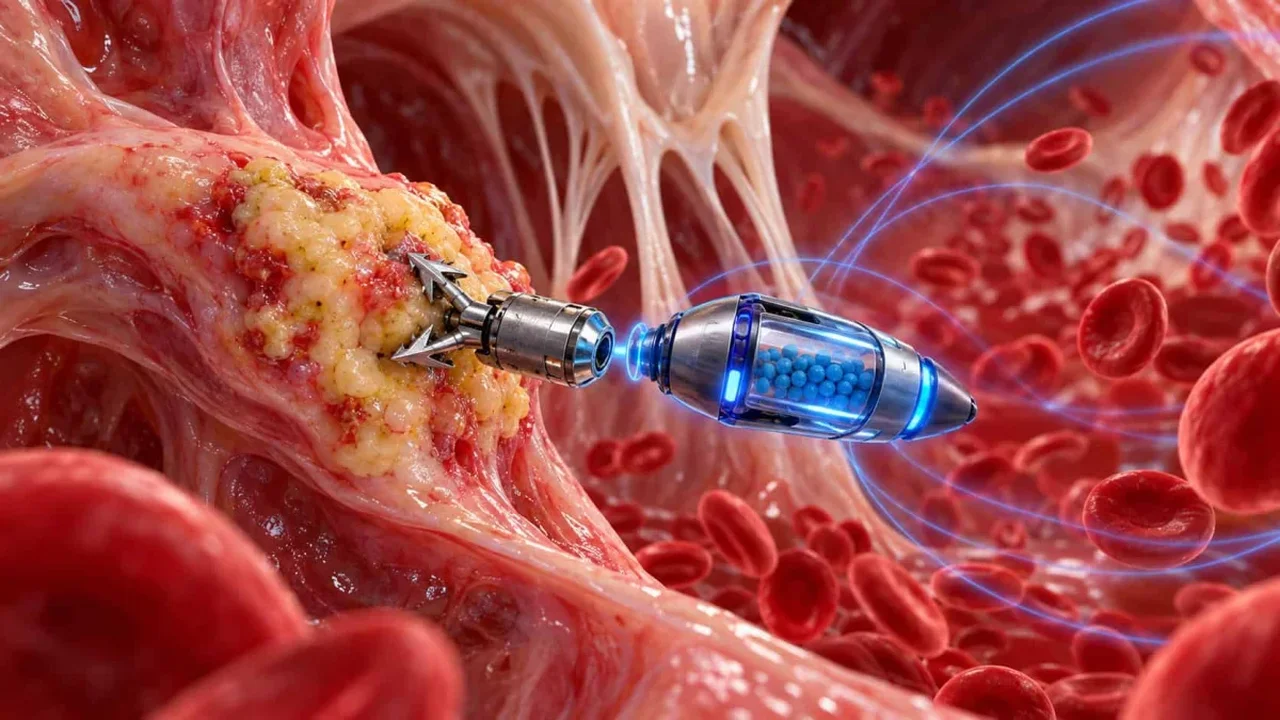
The team pivoted to create a biomaterial that could be infused into a blood vessel during procedures such as angioplasty or delivered through an IV. "We aimed to design a therapy that could reach hard-to-access organs and tissues by utilizing the bloodstream," explained Martin Spang, the first author of the study.
The bloodstream-based approach allows for more uniform distribution of the biomaterial throughout damaged tissue, making it particularly advantageous in the critical moments following a heart attack.
The study described the material as an intravascularly infused extracellular matrix biomaterial, which binds to damaged tissue and is primarily degraded within three days.
Broadening Applications
While the primary focus has been on heart damage, initial tests have suggested that this biomaterial could also be effective in treating other conditions, such as traumatic brain injuries and pulmonary arterial hypertension. The ability to utilize blood vessels for delivery could revolutionize the treatment of various hard-to-reach injuries.
"This study opens new avenues for using biomaterials in treating diseases affecting difficult-to-access organs," Spang noted.
Looking Ahead
Following the initial study, efforts to explore the influence of extracellular matrix-based biomaterials on heart repair continue. Plans are underway for Christman and her startup, Ventrix Bio, to seek FDA approval for human trials of this innovative intravascular biomaterial.
The potential for this treatment is remarkable, as it may soon provide a less invasive option for reaching injured tissues effectively, thereby transforming cardiac care and beyond.