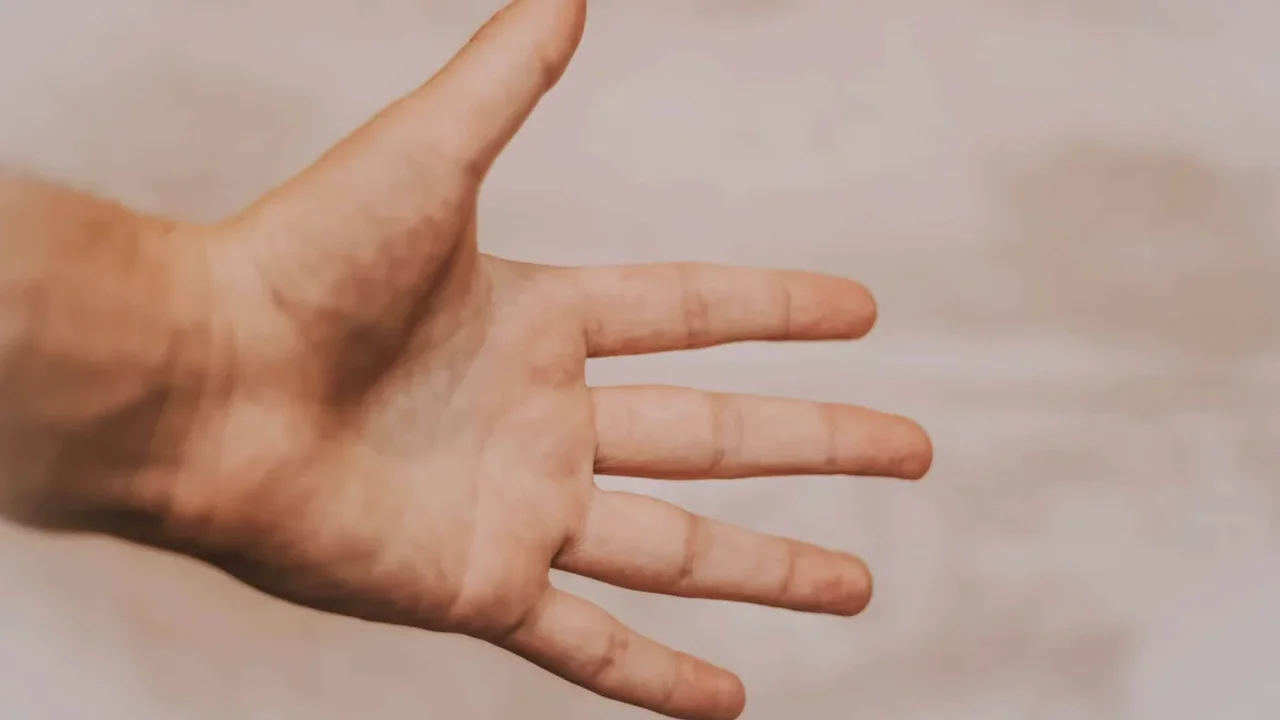
Finger lengths may look like a simple detail, but they reflect a remarkably efficient design. Each finger contributes differently to how the hand grips, balances, and manipulates objects, from precise pinches to stronger holds.
Different roles, different lengths
The middle finger usually serves as the hand's central support, helping guide movement and stabilize grip. The ring finger works closely with it to add strength, especially when carrying or lifting. The index finger is shorter and more independent, which makes it ideal for fine control tasks such as pointing, typing, and writing.
The pinky may be the smallest, yet it plays an important role in steadying the outer edge of the hand. This becomes especially useful when holding wider objects. The thumb stands apart from the others: its special joint allows it to move across the palm and meet the fingers, making precise pinching and grasping possible.
Shaped by evolution and development
Human hands evolved under constant pressure to perform both powerful and delicate actions. Over time, this balance supported survival tasks such as tool use, climbing, and building. The result is a hand that combines strength with precision in a way few other species can match.
Before birth, genes help set the blueprint for hand growth, influencing bone length, joint structure, and tendon formation. Hormones also contribute to subtle differences in finger proportions. Together, these biological factors explain why no two hands are exactly alike, even within the same family.
Daily use adds another layer. Practice strengthens coordination, making the hand more efficient for activities like writing, playing instruments, or handling small objects. In that sense, finger length is not just a physical trait, but part of a larger system built for adaptability. It offers a clear example of how biology can shape function in elegant ways, with future research likely to deepen our understanding of human movement and design.