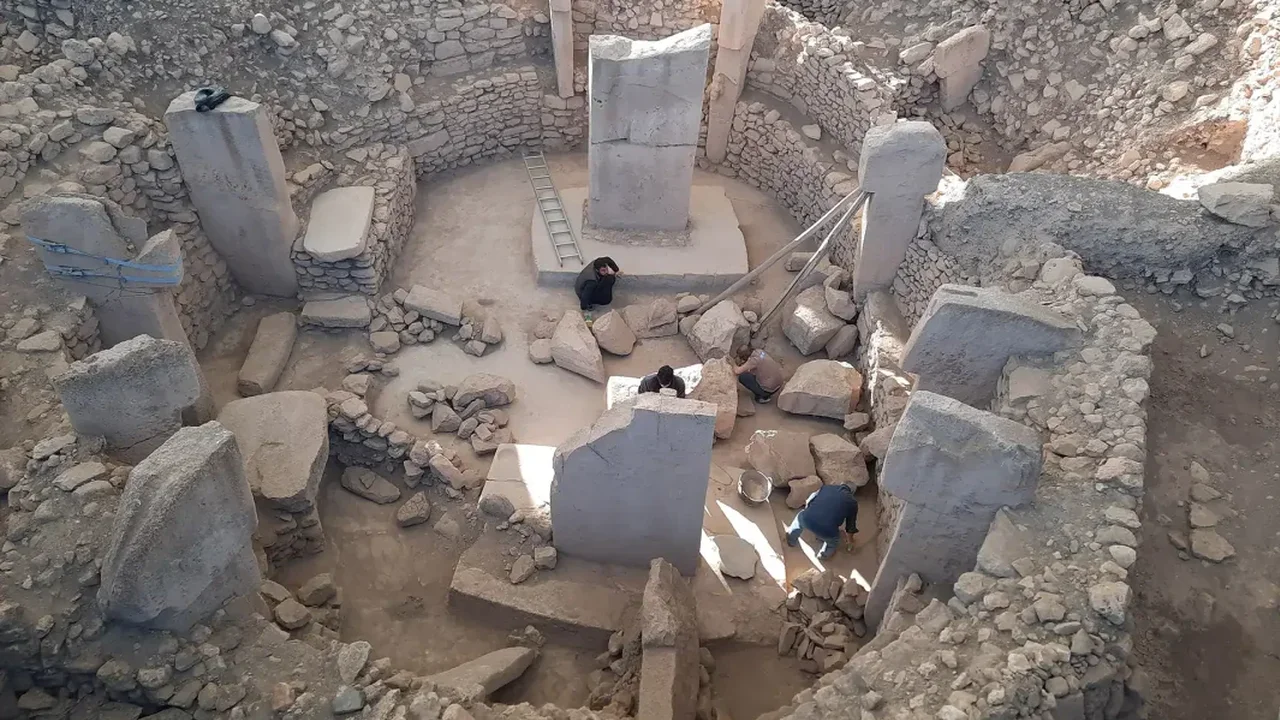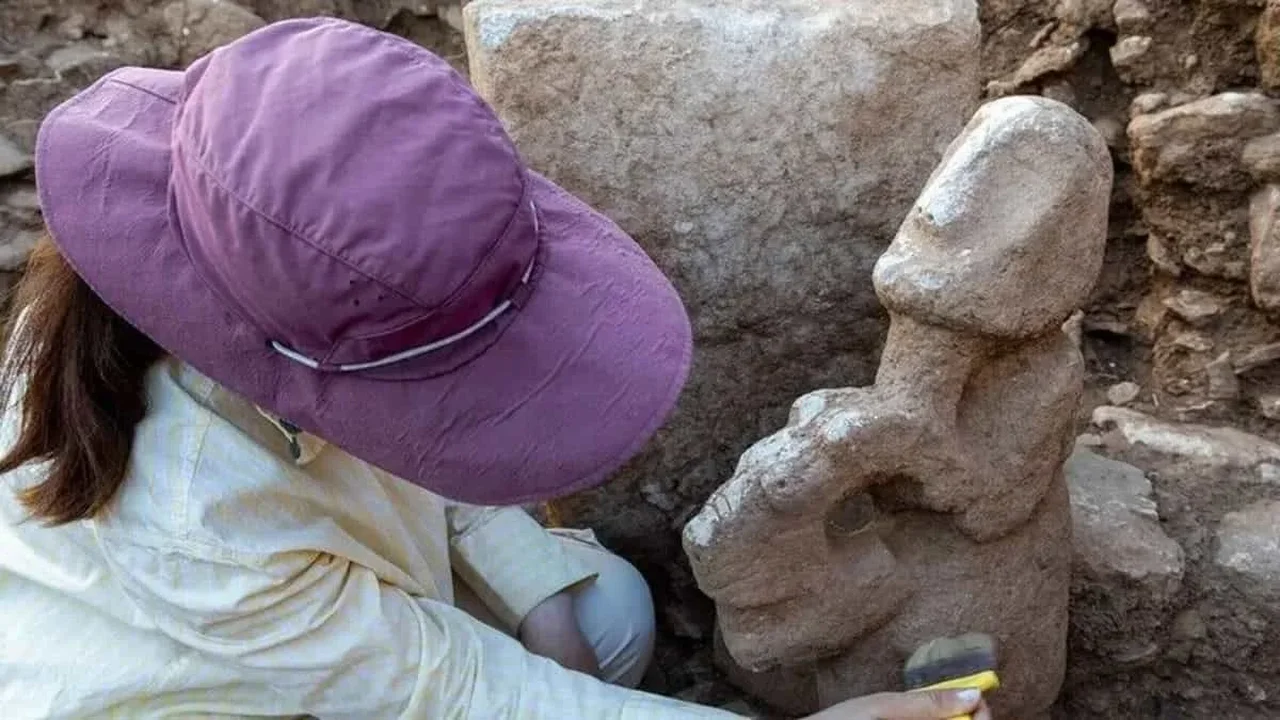
Archaeologists in southeastern Turkey have uncovered an 11,000-year-old limestone sculpture at Karahantepe that shows a human figure seated on what appears to be a leopard. The piece, about 28 inches tall, was found on a stone platform inside a small circular building, suggesting it was intentionally placed in a public ritual space.
The discovery adds a new layer to the artistic world of Karahantepe, a Neolithic site near Şanlıurfa that has already yielded striking human and animal figures. In earlier carvings from the region, leopards often appear as the dominant force, sometimes shown confronting or mounting human figures. This new sculpture reverses that relationship, placing the human above the animal.
A rare glimpse into early symbolic life
Researchers say the image may reflect ideas about strength, courage, control, or the human relationship with the wild environment. Karahantepe belongs to the same broad cultural horizon as Göbekli Tepe, where communities were building monumental structures long before agriculture fully reshaped daily life.
Nearby Sayburç has also produced carved scenes that appear to tell a story, including figures facing leopards and a bull. Together, these sites suggest that early settled communities in Upper Mesopotamia were creating a rich visual language centered on human bodies, powerful animals, and shared gathering spaces.
Because these carvings predate writing by thousands of years, their exact meaning remains open to interpretation. Still, the new find strengthens the idea that Neolithic art was not only decorative, but also deeply connected to identity, memory, and social meaning. It may help future research better understand how early societies imagined power, nature, and community.