Göbeklitepe has long been presented as a landmark of early belief, but new archaeological readings suggest a more layered story. Rather than standing alone as a purely sacred complex, the site increasingly appears to have been part of a broader inhabited landscape in Upper Mesopotamia.
A Site Beyond a Single Label
Recent reassessments point to signs of everyday life around the monumental circles: food remains, grinding tools, mortars, water-management features, and traces of sustained occupation. Surveys in previously unexplored areas have also identified possible dwellings, reinforcing the idea that Göbeklitepe was not isolated from settlement life.
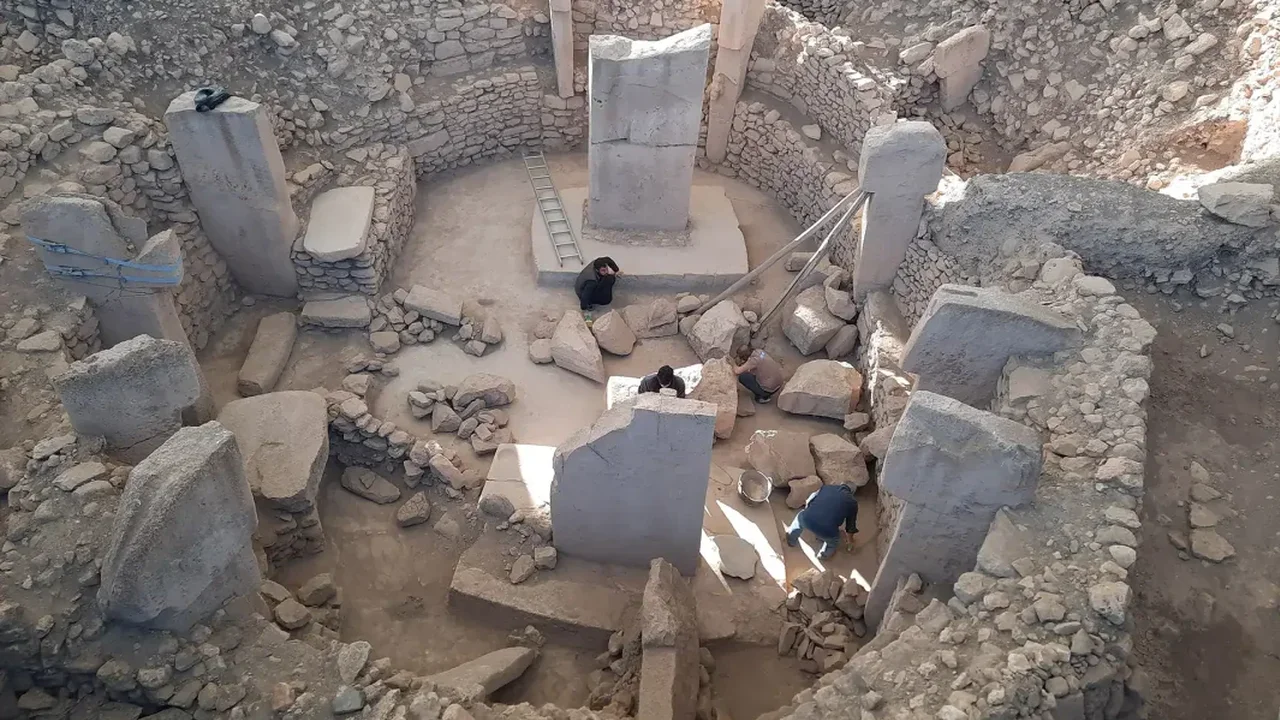
The famous T-shaped pillars and circular enclosures are certainly distinctive, but they are not entirely unique. Similar architectural forms have emerged at nearby Neolithic sites such as Karahantepe and Sayburç, where monumental spaces sit within wider domestic settings. That comparison weakens the argument that Göbeklitepe must have been a temple simply because of its scale or style.
Another key point is the role of ritual. In deep prehistory, ritual could mark birth, death, social transition, communal meals, or collective memory. That does not automatically make a space a temple. Likewise, the deliberate backfilling of structures may have signaled closure, renewal, or social reorganization rather than a purely religious act.
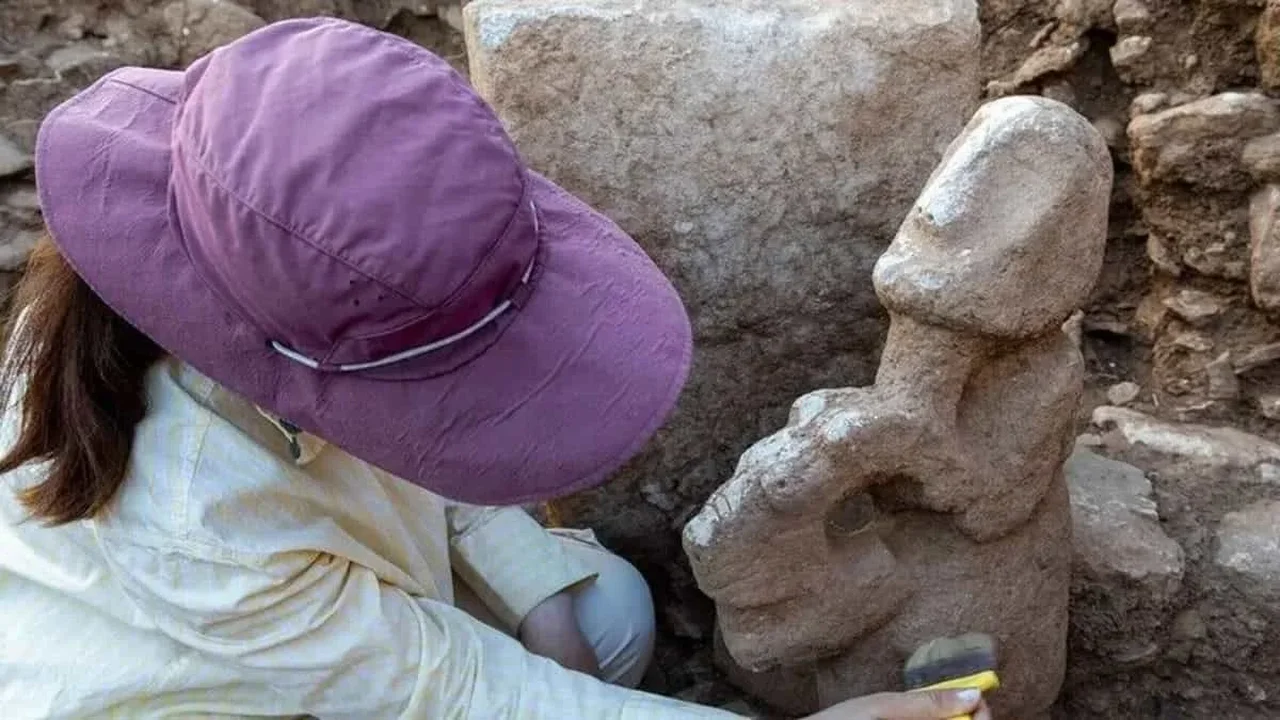
Symbolism at Göbeklitepe also resists simple readings. Animal reliefs, anthropomorphic pillars, and gendered imagery may reflect shared cosmologies, identity, and community coordination rather than a formal priestly system. The evidence does not clearly show a temple economy, a specialized clergy, or a separate religious institution.
What emerges instead is a picture of communities capable of large-scale cooperation. Hunting, food processing, construction, and shared gatherings all suggest organized social life. Göbeklitepe may therefore have functioned as a multifunctional center where labor, memory, ritual, and exchange came together.
In that sense, Göbeklitepe is less a simple "first temple" than a window into how early societies built meaning, cooperation, and architecture at the same time. Its future significance may lie in reshaping how we understand the origins of settlement, symbolism, and collective life.