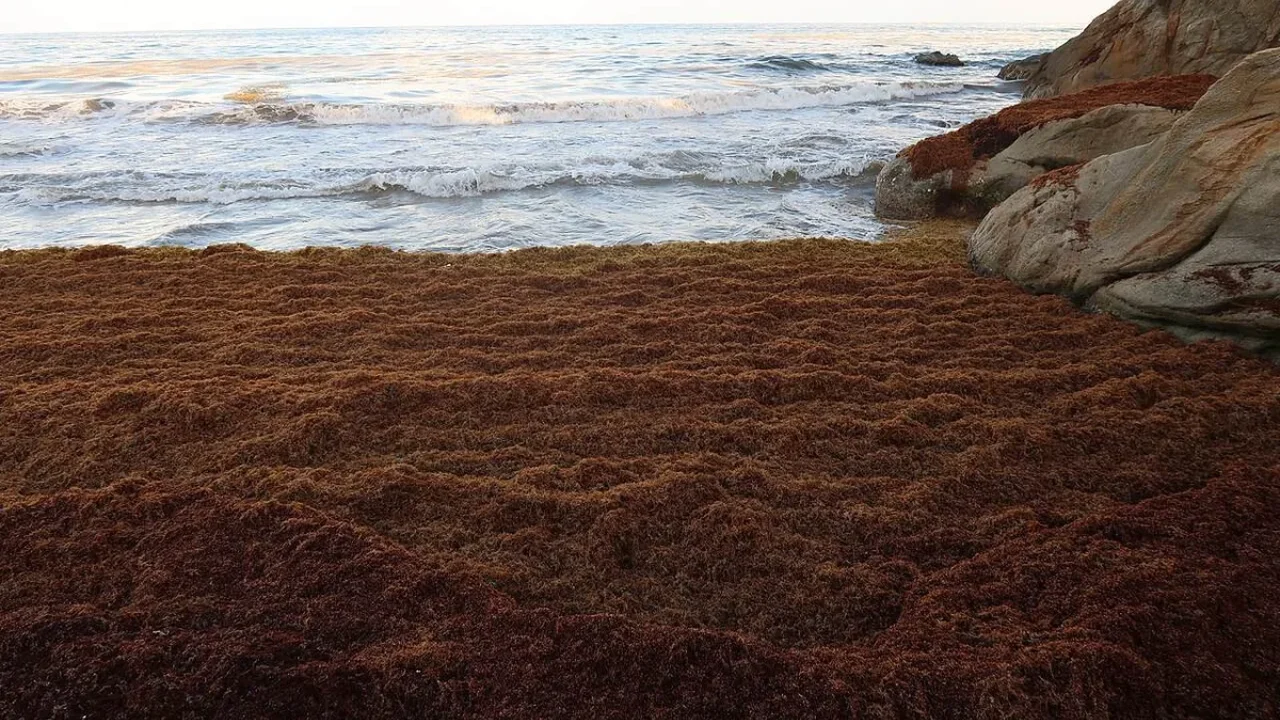
In May 2025, an estimated 37.5 million metric tons of floating sargassum stretched across the Atlantic, from West Africa toward the Gulf of Mexico. The Great Atlantic Sargassum Belt has appeared in satellite records nearly every year since 2011, though its size varies.
A review by researchers at Florida Atlantic University's Harbor Branch Oceanographic Institute examined four decades of observations and research to understand what drives the seaweed's growth. Their findings point to several interacting factors rather than a single nutrient source.
A changing supply of nutrients
Sargassum grows quickly when nitrogen and phosphorus are available. Research has linked changes in the seaweed's nutrient composition to a possible shift from natural ocean processes toward land-based inputs. However, the extent to which river nutrients support the belt remains uncertain.
Other studies offer evidence for ocean-based sources. A 2025 study in Nature Geoscience connected changes in bloom levels with phosphorus-rich water rising toward the surface near the equator. Experiments reported in Marine Environmental Research in 2026 found that subsurface water supported the strongest growth under the conditions tested. These findings do not rule out contributions from rivers or other sources across the Atlantic.
Currents and life within the mats
Ocean currents, including the Loop Current and Gulf Stream, help transport sargassum across the region. Nutrients may also be recycled within the floating mats, where marine animals and microbes contribute to local nutrient supplies. A 2026 study in Nature Communications used a model combining ocean mixing and this recycling to reproduce much of the observed variation in blooms.
Floating sargassum also provides habitat and food for marine life, including young sea turtles. Large accumulations can affect coastal ecosystems, making reliable monitoring and forecasting important alongside research into nutrient sources.
As scientists clarify how currents, nutrients and marine life interact, improved models could help communities anticipate changes in the belt and support more informed ocean management.