Researchers from the University of Illinois Urbana-Champaign and the Technical University of Denmark have developed a three-dimensional structure that can steer heat around an object, leaving the temperature pattern beyond it almost unchanged.
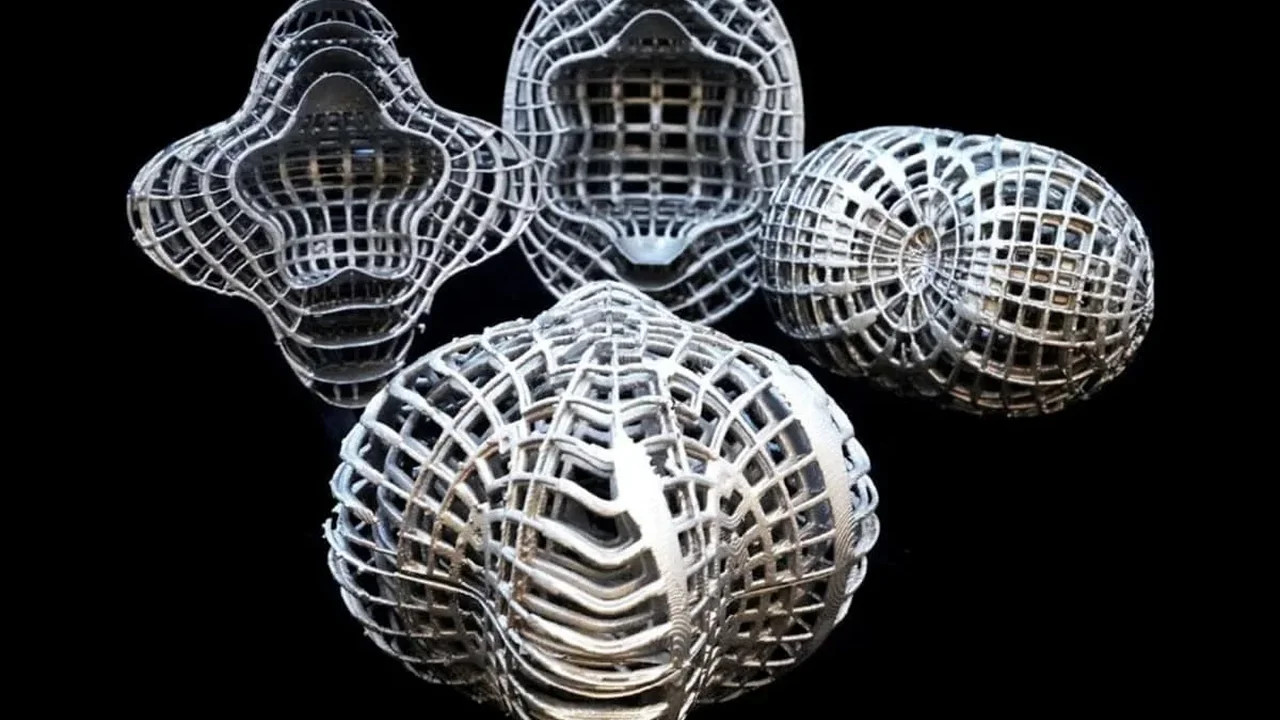
The design combines intersecting aluminum bars, which conduct heat efficiently, with polydimethylsiloxane, a rubber-like material that conducts it poorly. By adjusting the metal lattice's thickness and orientation, the team can guide heat in different directions around intricate shapes.
In a physical test, an apple-shaped core was placed inside a pear-shaped shell made with the cloak. The sample sat between a warm plate and a chilled one. Infrared measurements showed that the temperature bands outside the structure remained nearly undisturbed, while the protected region experienced less heat transfer. The researchers also tested a heart-shaped design.
The team produced more detailed, face-shaped structures too, but their ability to cloak heat was assessed through computer simulations rather than physical testing. The device redirects heat moving through solid materials; it does not conceal heat generated and emitted by a person or another warm object.
Potential applications in electronics
Earlier thermal-cloaking designs were limited in the shapes or directions they could handle. This approach is designed to work with complex three-dimensional forms and heat arriving from multiple directions. The findings were published in Nature Communications.
Possible applications include protecting sensitive electronics and improving temperature control in computer chips. If further developed, this kind of heat-management technology could help engineers design devices that operate more reliably in demanding environments.