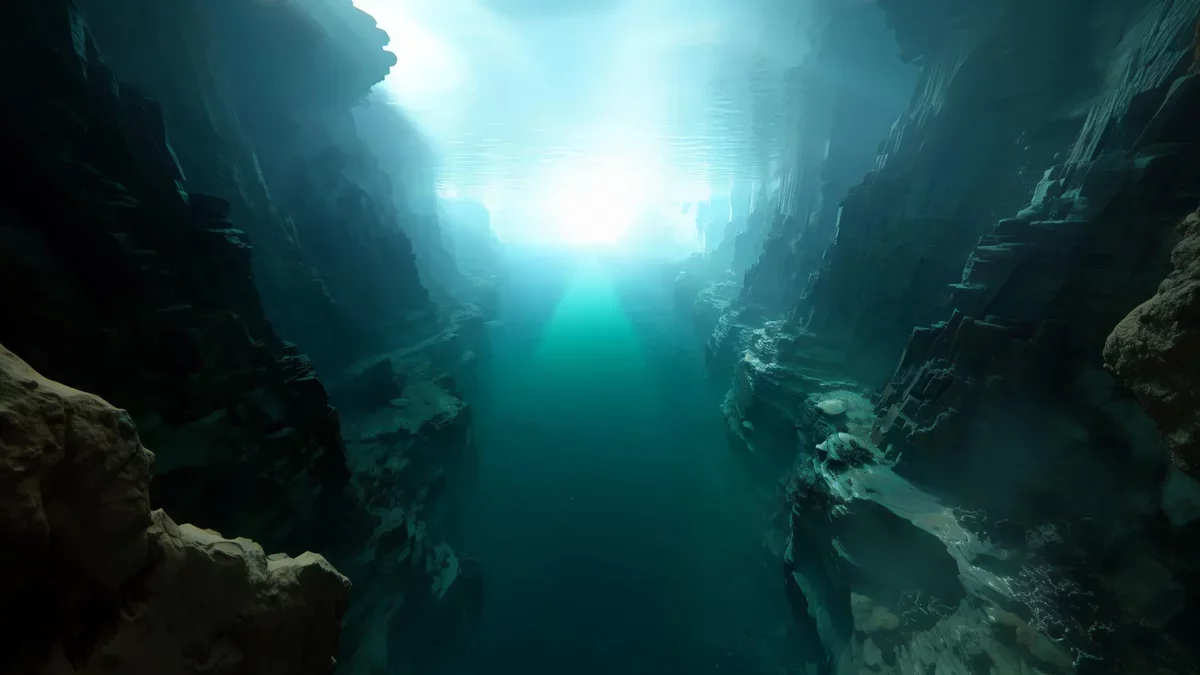
Approximately 1,000 kilometers off the coast of Portugal lies an extraordinary underwater formation known as the King's Trough Complex. This extensive structure spans around 500 kilometers and features a series of parallel trenches and deep basins, with Peake Deep marking its eastern edge as one of the Atlantic Ocean's deepest points.
A team of international scientists from the GEOMAR Helmholtz Centre for Ocean Research Kiel has made significant discoveries regarding the origins of this massive formation. Their research, published in Geochemistry, Geophysics, Geosystems by the American Geophysical Union, sheds light on the tectonic processes that shaped the King's Trough.
Lead author Dr. Antje Dürkefälden, a marine geologist at GEOMAR, states, "Researchers have long suspected that tectonic movements were crucial in forming the King's Trough. Our findings elucidate why this remarkable structure emerged in this specific location."
Seafloor Rifting Between Europe and Africa
The study reveals that between 37 and 24 million years ago, a plate boundary separating Europe and Africa temporarily traversed this section of the North Atlantic. As tectonic plates shifted, the crust in the area experienced pulling and fracturing, resembling a zipper being undone from east to west.
Delving deeper, the researchers discovered that prior to the plate boundary's migration, the oceanic crust had thickened and heated due to a mantle plume--an upward flow of hot material from beneath the Earth's surface. This plume is believed to be an early manifestation of the current Azores mantle plume.
"The thickened and heated crust likely weakened the region, prompting the plate boundary to shift here preferentially," explains co-author PD Dr. Jörg Geldmacher, also a marine geologist at GEOMAR. "As the plate boundary migrated south toward the modern Azores, the formation of the King's Trough came to an end."
How Mantle Activity Shapes the Atlantic
The King's Trough exemplifies the intricate relationship between deep mantle processes and tectonic movements. Activities occurring far beneath the surface can predispose the crust to deformation, determining where significant fractures and rifts will form.
This research also enhances our understanding of the Atlantic Ocean's geodynamic history. Similar geological processes may still be active today, as evidenced by the Terceira Rift near the Azores, where another trench system is developing due to unusually thick oceanic crust.
Mapping the King's Trough
The conclusions drawn from this study are based on data collected during the M168 research expedition aboard the METEOR in 2020, led by Dr. Dürkefälden. Utilizing high-resolution sonar, the team created a detailed map of the seafloor and retrieved volcanic rock samples from various locations within the trench system. These samples underwent chemical analysis, and dating was conducted at the University of Madison in Wisconsin, USA, with contributions from additional institutions.