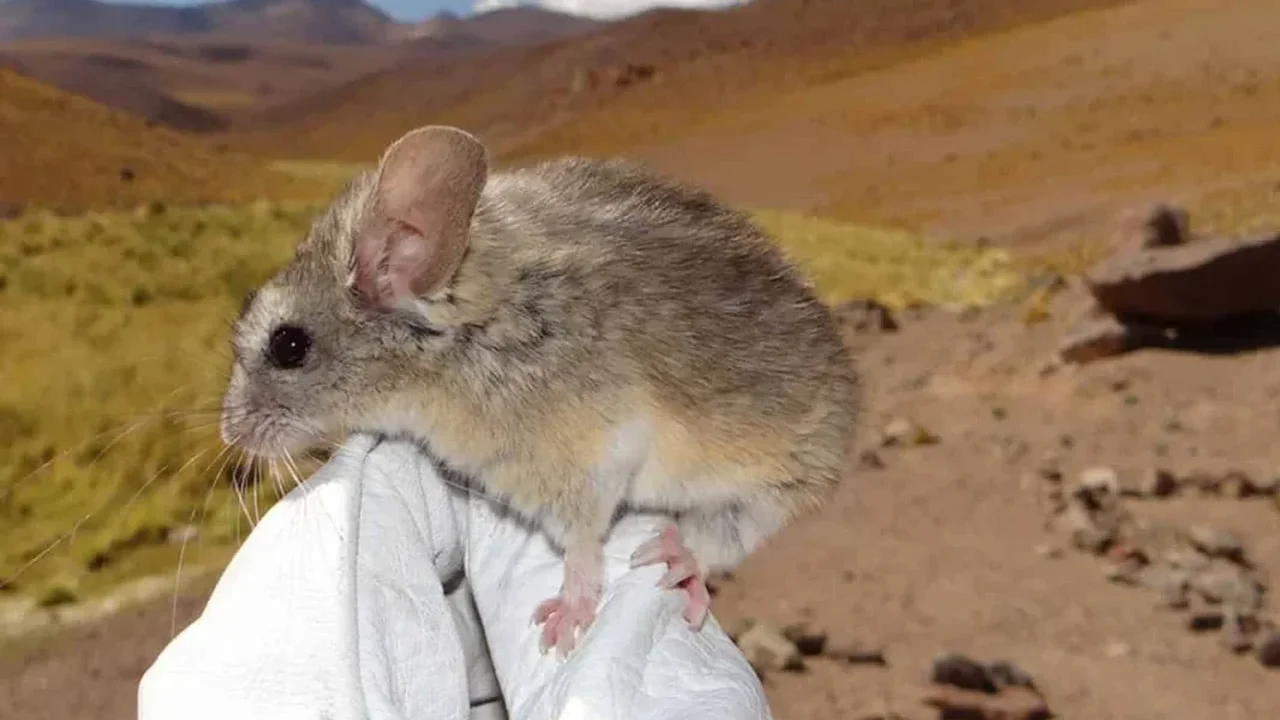
Scientists have uncovered how the Andean leaf-eared mouse manages to live at heights that push far beyond what most mammals can tolerate. Found across the Andes from sea level to volcanic peaks above 6,700 meters, this tiny rodent offers a rare window into adaptation at the edge of life.
A natural experiment in extreme living
Because the species spans such a wide altitude range, researchers were able to compare lowland and high-altitude populations of the same animal. More than 160 mice were studied through field expeditions, genome analysis, physiology tests, muscle measurements, and metabolic profiling.
The results show that the mountain mice are built for efficiency. Their muscles contain unusually high numbers of mitochondria, helping them generate energy and heat while using very little oxygen. Instead of relying mainly on carbohydrates, they also appear to favor fat as fuel, which supports steady heat production in freezing conditions.
Adaptation goes beyond breathing
The study also found genetic changes linked to energy use, blood flow, and long-term tolerance to low oxygen. Interestingly, the mice do not seem to depend on major changes in hemoglobin, unlike some other high-altitude species. Their survival strategy appears to come from a coordinated upgrade across several biological systems.
One of the most unexpected discoveries involved diet. Although the volcanic landscape seems sparse, the mice feed on alpine plants, lichens, and other available material. Researchers found signs of natural selection in genes that help break down toxic plant compounds, suggesting the animals can process food that would challenge many other mammals.
Another notable finding is that high-altitude and low-altitude mice still interbreed, yet the extreme-altitude traits remain. That points to ongoing natural selection preserving the adaptations needed for life in thin air and cold environments.
Published in Science, the study may also help scientists better understand how cells respond to chronic oxygen deprivation, with possible relevance for future biomedical research. It offers a striking reminder that evolution often works through fine-tuned systems rather than single dramatic changes, and that such discoveries may shape how we understand resilience in the future.