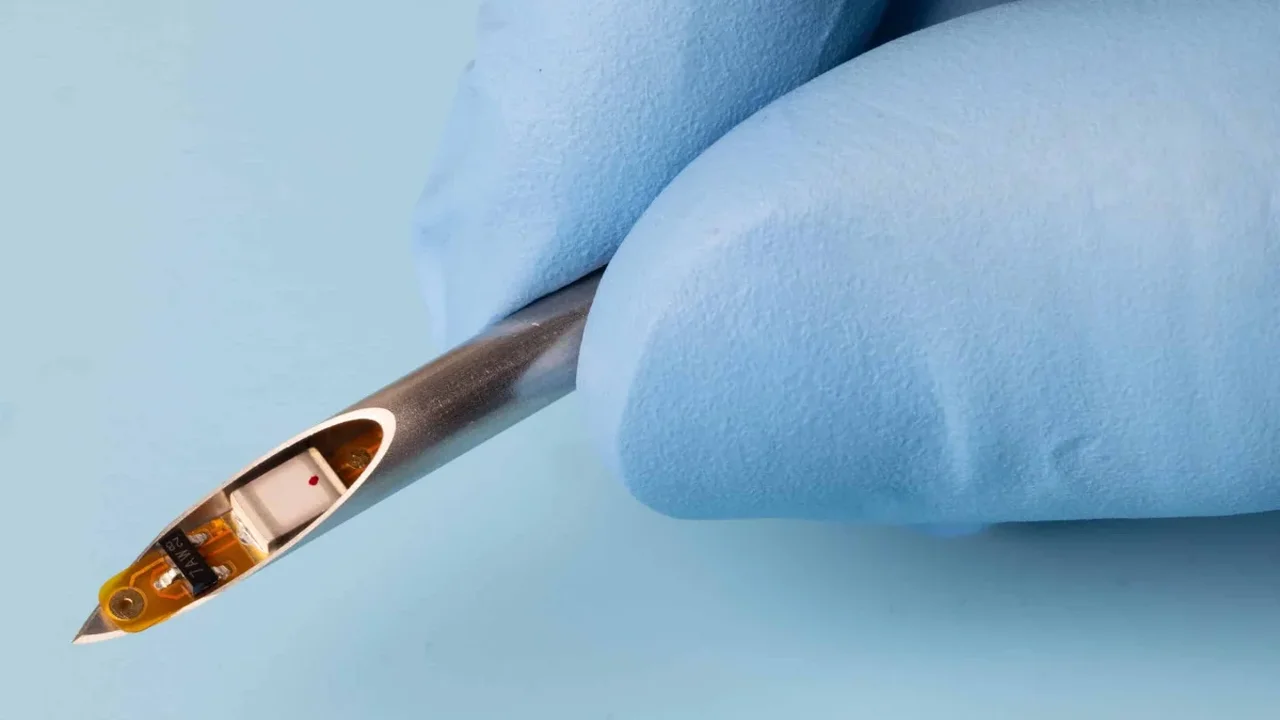
Researchers at Georgia Tech have introduced a new approach to medical-device communication that uses the human body's own conductive tissues as part of a wireless network.
The system, called SWANS--Smart Wireless Autonomous Networking System--allows wearable sensors and tiny implanted devices to exchange simple commands through low-level electrical pulses rather than conventional radio technologies such as Bluetooth.
Using tissue as a communication pathway
Because body tissues contain water and ions, they can conduct small electrical signals. In the new setup, a wearable hub creates carefully controlled pulses that form a voltage gradient through tissue. An implant equipped with conductive pads and a compact transistor circuit can detect a designated signal and activate when needed.
This design could allow several implants to respond selectively to different pulse patterns. A sensor detecting movement or another biological change could therefore trigger a specific device elsewhere in the body, such as an actuator designed to stimulate a nerve or support future therapeutic functions.
Smaller devices with lower power needs
According to the research published in Science, the platform's communication components were more than 15 times as power-efficient as Bluetooth- and NFC-based alternatives in the tested configuration. The system also demonstrated broader tissue communication coverage than Bluetooth.
Some electronics measured under three millimetres across, a scale that could eventually enable implantation through a needle rather than a surgical procedure. The team tested communication under the skin, in the abdominal cavity and through the gastrointestinal tract.
In proof-of-concept experiments involving rats, sensors on the front limbs detected movement and transmitted a signal through the body. Implants near the hind limbs received the command and activated connected nerve cuffs, producing selective leg movement.
The technology has not yet been demonstrated in people. Further research will need to establish long-term safety, reliability and consistent performance across the greater anatomical variation of human bodies.
By shifting some medical-device communication from radio waves to the body's own conductive pathways, in-body networking could help shape a future of smaller, lower-power and more precisely coordinated therapeutic implants.