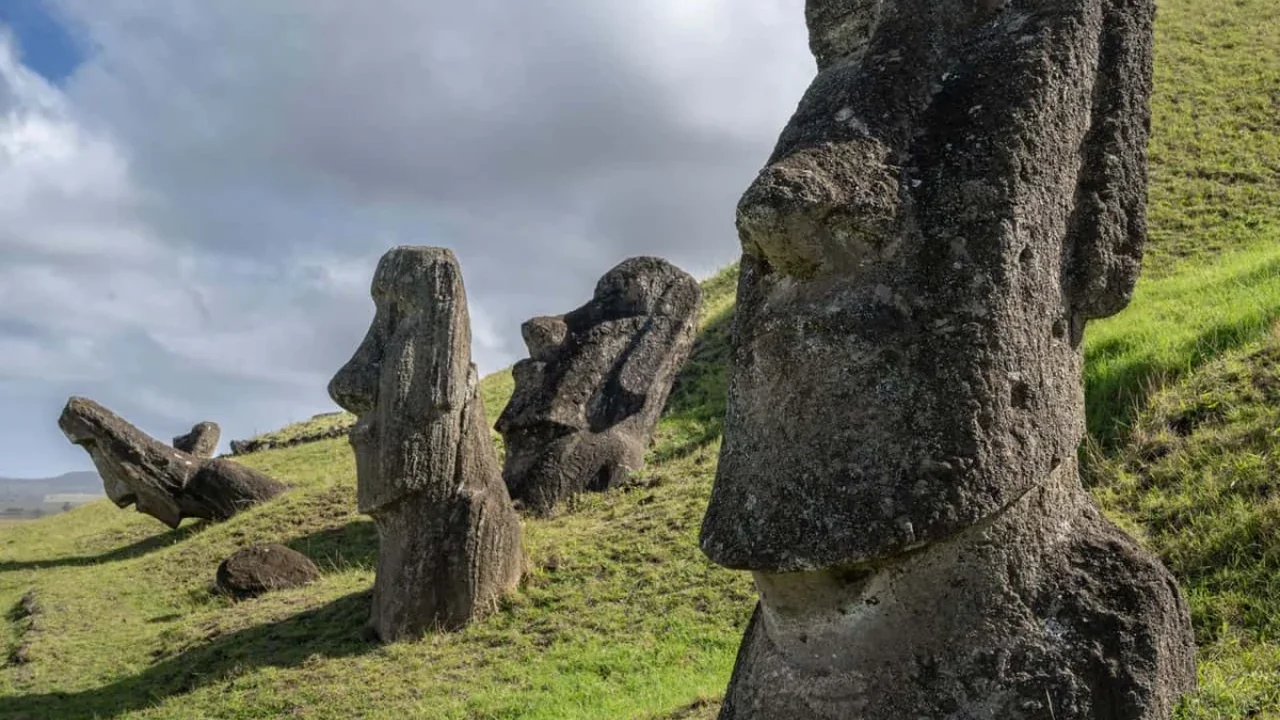
A genetic study has found that Native Hawaiians and the Indigenous people of Rapa Nui, also known as Easter Island, share a closer ancestral connection than the other remote Polynesian populations examined. The islands lie about 7,000 kilometers apart, but their distance did not prevent ancient voyagers from leaving a shared genetic legacy.
Researchers analyzed 1,050 whole-genome sequences from across Polynesia, including people from Hawaii, Rapa Nui, Samoa and Tonga. Across 2,500 reconstructed genetic trees, Hawaii and Rapa Nui appeared together 61% of the time.
Tracing a Pacific voyaging past
The findings point to a migration history that may have passed through Mangareva, with deeper ancestral roots in the Marquesas. The researchers describe the proposed seafaring tradition as Holomoana Nui, meaning "great ocean voyaging." The results identify shared ancestry, however, and do not establish that people sailed directly between Hawaii and Rapa Nui.
Repeated settlement by relatively small groups can change the genetic makeup of a population. Known as the founder effect, this process can make some inherited variants more common over generations. The study found that such effects were especially pronounced in remote eastern Polynesia.
Researchers also identified three variants associated with inherited conditions affecting vision and kidney function in French Polynesia. One variant in the FAN1 gene was carried by about 2.2% of the study group. Understanding how these variants are distributed could help inform future health research and care.
Published in the journal Science, the study connects present-day genetic patterns with the remarkable history of Pacific navigation. Further research may deepen understanding of Polynesian ancestry while supporting more informed, population-specific healthcare.