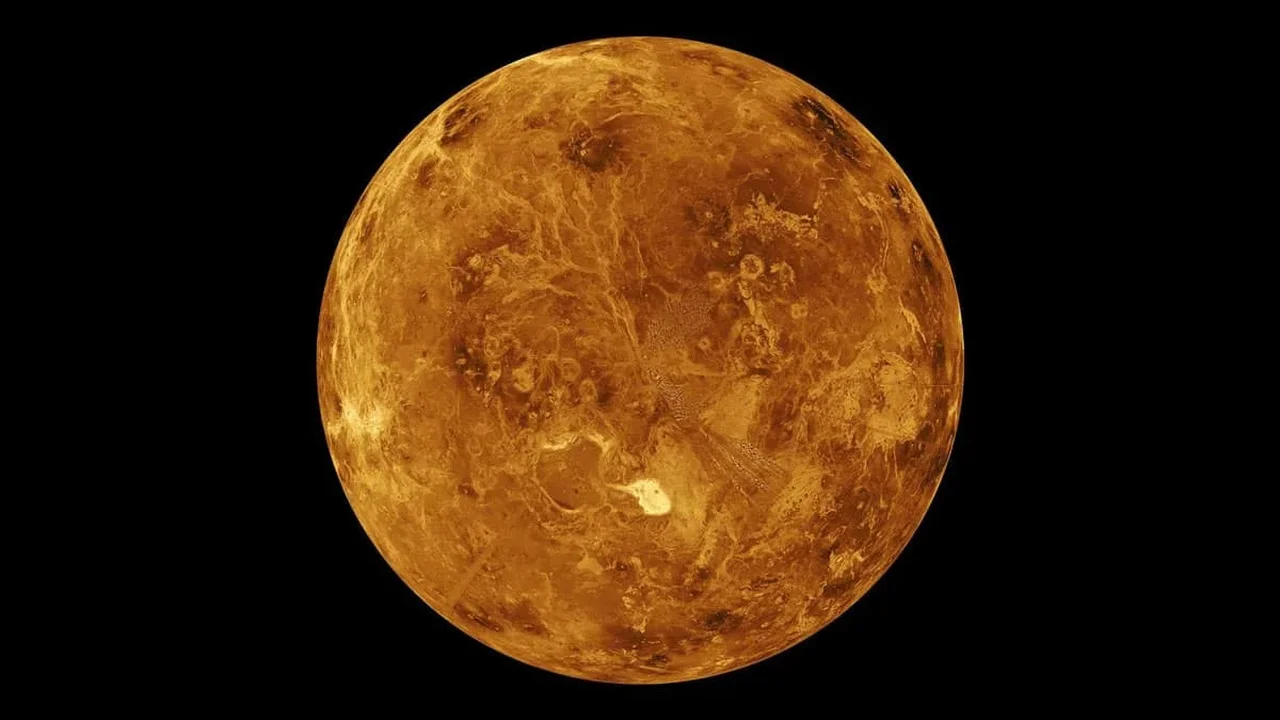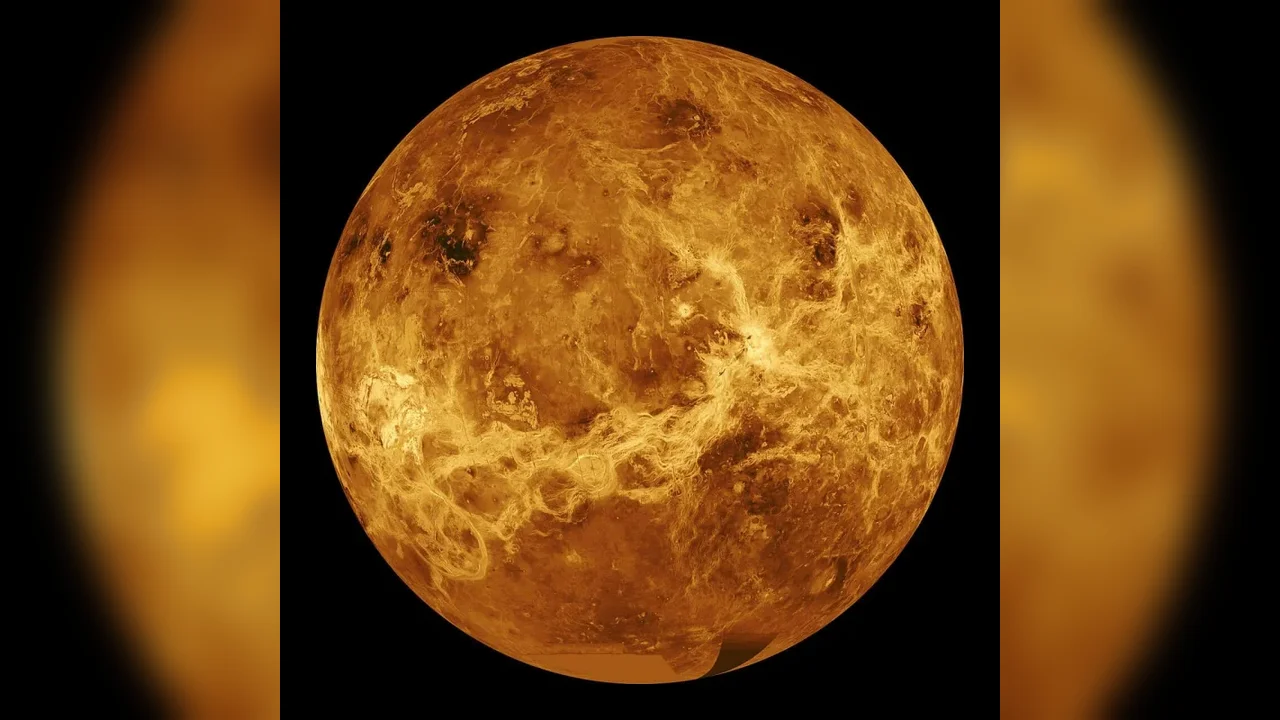
Venus is offering astronomers a valuable lesson: a planet's atmosphere can make it look like it spins much faster than its solid surface actually does. That insight matters as scientists prepare to study rocky worlds beyond our Solar System with far more precision.
Research led by Stephen Kane at the University of California, Riverside shows that strong upper-atmosphere winds could mimic rotation signals when astronomers analyze reflected light from exoplanets. In other words, what appears to be a planet's spin may sometimes be the motion of clouds and gases instead.
Why rotation matters
Rotation is more than a technical detail. It shapes climate, cloud cover, heat transport and the way a planet reflects starlight. Venus is the clearest example: its surface completes one turn in about 243 Earth days, while its atmosphere races around the planet in roughly four to five days. That mismatch creates a phenomenon known as superrotation.
Kane's model, accepted by The Astronomical Journal, explores how future observatories might separate surface spin from atmospheric motion by studying subtle shifts in reflected light. As a planet turns, its light changes through the Doppler effect, but different atmospheric layers can produce similar signals. Comparing spectral features at different pressures may help reveal whether scientists are tracking the ground or the winds above it.
This distinction could be especially important for Earth-sized and Venus-sized planets. A fast-spinning rocky world should show a more uniform signal across atmospheric layers, while a slow rotator with superrotating clouds would display different speeds at different heights. Venus fits the second pattern.
Future tools such as NASA's proposed Habitable Worlds Observatory and advanced ground-based spectrographs may use this method to better understand distant climates. The goal is not only to measure rotation, but also to learn how a planet's atmosphere shapes its long-term habitability.
By refining how rotation is measured, astronomers may gain a clearer view of which rocky planets stay temperate and which evolve into extreme greenhouse worlds. That progress could sharpen the search for life-friendly environments across the galaxy and guide the next era of exoplanet discovery.