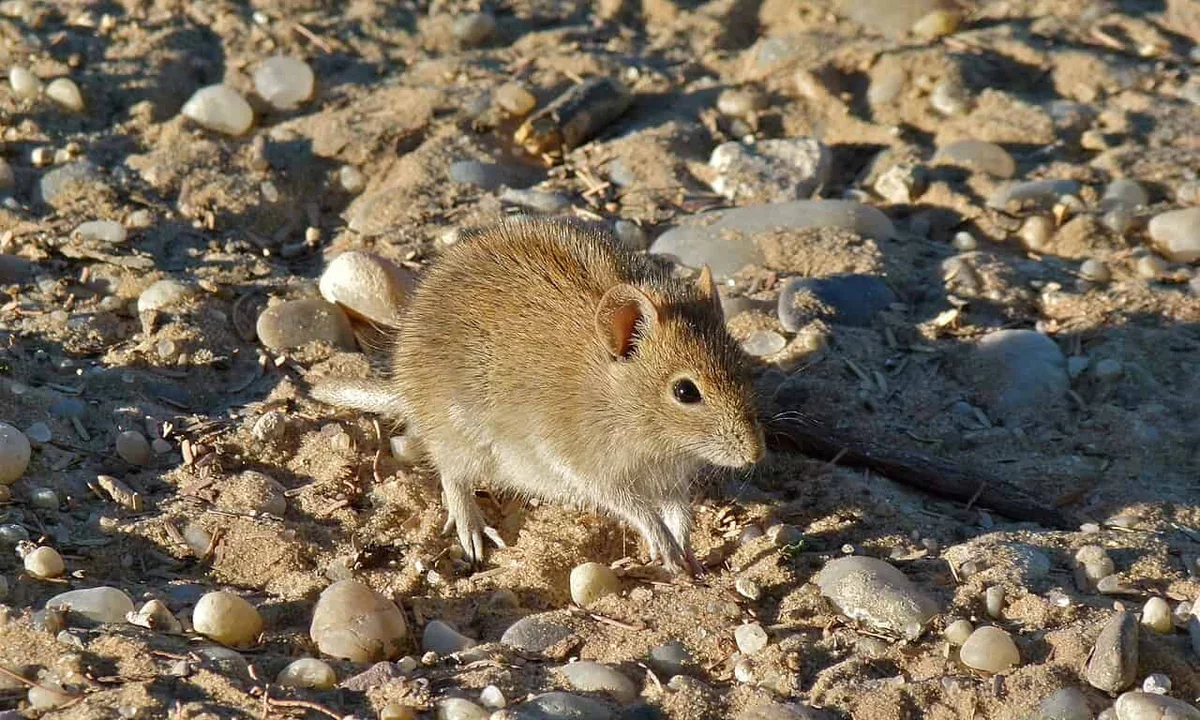
In the animal kingdom, particularly among mammals, paternal involvement in nurturing offspring is often minimal. However, the African striped mouse defies this trend, showcasing a fascinating dichotomy: while some males exhibit extraordinary caregiving behaviors, others display neglectful or even aggressive tendencies towards their young.
A research team led by Forrest Rogers from Princeton University has delved into this intriguing phenomenon. Their findings, published in Nature, unveil that the key to understanding these contrasting behaviors lies in the activity of a single gene, primarily known for its role in fur coloration.
The Molecular Mechanism
The study focused on the medial preoptic area (MPOA) of the brain, a region recognized for driving maternal instincts in females, which also plays a critical role in male parenting. Interestingly, even male mice without offspring can exhibit nurturing behaviors, indicating that the potential for caregiving exists independently of paternal experience.
Researchers discovered that "good dads" had lower levels of the Agouti gene in their MPOA. While Agouti is typically associated with fur color, it also appears to modulate behaviors related to nurturing. When the gene's levels were artificially increased, even the most attentive fathers became indifferent and aggressive.
Environmental factors also influence these behaviors. Mice raised in stressful, crowded conditions exhibited higher Agouti levels and were more prone to aggression towards pups. Conversely, male mice in solitary environments showed reduced Agouti levels, leading to more caring behaviors.
Understanding the Complexity of Care
At first glance, the relationship between a single gene and varying paternal behaviors seems straightforward. However, the reality is more intricate. The Agouti gene produces a signaling protein that interacts with melanocortin receptors, commonly associated with appetite regulation. In the MPOA, this pathway connects a male mouse's social environment with his responses to offspring.
Significantly, the researchers ruled out hunger as a factor influencing paternal behavior. Adjustments in diet did not affect Agouti levels or nurturing tendencies, suggesting that long-term housing conditions, rather than immediate hunger, shape these behaviors.
These findings prompt a reevaluation of how male caregiving is understood. Rather than being an activated response, nurturing seems to be a default capability that can be suppressed by environmental stressors. As noted by Catherine Dulac of Harvard University, the research highlights that male parenting behavior may be repressed under certain conditions, rather than simply turned on.
While the study offers intriguing insights into the biology of caregiving, the researchers caution against directly applying these findings to human behavior, as the mechanisms governing fatherhood in humans remain distinct.