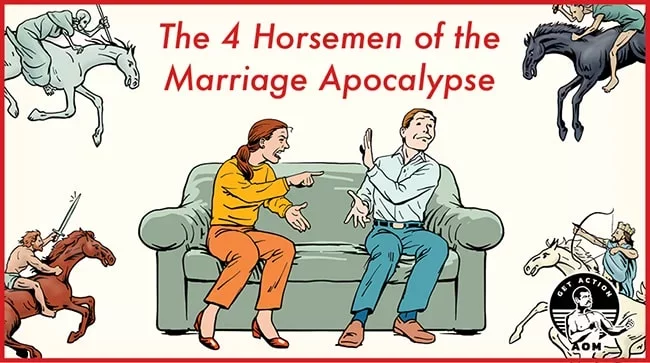
Psychologist John Gottman dedicated years to studying couples in his Love Lab at the University of Washington. By observing their interactions, he uncovered four distinct communication patterns that could predict, with an impressive 94% accuracy, whether a marriage would endure.
Interestingly, the specific topics couples argued about--be it finances, household chores, or family matters--were less significant than the communication styles they employed during these disagreements. Gottman dubbed these detrimental styles the Four Horsemen of the Marriage Apocalypse.
1. Criticism
Many marital disputes stem from dissatisfaction with a partner's behavior. Gottman identified two approaches: complaints and criticisms. While complaints focus on specific actions--such as, "You didn't call when you said you would"--criticisms attack the individual, using global terms like "always" or "never." This shift from a specific issue to a character assessment can derail constructive dialogue.
To counteract criticism, Gottman suggests a "Gentle Start-Up." For instance, instead of saying, "You're a selfish spender," try, "I feel stressed about our finances when I see your spending on Amazon. Can we review our budget together?"
2. Contempt
Gottman identifies contempt as the strongest predictor of divorce. It manifests through sarcasm, mockery, or dismissive gestures, indicating a lack of respect. Contempt often arises from unresolved grievances, leading to a negative perception of a partner's actions.
To mitigate contempt, couples should actively express appreciation for each other's positive traits and contributions. Regularly acknowledging what your partner does well can foster a more supportive environment.
3. Defensiveness
Defensiveness occurs when one partner feels attacked and responds by deflecting blame. This often leads to counter-complaining, where one grievance leads to another, complicating the conversation further.
The antidote lies in taking responsibility, even for a small part of the issue. Acknowledging your partner's feelings can pave the way for a more constructive discussion.
4. Stonewalling
Stonewalling involves one partner withdrawing from the conversation, which can appear as indifference. However, it often stems from feeling overwhelmed. Gottman refers to this as "flooding," where emotional intensity prevents rational communication.
Taking a timeout can be beneficial. If you need space to process emotions, communicate this to your partner during calmer moments, ensuring they understand your need for a break during heated discussions.
Gottman's research emphasizes that while these Four Horsemen can disrupt communication, the key to a resilient relationship lies in fostering positive interactions. A ratio of five positive exchanges for every negative one can significantly buffer against conflict. Prioritizing connection and appreciation can help couples navigate challenges more effectively.
In the long run, understanding and addressing these communication patterns can transform relationships, paving the way for deeper connections and greater resilience in the face of challenges.