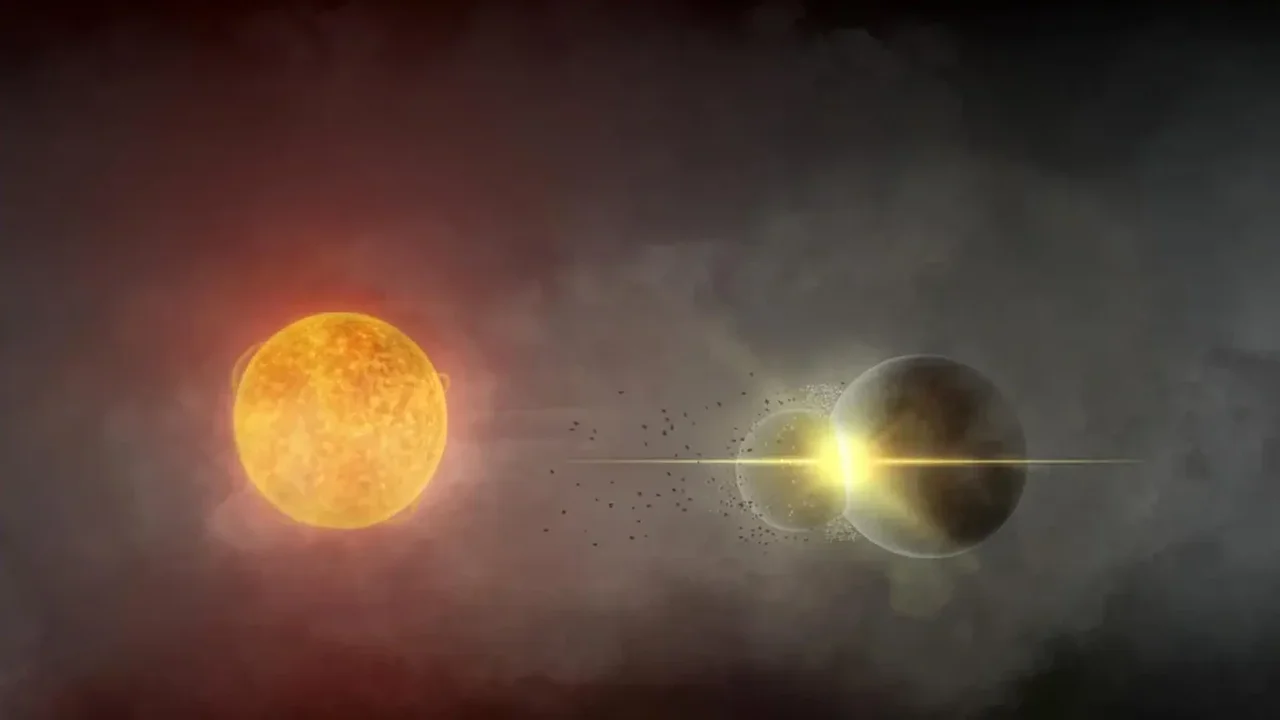
In a groundbreaking discovery, astronomers have observed unusual behavior from a star that led them to conclude a significant planetary collision occurred. "The star's light output was stable until it exhibited three notable dips in brightness starting in 2016, followed by erratic fluctuations around 2021," explained Tzanidakis, a doctoral candidate in astronomy at the University of Washington. "Such behavior is atypical for stars like our sun, prompting us to investigate further."
Unraveling the Mystery
Upon detailed analysis, researchers found that the star's strange brightness patterns were due to large amounts of rock and dust orbiting the system, partially obscuring the star's light. This debris was likely the result of a dramatic collision between two planets.
"It's remarkable that various telescopes captured this event in real time," Tzanidakis noted. "There are only a few recorded planetary collisions, and this one shares similarities with the event believed to have formed the Earth and moon. Observing more such occurrences could provide invaluable insights into our planet's formation."
The findings were published on March 11 in The Astrophysical Journal Letters.
The Chaotic Nature of Planet Formation
Planet formation is inherently tumultuous. As material like dust, gas, and ice gravitates toward young stars, collisions among developing planetary bodies are commonplace. Over millions of years, such interactions shape and stabilize planetary systems, including our own.
Detecting these collisions from Earth is rare, as the debris must align perfectly to block the star's light, creating a dimming effect that can evolve over several years.
"Andy's innovative approach utilizes decades of data to uncover slow-moving astronomical phenomena," said James Davenport, a senior author and assistant research professor at UW. "This method opens the door for numerous potential discoveries."
Infrared Insights into Hot Debris
Tzanidakis, who leads the study, focuses on stars that exhibit significant brightness changes. Previous research helped identify a system where a binary star and a dust cloud caused a seven-year eclipse. However, Gaia20ehk presented a unique challenge with its unpredictable brightness.
After suggesting a shift to infrared observations, Davenport and the team found that while visible light fluctuated, infrared light spiked, indicating that the obstructing material was exceedingly hot and glowing.
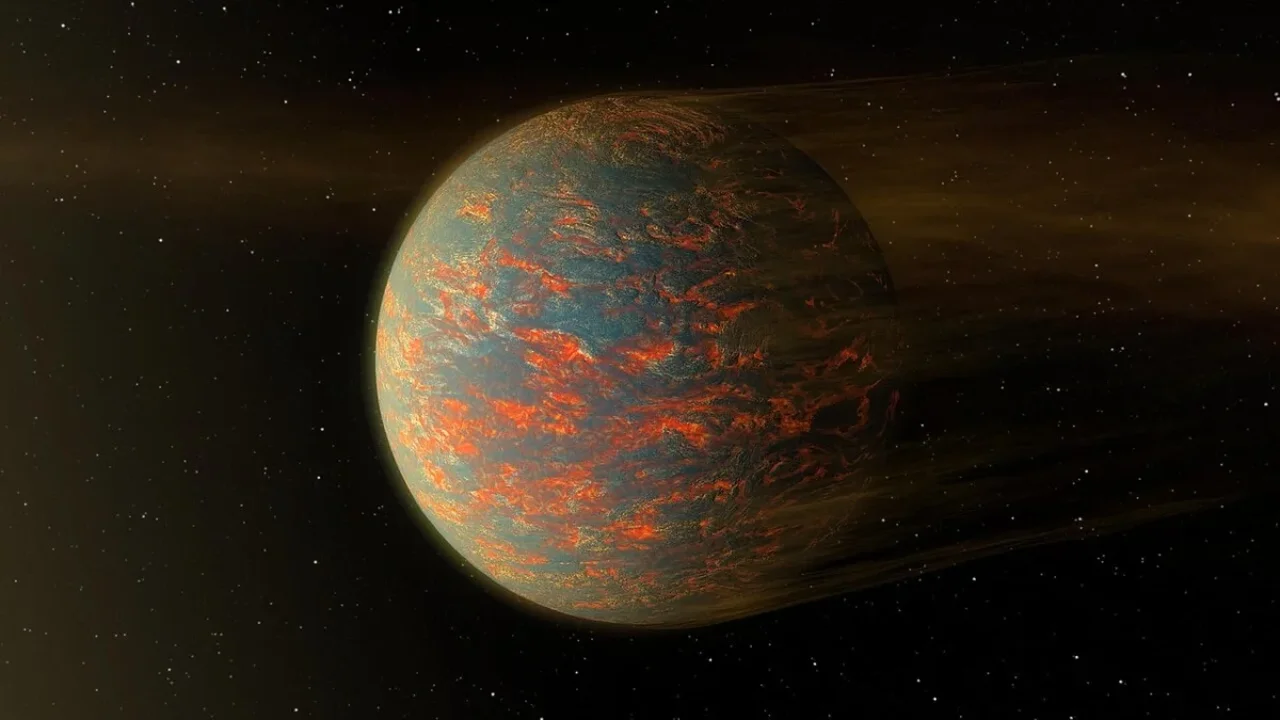
This intense heat could be a result of a violent planetary collision, which would also explain the earlier brightness dips.
Connections to Earth's Formation
Interestingly, the collision may resemble the event that created the Earth and moon approximately 4.5 billion years ago. The debris surrounding Gaia20ehk orbits at a distance similar to that between Earth and the sun, suggesting that it could eventually cool and coalesce into new planetary bodies.
Future Prospects for Discovery
The discovery emphasizes the need for ongoing searches for planetary impacts. The upcoming Simonyi Survey Telescope at the NSF-DOE Vera C. Rubin Observatory is anticipated to play a crucial role in this endeavor. Davenport estimates that it could identify around 100 similar collisions over the next decade.
Understanding these events is vital for comprehending planetary system evolution and the search for habitable worlds beyond our solar system. "Determining how rare the event that formed the Earth and moon is fundamental to astrobiology," Davenport concluded. "More observations could help us unravel the dynamics that make Earth conducive to life."