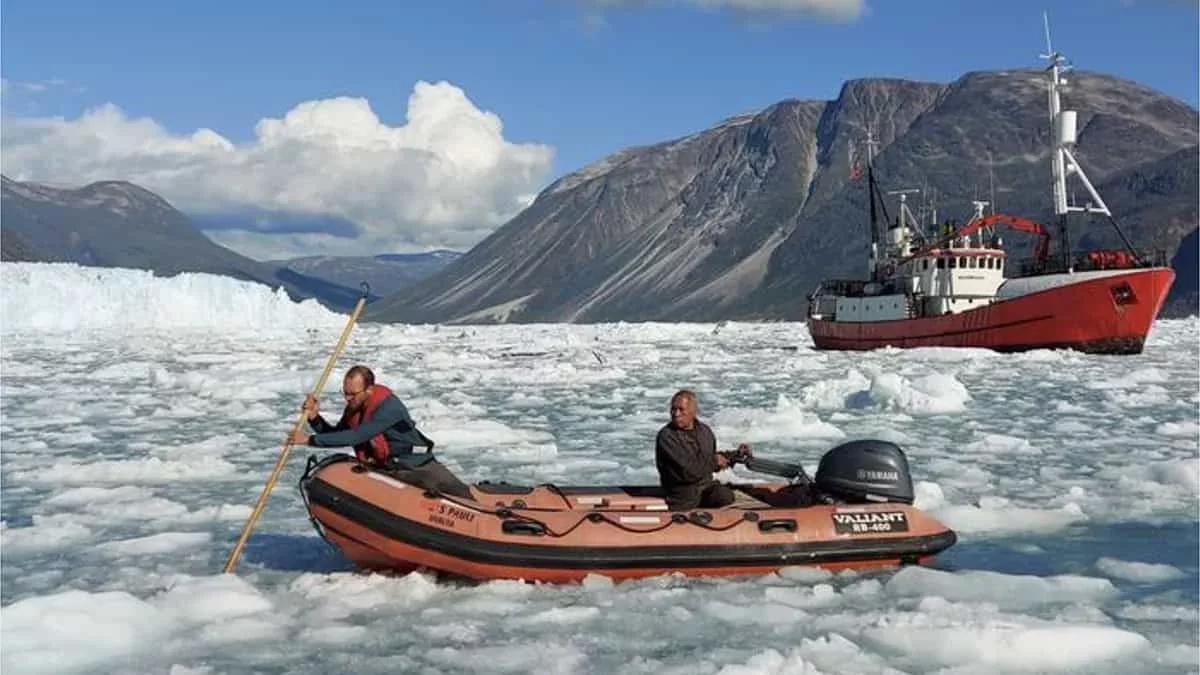
Researchers in southern Greenland have made significant strides in understanding glacier calving by deploying a 6-mile fiber-optic cable across the seafloor near the Eqalorutsit Kangilliit Sermiat (EKaS) glacier. This innovative approach allowed them to capture a staggering 56,000 iceberg detachments over a three-week period, providing unprecedented insights into the dynamics of glacial movement and its implications for sea level rise.
Glacier calving, the process where chunks of ice break off from the glacier and enter the sea, plays a crucial role in global climate change. However, many details about this phenomenon remain elusive. The research team, led by glaciologist Dominik Gräff from the University of Washington, aimed to address these gaps by employing fiber-optic sensing technology, which can monitor both acoustic and temperature changes in real-time.
Understanding the Calving Process
Accessing the glacier's calving front poses numerous challenges, including navigating through a dense mixture of sea ice and icebergs. Traditional remote sensing methods often fail to provide a complete picture of the underwater processes. Gräff emphasized that understanding the physical processes at the calving front is vital for predicting glacier stability and behavior.
This deployment marked the first use of fiber-optic sensing in such an environment. The cable, which was laid across the fjord floor, functions as a comprehensive sensor network, recording various events simultaneously. As the icebergs calved, the cable detected the acoustic vibrations and temperature fluctuations, allowing researchers to analyze the calving events in detail.
Capturing Data on Iceberg Detachments
During the experiment, the fiber-optic cable recorded a wealth of data through two primary techniques: distributed acoustic sensing (DAS) and distributed temperature sensing (DTS). The DAS technique enabled the team to detect the sounds of cracking ice and the subsequent detachment of icebergs, while DTS provided insights into temperature variations caused by the calving events.
This rich dataset allows scientists to trace the entire calving process, from the initial cracking of the ice to the eventual detachment of icebergs. The researchers noted that the fiber-optic cable could even detect internal gravity waves caused by the movement of icebergs, further enhancing their understanding of the complex interactions within the fjord.
Implications for Future Research
With the wealth of information gathered, Gräff and his team hope to refine existing models of glacial calving, which often underestimate the amount of ice lost below the water's surface. As researchers continue to analyze the data, they aim to develop predictive models for future calving events, contributing valuable knowledge to the field of climate science.
The successful deployment of fiber-optic technology in this context not only opens new avenues for research but also highlights the potential for innovative solutions in monitoring and understanding our changing climate. By enhancing our grasp of glacier dynamics, scientists can better anticipate the impacts of glacial melt on global sea levels in the years to come.