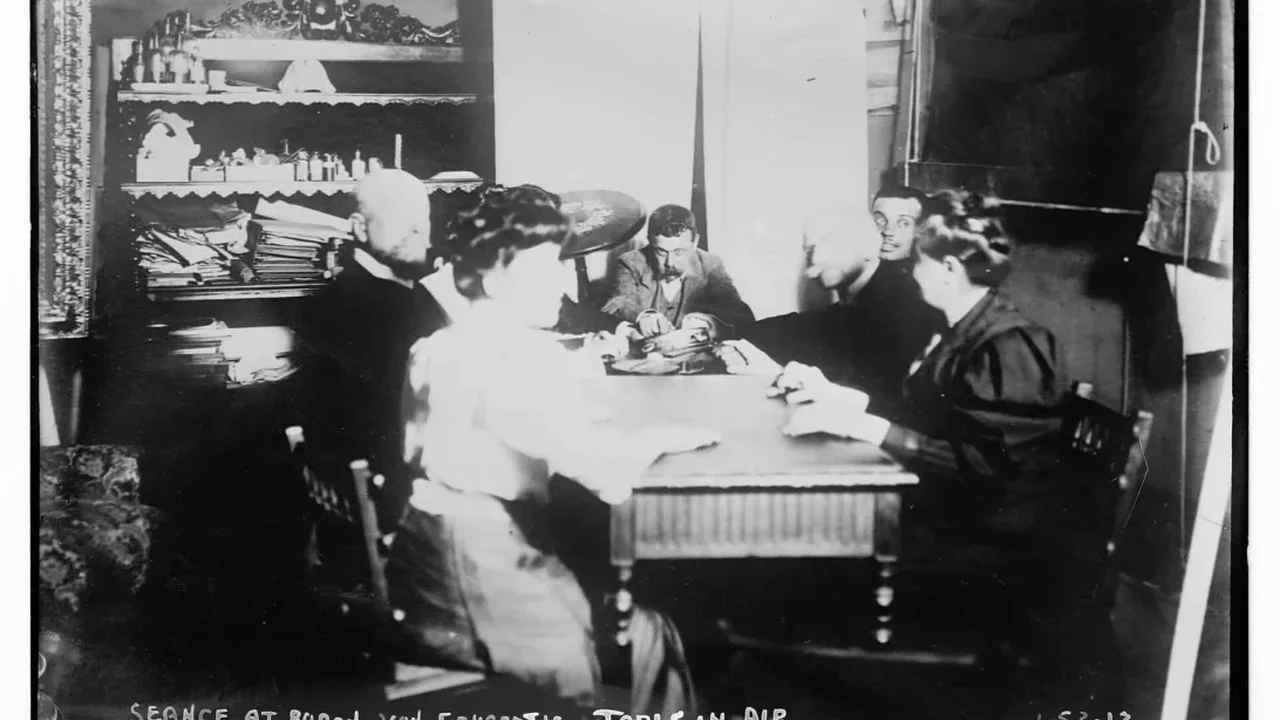
In 1857, medium Leah Brown said luminous particles appeared to come from her body during a séance in Jersey City. After she pressed her hands into damp soil, glowing specks were reportedly found there the next day and identified as phosphorus. Brown attributed the glow to spirits, though she may have brought the chemical with her.
The science of a ghostly glow
White phosphorus emits a faint light as it reacts with oxygen in the air. This chemical glow can look eerie in a dark room, but it is not supernatural. The substance is also toxic, and contact with its fumes can be harmful.
Phosphorus was used in some matches during the Victorian era. Factory workers exposed to it could develop "phossy jaw," a serious condition affecting the teeth and jawbone. A different material offered a less hazardous route to luminous effects: a 19th-century paint made with calcium sulfide could absorb light and glow in darkness.
Science, spectacle and popular culture
Spiritualist séances and scientific experimentation sometimes overlapped. Chemist William Crookes investigated luminous objects at séances in the 1870s, while stage magician William Marriott later demonstrated how props and luminous paint could create the appearance of ghostly hands.
The idea also entered popular fiction. In Arthur Conan Doyle's The Hound of the Baskervilles, phosphorus creates the appearance of a spectral dog. The story helped make the chemical link between eerie light and ghostly spectacle familiar to readers.
These historical effects show how chemistry shaped both entertainment and beliefs about the supernatural. Understanding the science behind luminous materials can help future storytellers and designers create striking effects with greater attention to safety.