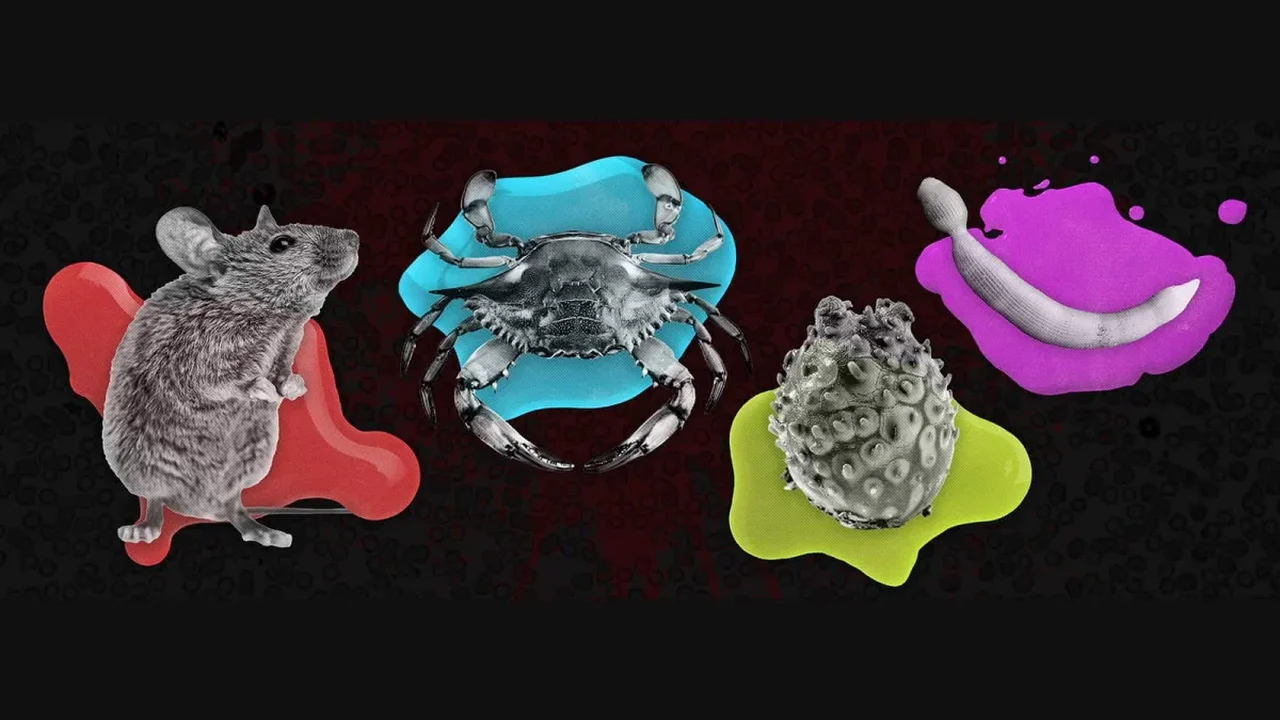
Red blood is familiar to humans, but across the animal kingdom, oxygen-carrying fluids can appear blue, violet, green, yellow or nearly white. These colors reflect different biological solutions shaped by evolution.
Different proteins, different colors
In most vertebrates, iron-containing hemoglobin carries oxygen and gives blood its red color. Octopuses, squid and many crustaceans instead use hemocyanin, a copper-based protein that turns blue when it binds oxygen. It works particularly well in cold environments, including the deep ocean, and may also contribute to immune functions.
Some brachiopods and peanut worms use hemerythrin, an iron-rich protein associated with violet-colored blood. Sea squirts can have yellow-green blood, though its color may be linked to vanadium they accumulate or pigments produced as they process phytoplankton. In several New Guinea lizards, green biliverdin builds up in the bloodstream, masking the red of hemoglobin.
Life without red blood
Antarctic icefish are the only known vertebrates that lack both hemoglobin and red blood cells. Their blood appears pale and translucent, and oxygen dissolves directly into it. Larger hearts and blood vessels help circulate more fluid, while their low-energy hunting style may reduce oxygen demand. Researchers, including John Postlethwait of the University of Oregon, are investigating how and why these traits evolved.
Evolution has also fine-tuned hemoglobin in animals living at high elevations. Deer mice, Andean hummingbirds and some frogs can bind oxygen especially effectively in thin air, though adaptations may involve trade-offs in how oxygen is delivered to tissues. Studying these varied systems could offer new clues for understanding conditions involving low oxygen or reduced hemoglobin. As research continues, nature's diverse blood chemistry may help inform future approaches to human health.