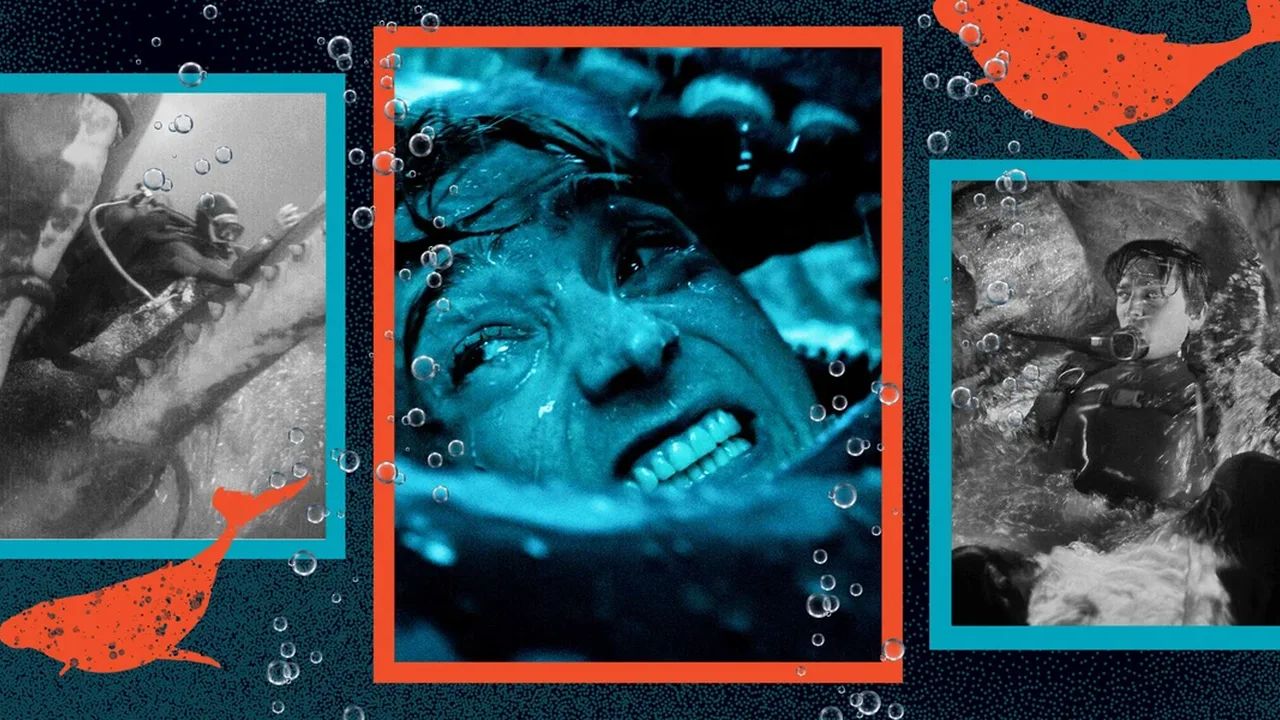
Daniel Kraus's novel Whalefall imagines a diver trapped inside a sperm whale. Its film adaptation brings the premise to the screen, raising a real-world question: could someone survive being swallowed?
Rare incidents in which people have ended up in a whale's mouth have generally ended when the animal released them. Being swallowed into the stomach is a different matter--and survival would be extremely unlikely. The film's production team worked with cetacean expert Joy Reidenberg to ground its depiction in whale anatomy.
What happens inside a sperm whale?
Sperm whales have four stomachs. They draw prey such as squid into their mouths rather than chewing it, and the first stomach's powerful muscles help process food. Digestion begins farther along the system, where acids are present. The first stomach also contains gases that people cannot breathe, making a diver's limited air supply a critical factor in the story.
Production designer Ramsey Avery said the team used anatomical research to shape the film's sets. Their calculations suggested that a stomach large enough to hold an actor and filming equipment would correspond to a sperm whale around 80 feet long--close to the largest recorded size for the species.
Some details remain uncertain: researchers cannot observe the internal reactions of a living whale in this kind of situation. The film therefore combines known anatomy with creative speculation. As ocean research advances, better ways to study marine life may help filmmakers--and scientists--depict these little-known environments with greater accuracy.