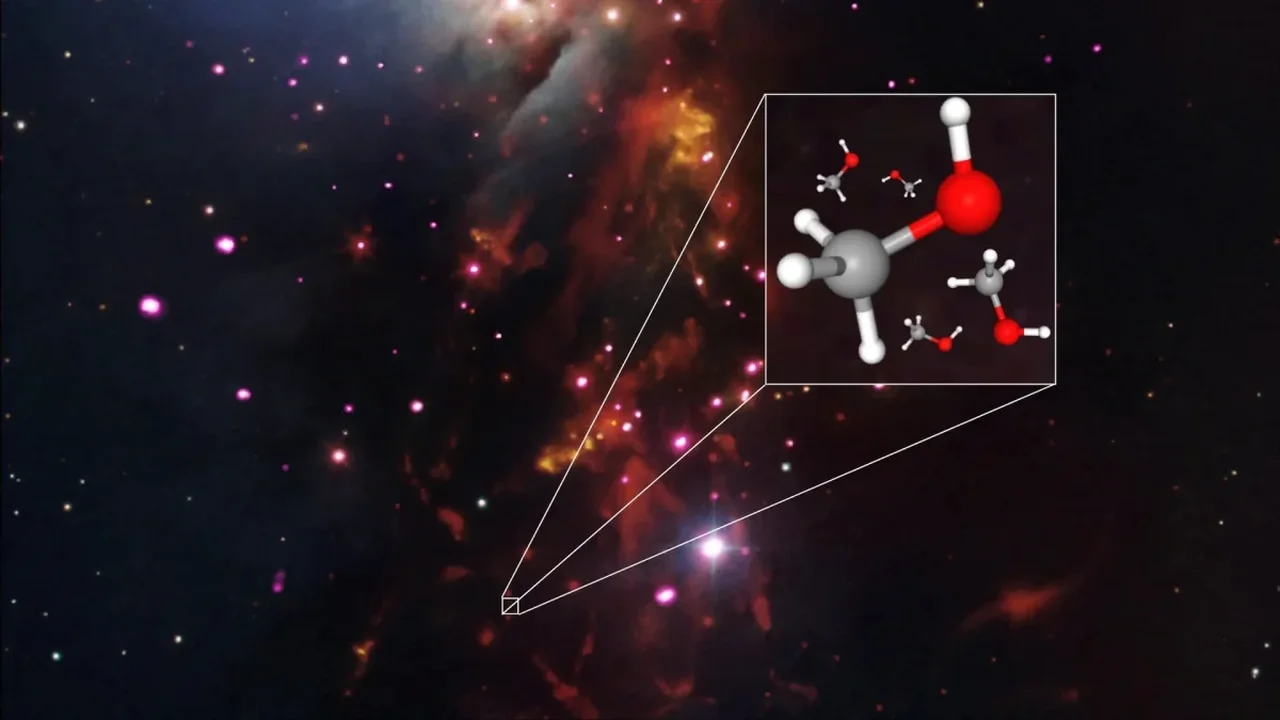
Astronomers have confirmed the first detection in interstellar space of fully deuterated methanol, a rare form of the organic molecule in which all four hydrogen atoms are replaced by deuterium, a heavier form of hydrogen.
The molecule was found around IRAS4A2, a young stellar system in the Perseus molecular cloud, roughly 1,000 light-years from Earth. A team led by Arnaud Belloche of the Max Planck Institute for Radio Astronomy identified 10 distinct radio-signal fingerprints using the Atacama Large Millimeter/submillimeter Array (ALMA). The system was one of 11 examined in the team's COMPASS survey.
A clue to chemistry before stars are born
Methanol forms on icy dust grains in cold clouds before stars emerge. When young stars warm their surroundings, the molecules escape into gas, where radio telescopes can detect them. Because deuterium is more readily incorporated into molecules in very cold conditions, its presence can preserve clues about chemistry that took place before a star began to heat its environment.
Researchers estimate that IRAS4A2 contains about four fully deuterated methanol molecules for every 10,000 ordinary methanol molecules. That abundance is far higher than current chemical models predict: some calculations fall short by around 100 times, while one misses the estimate by as much as 100,000 times.
The findings point to a missing step in scientists' understanding of how heavily deuterated molecules form. The team also identified unexplained signals that may come from other deuterated methanol variants, though further laboratory work is needed to verify them.
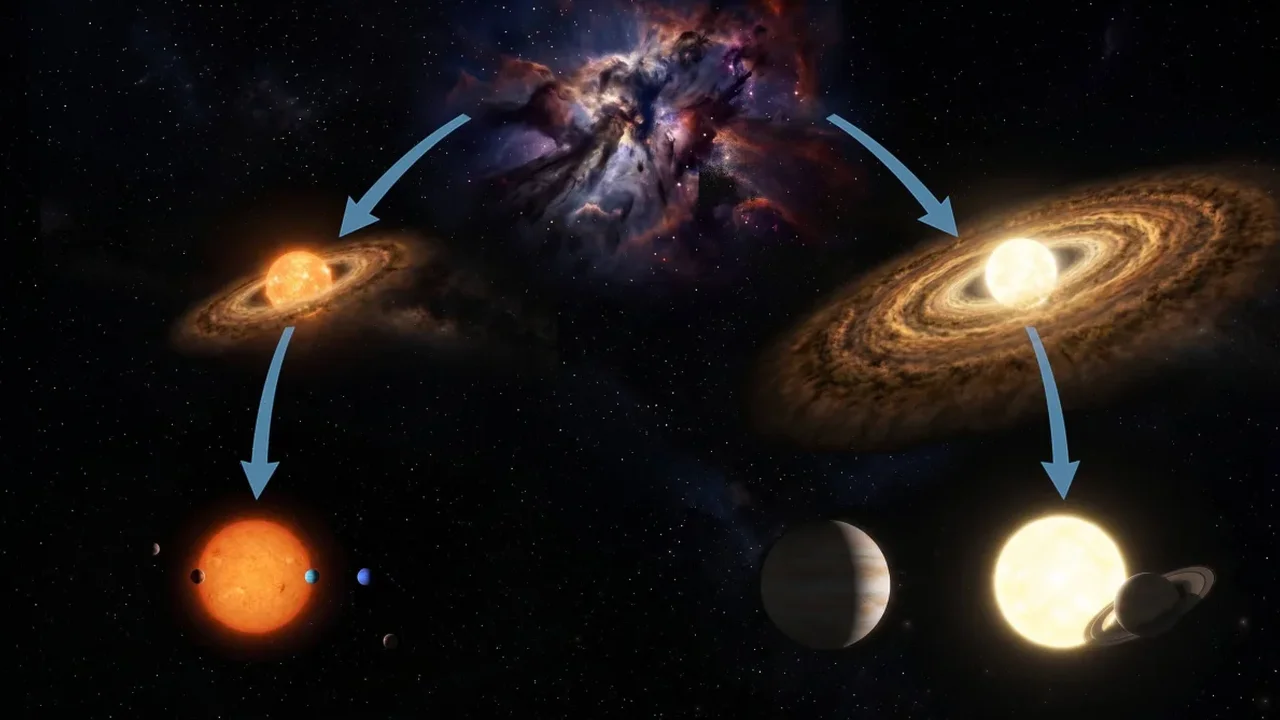
By refining models of this chemistry, future research could reveal how organic molecules form and persist as interstellar clouds become new planetary systems.