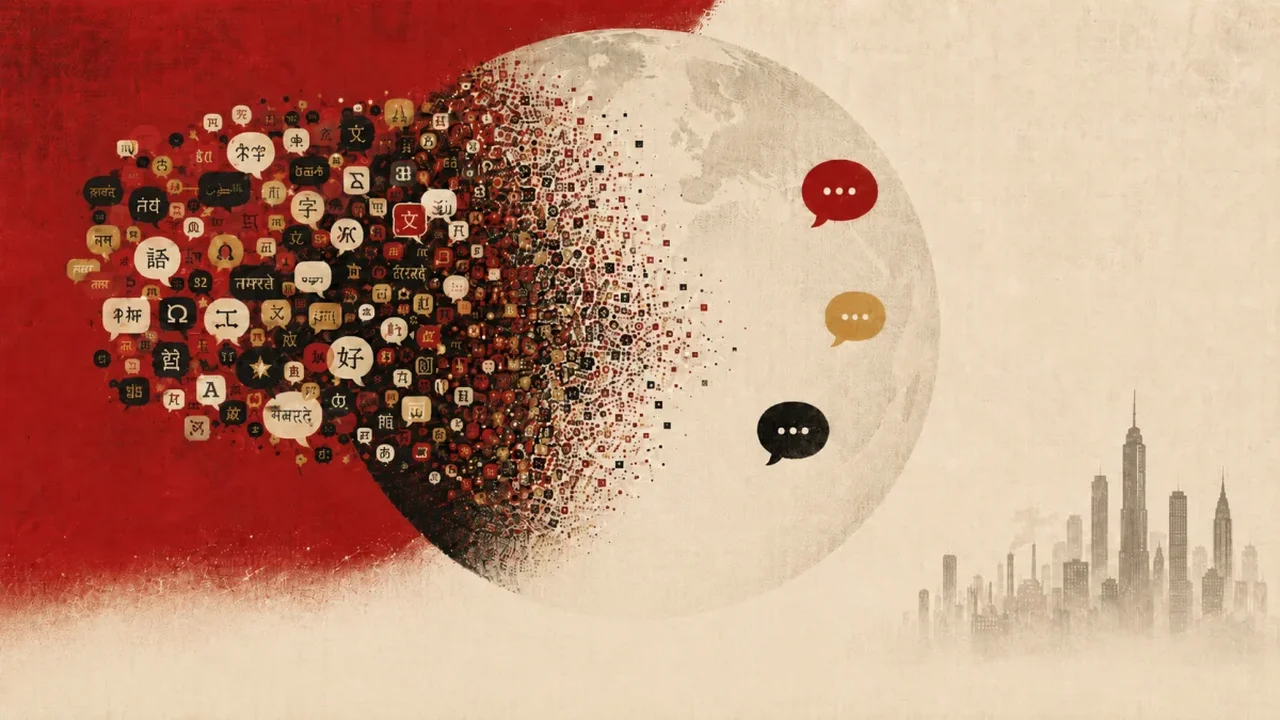
A new study published in Science suggests that human language diversity may have been far richer in the distant past than it is today. Using historical modeling and ethnographic data, researchers estimate that between about 1000 B.C.E. and C.E. 1000, the world may have hosted anywhere from 20,000 to 75,000 languages.
Reconstructing a Lost Linguistic World
Because spoken languages leave no fossils, the team combined modern data from 171 hunter-gatherer and fisher societies with population estimates from the early Holocene. Their calculations point to roughly 4,500 to 6,200 languages around 12,000 years ago, a figure surprisingly close to today's total despite a far smaller global population.
The researchers then traced how language numbers may have changed as societies grew, settled, and became more interconnected. Their models suggest that language diversity rose for millennia before reaching a peak around 2,000 years ago.
Empires, Mobility, and Language Shift
According to the study, the long decline in linguistic diversity likely began before European colonial expansion. As large states and multinational empires expanded, they carried dominant languages, institutions, trade networks, and education systems into new regions. Over time, languages such as Latin, Arabic, and varieties of Chinese spread across wide territories, often replacing smaller local tongues.
The researchers also note that agriculture may have played a dual role: it supported larger populations while creating more settled communities, which could encourage new language branches to emerge. Even so, later political consolidation appears to have reduced diversity more strongly than it created it.
The authors describe today's languages as the survivors of a major historical bottleneck. While the estimates remain uncertain, the study offers a fresh lens on how human mobility, governance, and social organization shape communication across generations. It also highlights the importance of protecting minority languages in a rapidly connected world, with future cultural diversity likely to depend on the choices societies make now.